 Save to Pinterest
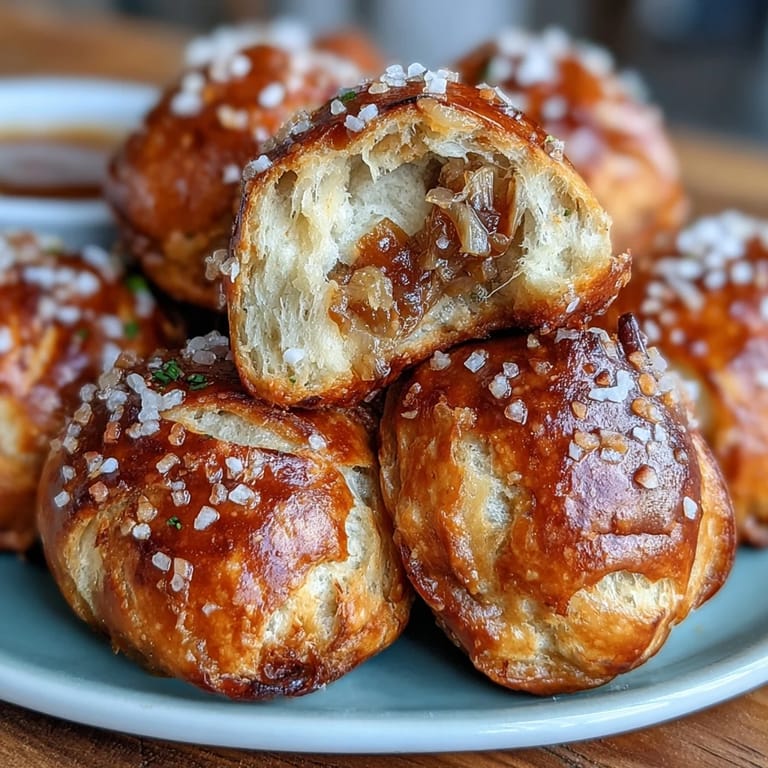
 There's something almost magical about the moment when caramelized onions meet tangy sourdough—a combination I stumbled upon by accident while trying to use up a particularly robust starter and some onions that were getting soft in my crisper drawer. I'd been making pretzels for years, but something about folding those sweet, golden onions into the dough transformed an ordinary recipe into something I couldn't stop making. My partner walked into the kitchen halfway through the first batch and the smell alone made them sit down at the counter and wait—no small feat in our house.
I made these for a casual game night last October, serving them warm straight from the oven with three different dips, and my usually quiet friend Sarah literally said, "Wait, did you make these yourself?" as if she couldn't quite believe homemade pretzels were possible. That moment, watching people reach for a third or fourth bite while barely noticing what they were eating, taught me that the best recipes are the ones that feel effortless to share.
Ingredients
- Active sourdough starter (1 cup, 100% hydration): This is your flavor foundation—use one that's been fed recently and is bubbly and ready to go, as a sluggish starter will make your rise times longer and your texture denser.
- Bread flour (2½ cups): The higher protein content creates that chewy pretzel structure you're after; all-purpose flour will work but won't give you quite the same bite.
- Warm water (⅔ cup): Keep it around 75–80°F to ensure gentle hydration without killing your sourdough's natural yeasts.
- Unsalted butter (2 tbsp, melted): This adds tenderness and richness without overpowering the sourdough tang—melt it while other ingredients are coming together.
- Granulated sugar (1 tbsp): A small amount feeds the fermentation and adds subtle sweetness that complements the caramelized onions beautifully.
- Fine sea salt (1 tsp for dough, ½ tsp for onions): Using fine salt in the dough ensures even distribution; reserve the flaky sea salt for the final topping where it adds textural contrast.
- Yellow onion (1 medium, finely diced): Medium onions are the sweet spot—large ones can become watery, and small ones caramelize unevenly.
- Olive oil (1 tbsp for onions, plus more for greasing): Good quality matters here since the onions are the star; the oil brings out their natural sweetness as they cook down.
- Baking soda (¼ cup for the bath): This is non-negotiable for authentic pretzel texture—it raises the pH of the water and creates that distinctive mahogany crust and chewy interior.
- Egg (1, beaten): One egg wash gives you that beautiful shiny finish and helps toppings adhere; room temperature works best for even distribution.
- Flaky sea salt and optional toppings: Finish with flaky salt for crunch, or add chives and onion flakes for an extra savory layer.
Tired of Takeout? 🥡
Get 10 meals you can make faster than delivery arrives. Seriously.
One email. No spam. Unsubscribe anytime.
Instructions
- Caramelize the onions first:
- Medium heat is your friend here—rushing this step by cranking up the flame will scorch your onions and turn them bitter instead of giving you that deep, sweet caramel flavor. Stir occasionally and give yourself about 12–15 minutes; you'll know they're ready when they're a rich golden brown and smell almost sweet.
- Mix your dough:
- Combine starter, flour, water, melted butter, sugar, and salt in a large bowl, stirring until everything is hydrated and shaggy. Don't overthink this step—you're just bringing the ingredients together, not developing gluten yet.
- Knead in the onions:
- Once the caramelized onions have cooled slightly, add them to your dough and knead by hand or with a dough hook for 7–10 minutes. The dough will go from sticky and rough to smooth and elastic, and you'll feel a subtle resistance that tells you the gluten is waking up.
- Let time do the work:
- Cover your bowl and let the dough rise in a warm place (a turned-off oven with the light on works perfectly) for about 2 hours. You're looking for the dough to roughly double in size; this slow fermentation is what builds flavor and texture.
- Preheat and prepare:
- Heat your oven to 425°F and line two baking sheets with parchment paper. Having everything ready means you won't scramble when the pretzel bites come out of the water bath.
- Shape your bites:
- Turn the dough onto a floured surface, divide it into 4 pieces, and roll each into a 12-inch rope—think of the rope as a thick piece of string, not a thin snake. Cut these ropes into 1-inch pieces, and don't stress about perfect uniformity; variation adds character.
- The baking soda bath (the magic step):
- Bring 6 cups of water to a rolling boil and carefully add the baking soda—it will bubble and fizz dramatically, which is exactly what you want. Working in batches to avoid crowding, drop pretzel bites in for 30 seconds exactly (set a timer, trust me), then fish them out with a slotted spoon and arrange on your baking sheets.
- Add shine and flavor:
- While still warm from the bath, brush each bite with beaten egg and immediately sprinkle with flaky sea salt. If using chives or onion flakes, add them now while the egg is tacky.
- Bake until golden:
- Pop everything into your preheated oven for 12–15 minutes, watching for that deep golden-brown color that signals proper caramelization. The edges will be crispier than the centers, which is exactly the contrast you're chasing.
- Cool and serve:
- Let them sit for just a few minutes before eating—they're still setting and will firm up as they cool slightly. Serve warm with mustard, cheese dip, or a creamy onion dip for maximum enjoyment.
 Save to Pinterest
 I realized the true magic of this recipe last spring when my teenage nephew, who usually tolerates my cooking with polite indifference, asked for the leftovers to bring to school the next day. That's when a simple pretzel bite became something worth bragging about to people who matter.
Why the Sourdough Makes All the Difference
Using sourdough starter instead of commercial yeast gives these pretzel bites a subtle tang and a more complex flavor that develops over the 2-hour rise. The natural fermentation also creates a dough with incredible texture—tender and chewy at the same time—something you just can't replicate with instant yeast. Plus, there's something deeply satisfying about using starter that's been living on your counter; it feels like you're cooking with a living ingredient rather than something anonymous from a packet.
Storage and Make-Ahead Options
These freeze like a dream, which is why I often double the batch and freeze half for future cravings. Cool them completely, layer them between parchment paper in a freezer bag, and they'll keep for up to a month. Reheat in a 350°F oven for 5–7 minutes until warmed through and the crust is crispy again.
Flavor Variations to Try
Once you've mastered the basic recipe, the possibilities expand beautifully. Try adding ½ tsp garlic powder to the dough for a more savory depth, or brush the egg wash with a light coating of everything bagel seasoning instead of plain salt. I've also experimented with adding crispy bacon bits to the onion mixture and serving them with a sharp cheddar dip—it's an entirely different experience while staying true to the original concept.
- Garlic powder mixed into the dough adds savory complexity without changing the texture.
- Everything bagel seasoning, crispy bacon, or even smoked paprika transform these into conversation-starting appetizers.
- A dollop of whipped cream cheese mixed with caramelized onions creates a dip that complements the bites perfectly.
 Save to Pinterest
 These pretzel bites have become my go-to when I want to impress without exhausting myself, and they never fail to make people pause mid-conversation and ask for the recipe. I hope they bring you as much joy as they've brought to my kitchen.
Recipe FAQs
- → How do caramelized onions affect the flavor?
Slow cooking the onions until golden brings out their natural sweetness, adding a rich, savory depth that complements the sourdough's tang.
- → What is the purpose of the baking soda bath?
Dipping the shaped bites into the hot baking soda bath develops the characteristic chewy crust and deep golden color typical of pretzels.
- → Can these bites be frozen for later?
Yes, after baking and cooling, they freeze well and can be reheated in a warm oven to restore their chewy texture.
- → What texture should the dough have before rising?
The dough should be smooth and elastic after kneading, allowing it to rise properly for a light, airy bite.
- → Are there any recommended serving suggestions?
They pair wonderfully with mustard, cheese dips, or creamy onion spreads, making them versatile for snacks or appetizers.
- → Can I add other toppings besides flaky sea salt?
Optional toppings like minced chives or dried onion flakes enhance flavor and add texture to the finished bites.