 Save to Pinterest
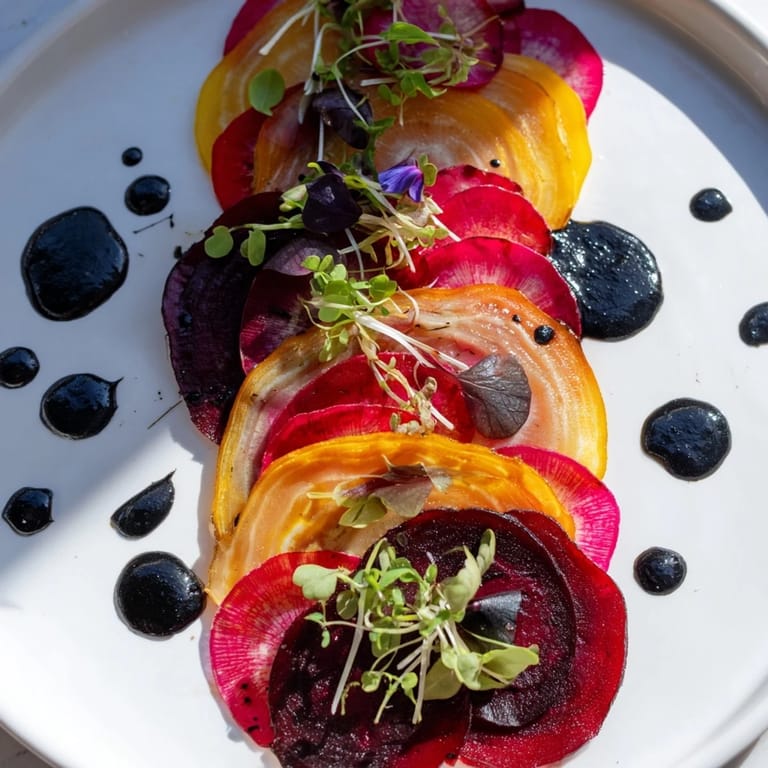
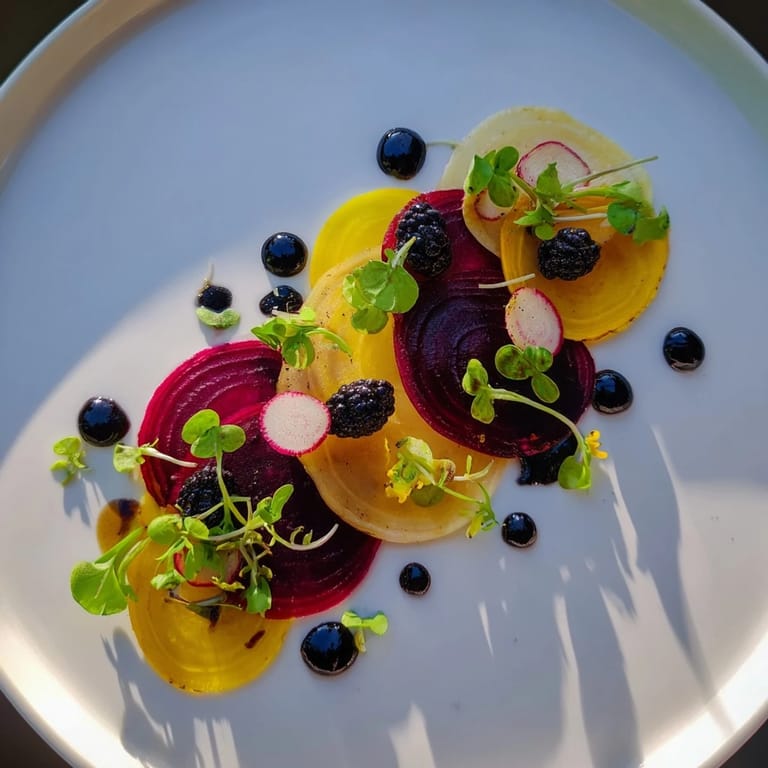
 I discovered this dish while standing in a farmers market on an unexpectedly warm autumn afternoon, surrounded by vendors displaying vegetables like jewels. A chef friend was arranging beets and blackberries on a white plate, and I watched as she layered them with such care that the vegetables seemed to glow and fade at once. She caught me staring and said, "It's all about the contrast—the dark makes the bright sing." I went home that day determined to recreate what I'd seen, and this became my favorite way to begin a meal.
I made this for a dinner party where I'd invited three people I rarely saw anymore, and I remember feeling nervous about whether it would work. When I set the plated appetizers on the table, the room went quiet for a moment, and then someone laughed and said it was too beautiful to eat. We lingered over those first bites, talking about color and flavor and why simple things sometimes matter the most.
Ingredients
- Golden beet: The warm, almost buttery sweetness anchors the plate and provides a gentle earthiness that balances the sharper flavors to come.
- Red beet: Earthier and slightly mineral compared to golden, these slices create the visual contrast that gives the dish its name.
- Baby arugula: Its peppery bite cuts through richness and adds a whisper of green that draws the eye across the plate.
- Watermelon radish: Those pale pink and white striations look delicate but taste bright and crisp, like a secret waiting to be discovered.
- Blackberries: Beyond their stunning dark color, they bring a gentle tartness that surprises when you bite into them.
- Black olives: Their briny depth creates flavor anchors that keep every forkful interesting.
- Black tahini: This is the artist's final touch—creamy, nutty, and visually striking when smeared across the plate.
- Extra virgin olive oil: Use one you genuinely love, because here it's not hidden—it's the dressing's foundation and its character matters.
- Lemon juice: A small amount brightens everything without overwhelming the delicate vegetables.
- Honey: Just enough to round the dressing and add a whisper of warmth.
- Microgreens: These are not an afterthought—they're the final punctuation that adds texture and visual drama.
Tired of Takeout? 🥡
Get 10 meals you can make faster than delivery arrives. Seriously.
One email. No spam. Unsubscribe anytime.
Instructions
- Slice your beets paper-thin:
- Use a mandoline if you have one, but a sharp knife works beautifully too if you take your time. You want them thin enough to be almost translucent when light passes through them.
- Create the color foundation:
- Lay golden and red beet slices in a loose, overlapping pattern across your platter, letting each slice catch the light differently. Think of it like painting with your ingredients.
- Layer the brightness:
- Fan out your watermelon radish slices so their striped interior shows, then scatter arugula leaves over the beets, letting some cluster and some stand alone.
- Position your shadows:
- This is where the dish gets its drama—place blackberries and black olives in the spaces behind and under your bright vegetables, as if they're creating silhouettes.
- Emulsify the dressing:
- Whisk together olive oil, lemon juice, honey, salt, and pepper until the mixture is cohesive and balanced. Taste it before you commit—a tiny pinch of salt can change everything.
- Add the dark contrast:
- Spoon small dots of black tahini around the plate's edge and in strategic spots, then use the back of a spoon to smear it slightly in an organic, artistic way.
- Crown with finesse:
- Scatter microgreens and edible flowers across the surface, layering them at varying heights so the plate has movement even when it's standing still.
- Serve and savor:
- Bring the plated appetizer directly to the table immediately, before anything wilts or settles—this dish is meant to be admired before it's eaten.
 Save to Pinterest
 I once made this dish for my mother-in-law, who usually picks at the food I cook and asks what's in everything, but this time she just ate quietly and said, "This is how art tastes." It was the first time she'd ever complimented my cooking, and I realized that sometimes a meal becomes meaningful not because of complexity, but because you've paid attention to every small detail.
The Mandoline Moment
The first time I tried to slice beets paper-thin without a mandoline, my knife got sticky with beet juice and the slices came out uneven and thick. It was frustrating until I realized the unevenness actually created interesting layers and caught light in different ways. Now I sometimes prefer the imperfect hand-knife slices because they feel more alive on the plate. If you don't have a mandoline, don't hesitate—just sharpen your knife, take your time, and embrace the human element of your slicing.
Reading Your Beets
Not all beets are created equal, and learning to choose ones that are similar in size makes this dish easier to assemble. I learned this after buying one enormous beet and three tiny ones, and spending extra time just trying to make them look intentional. Now I run my hand over beets at the market like I'm reading their story—smooth skin, no soft spots, roughly the same weight. This small attention saves time and frustration when you're plating.
Why This Dish Works as Theater
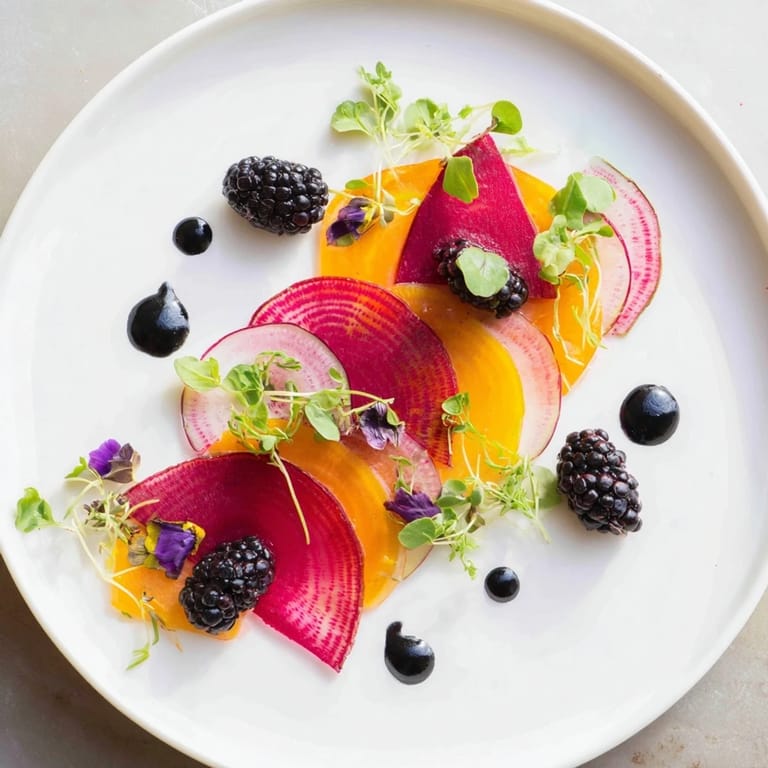
Every element on this plate serves a purpose that goes beyond flavor—the contrast creates visual intrigue that makes people want to explore every corner of the plate with their fork. The dark ingredients aren't just decoration; they're flavor anchors that ground the bright vegetables and keep the whole composition from feeling too delicate. When you understand this balance, you're not just assembling ingredients—you're choreographing an experience.
- Always taste your dressing before dressing the vegetables, because a perfectly balanced dressing is what ties all these competing flavors into one coherent moment.
- Remember that edible flowers aren't required, but they add an unexpected sophistication that guests remember long after the meal ends.
- Serve this on a white or neutral plate so every color pop reads clearly and nothing gets lost in visual noise.
 Save to Pinterest
 This dish taught me that restraint and intentionality can be more impressive than complexity. Every time I serve it, I remember why I fell in love with cooking in the first place.
Recipe FAQs
- → What is the best way to slice the beets thinly?
Using a mandoline slicer ensures uniform, thin slices which are essential for layering and creating visual contrast.
- → Can I substitute black tahini for another ingredient?
Regular tahini mixed with a natural coloring agent like squid ink can achieve a similar dark contrast without affecting flavor significantly.
- → How do the dark ingredients affect the dish's presentation?
Blackberries, olives, and tahini create striking silhouettes and depth, enhancing the artistic effect of the layered plate.
- → What dressing complements the layered vegetables best?
A simple dressing of extra virgin olive oil, lemon juice, honey, salt, and pepper adds brightness and balances the darker accents nicely.
- → Are there vegan alternatives suggested for the honey in the dressing?
Agave syrup can be used instead of honey to maintain a plant-based version while preserving sweetness.