 Save to Pinterest
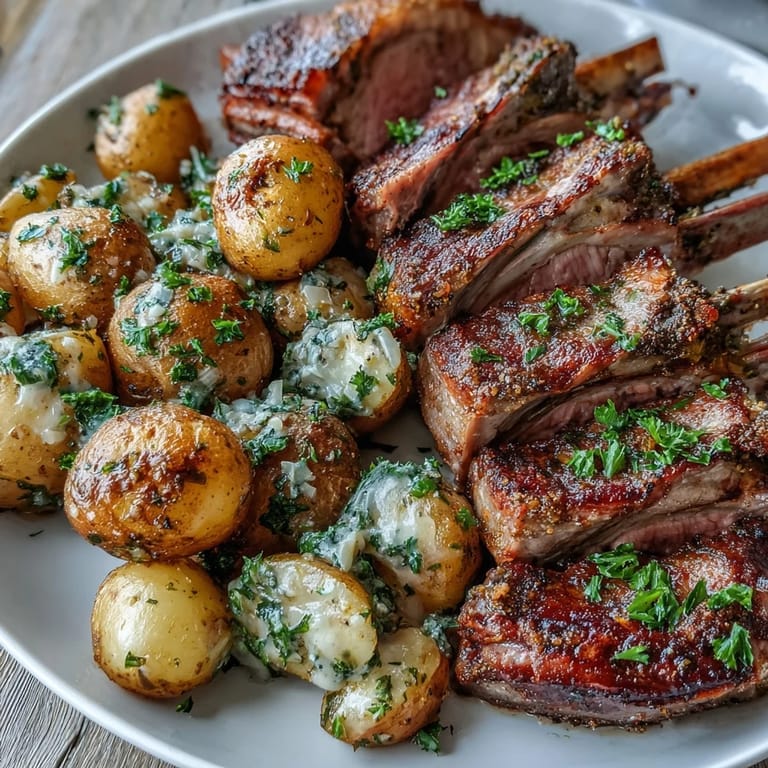
 There's something about roasting lamb that transforms an ordinary Wednesday into an event. I discovered this dish on a whim while standing in the butcher shop, eyeing a perfectly Frenched rack and thinking about how little time I actually had to cook. The butcher suggested pairing it with potatoes, and somewhere between that counter and my kitchen, the idea of green olives and fresh herbs crystallized into something that felt both effortless and special. Forty-five minutes later, my kitchen smelled like a Mediterranean dream, and I realized I'd stumbled onto the kind of meal that makes people think you've been cooking all day.
I made this for someone I wanted to impress but didn't want to stress about, which turned out to be the perfect mindset. As we sat down to eat, they asked if I'd been cooking professionally, and I nearly laughed—I'd genuinely just thrown it together. That moment, when they realized the whole meal had taken less time than a typical reservation, changed how I thought about cooking for people I care about. Simple doesn't have to mean boring; it just means you know what you're doing.
Ingredients
- Rack of lamb (500–600 g), Frenched: Ask your butcher to do this for you—it's not worth the wrestling match, and it looks stunning on the plate with those exposed bones creating peaks.
- Dijon mustard (1 tsp): This isn't a decoration; it acts as a glue for the herbs and creates a subtle tang that prevents the lamb from tasting one-note.
- Fresh rosemary and thyme (1 tsp each, finely chopped): Dried herbs will work in a pinch, but fresh ones bruise slightly when you rub them into the mustard, releasing oils that coat the meat beautifully.
- Baby potatoes (300 g, halved): The smaller the potato, the faster it crisps; halving them exposes more surface area to the heat.
- Extra-virgin olive oil (2 tbsp for potatoes, 1 tbsp for lamb): Don't skimp here—good oil makes the difference between potatoes that glisten and potatoes that look tired.
- Smoked paprika (1/2 tsp): This adds depth and a whisper of smoke that makes people ask what that delicious flavor is.
- Green olives (60 g, pitted and halved): Pitting them yourself tastes somehow fresher than buying pre-pitted, though I'll admit to being lazy about this sometimes.
- Lemon zest (from 1/2 lemon): This bright, sharp element added at the very end prevents the whole dish from feeling heavy.
- Capers (1 tsp, drained): Optional but worth it—they add a salty, slightly briny complexity that makes people pause and wonder what you did.
Tired of Takeout? 🥡
Get 10 meals you can make faster than delivery arrives. Seriously.
One email. No spam. Unsubscribe anytime.
Instructions
- Heat your oven properly:
- Get it to 220°C (430°F) before you do anything else—this isn't a step you can rush. A properly heated oven means your lamb will sear slightly on the outside while staying tender within, and your potatoes will crisp instead of steam.
- Season and arrange the potatoes:
- Toss them with oil, paprika, oregano, salt, and pepper, then spread them on one side of your baking tray in a single layer. They need space to roast and crisp, not huddle together steaming.
- Prepare the herb rub:
- Mix the mustard, oil, rosemary, thyme, and garlic into a paste in a small bowl—this should look thick enough to coat a spoon. Rub it all over the lamb, paying special attention to getting it into the crevices where the flavor will concentrate.
- Position the lamb carefully:
- Place it fat-side up on the other side of the tray, making sure it doesn't touch the potatoes (they'll steam each other if they do). The fat will render and baste the meat as it roasts.
- Roast with a midway flip:
- Set your timer for 25 minutes for medium-rare; you're aiming for an internal temperature of about 54°C (130°F). Halfway through, give the potatoes a gentle toss so they brown evenly on all sides.
- Make the olive mixture while roasting:
- In a separate small bowl, combine your green olives, parsley, lemon zest, and capers—this can sit at room temperature and actually benefits from a few minutes of sitting so the flavors meld.
- Rest the lamb:
- When the time's up, pull the tray out carefully and tent the lamb with foil for 8–10 minutes. This might feel like the hardest part because it smells incredible, but resting distributes the juices and keeps the meat tender instead of dry.
- Finish and serve:
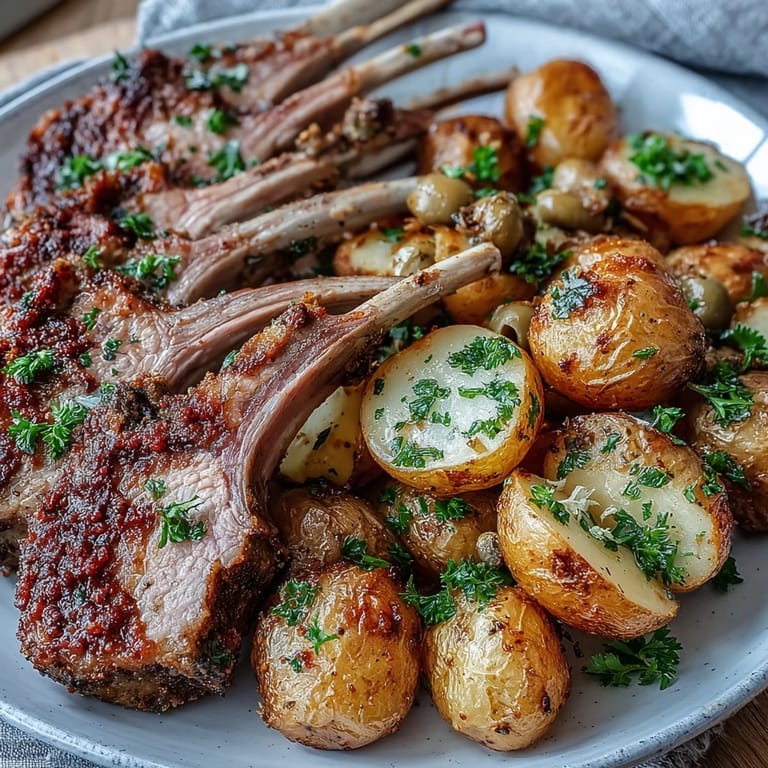
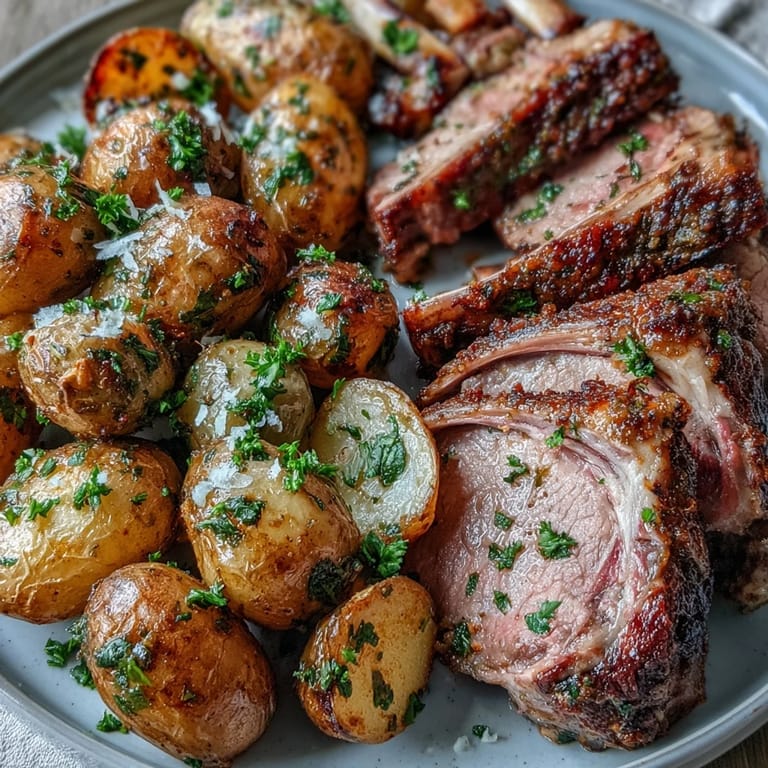
- Scatter the olive mixture over the warm potatoes and toss gently, then slice the lamb into individual chops and arrange them alongside. Everything should still be hot, and the lemon zest will cut through the richness beautifully.
 Save to Pinterest
 There's a quiet magic in meals that feel effortless but taste like they required hours of love. This dish taught me that elegance isn't about complexity; it's about knowing which ingredients speak loudly and which ones whisper, and giving them space to do their thing. The first time someone asked for the recipe, I realized I'd created something people actually wanted to make again, and that feeling—that moment of genuine delight—is what keeps me coming back to my kitchen.
The Art of the One-Pan Meal
Cooking on one pan isn't just about cleanup, though that's certainly a bonus when you're trying to look effortlessly graceful. It's about understanding heat zones and timing, knowing that potatoes need more time than lamb, and trusting that spacing them correctly means they cook together without interfering. The real skill is in arranging your ingredients so they don't steam each other but can share the same oven warmth—it's like seating guests at a dinner table where everyone has enough elbow room but still feels connected.
Wine Pairing and Serving Thoughts
A light red wine like Pinot Noir or Grenache cuts through the richness of the lamb without overwhelming the delicate potato-olive balance. The acidity refreshes your palate between bites, and somehow makes everything taste more intentional, as if you'd planned this meal weeks in advance instead of deciding on it at the butcher counter. Serve the lamb immediately while it's still warm, and don't be shy about drizzling any pan juices over the potatoes—that's liquid gold you've just created.
Customizing Your Roast
Once you understand how this dish works, you can play with it thoughtfully without losing what makes it special. The beauty of the herb rub means you could substitute thyme with oregano or add a pinch of Herbes de Provence for something earthier. Black olives work beautifully if green ones aren't calling to you, and sun-dried tomatoes add a sweet complexity that transforms the whole thing into something entirely different but equally lovely. The framework stays strong no matter what, which is the hallmark of a recipe worth learning.
- Try marinating the lamb with the herb rub for up to 4 hours if you have time—the flavors deepen and the meat becomes even more tender.
- If you prefer your lamb more done, add 5–10 extra minutes; use a meat thermometer to hit your exact target temperature and remove the guesswork entirely.
- Leftovers slice cold beautifully and make incredible sandwiches the next day if there are any, though there usually aren't.
 Save to Pinterest
 This meal taught me that sometimes the most impressive things come from knowing when to stop overthinking and let good ingredients speak for themselves. Every time I make it, I remember why it works, and I'm grateful for that butcher who suggested pairing lamb with potatoes all those months ago.
Recipe FAQs
- → What internal temperature should I aim for when cooking the lamb?
For medium-rare, aim for an internal temperature of 54°C (130°F). For medium, cook to 60°C (140°F), and for medium-well, reach 65°C (150°F). Use a meat thermometer for accuracy.
- → Can I prepare the lamb ahead of time?
Yes, you can marinate the lamb with the herb-mustard rub up to 4 hours in advance. Store covered in the refrigerator and bring to room temperature 30 minutes before roasting.
- → What can I substitute for green olives?
Black olives work beautifully as a substitute. You can also add sun-dried tomatoes for a sweeter, Mediterranean twist or use Kalamata olives for a bolder flavor.
- → How do I know when the lamb is properly rested?
Tent the lamb with foil and let it rest for 8-10 minutes after removing from the oven. This allows the juices to redistribute, ensuring tender, juicy meat when you slice into individual chops.
- → What wine pairs best with this dish?
Light to medium-bodied red wines pair wonderfully. Try Pinot Noir for its elegance, Grenache for fruity notes, or a Côtes du Rhône for a classic French-Mediterranean pairing.
- → Can I use regular potatoes instead of baby potatoes?
Absolutely. Cut regular potatoes into 2-3 cm chunks to ensure they cook evenly within the 25-minute roasting time alongside the lamb.