 Save to Pinterest
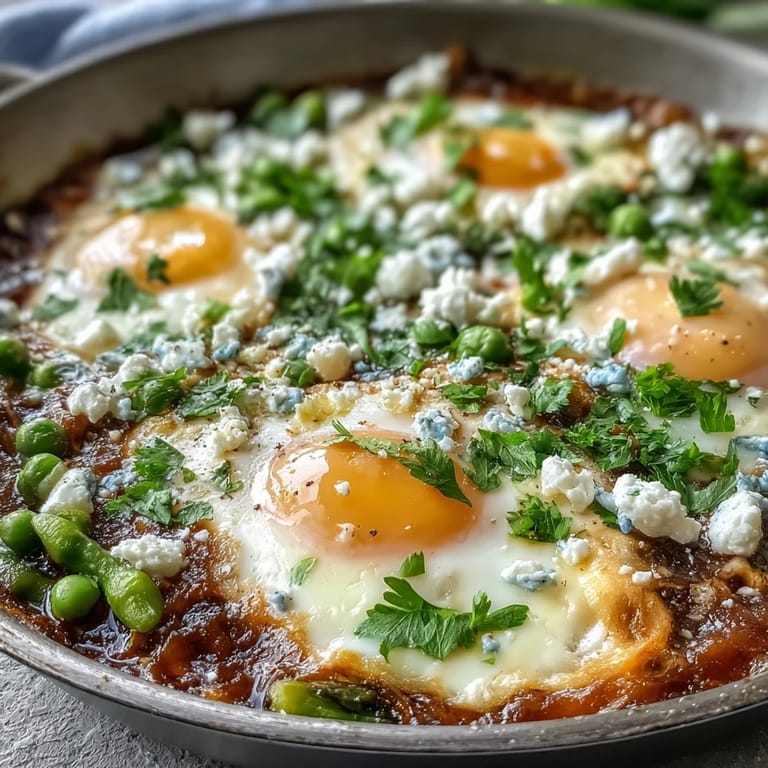
 There's something about spring that makes me want to crack eggs into a bubbling tomato sauce and call it dinner. My friend Zara brought this pea and broad bean shakshuka to a potluck last April, and the whole table went quiet for a moment when we first tasted it—not the usual recipe-blog quiet, but the kind where people are genuinely surprised by how a few humble vegetables and spices can taste so alive. She'd mentioned it was her take on traditional shakshuka, swapped out for whatever greens were at the farmer's market that week. I've been making it constantly ever since, tweaking it based on what's growing, what I'm craving, and honestly, how much energy I have that day.
I made this for my parents on a random Tuesday evening, and my dad—who normally complains about anything green—ate two bowls and asked for the recipe. My mum kept dunking torn pieces of flatbread into the sauce, and I realized this dish has a way of making people want to linger at the table instead of rushing off. That's when I knew it wasn't just good; it was the kind of food that brings people together without announcing itself.
Ingredients
- Fresh or frozen peas: Use whichever you have—frozen peas are honestly just as good and often sweeter since they're picked at peak ripeness.
- Fresh or frozen broad beans: If you're using fresh ones, double-pod them (pop them out of their inner skin) for a silkier texture, though honestly, I skip this step when I'm tired and it still tastes fine.
- Asparagus: Cut into 2-inch pieces so they cook evenly; thin spears work better than thick ones if you want everything tender at the same time.
- Onion and red bell pepper: The onion softens into the sauce and creates a gentle base, while the pepper adds sweetness and color.
- Garlic: Mince it fine so it dissolves into the sauce rather than sitting in chunks.
- Canned chopped tomatoes: Quality matters here more than anywhere else in the recipe; the tomatoes are the backbone of your sauce.
- Tomato paste: Two tablespoons concentrated flavor that deepens everything without making it taste acidic.
- Ground cumin and smoked paprika: These two spices do almost all the heavy lifting; they're what make this taste distinctly shakshuka and not just tomato stew.
- Ground coriander: A whisper of earthiness that keeps the spices from feeling one-dimensional.
- Chili flakes: Optional, but I always add them because the gentle heat balances the sweetness of the peas and beans.
- Eggs: Four large ones, one per person; make sure they're at room temperature so they cook evenly.
- Feta cheese: Crumbled feta adds a salty, creamy contrast that you absolutely need here.
- Fresh parsley or mint: Mint feels more spring-forward to me, but parsley works if that's what you have.
- Extra virgin olive oil: For drizzling at the end—this is not the place to use budget oil.
Tired of Takeout? 🥡
Get 10 meals you can make faster than delivery arrives. Seriously.
One email. No spam. Unsubscribe anytime.
Instructions
- Blanch your spring vegetables:
- Boil salted water in a pot and drop in your peas and broad beans for exactly 2 minutes—you want them cooked just enough to soften but still bright and firm. Scoop them out with a slotted spoon into an ice bath to stop them cooking, then drain and set aside; this keeps them from turning gray and mushy later.
- Build your aromatic base:
- Heat olive oil in a large deep skillet over medium heat and add your chopped onion and diced red bell pepper, stirring occasionally for about 5 minutes until they're softened and the onion turns translucent. You should smell something sweet and savory starting to develop—that's when you know you're on the right track.
- Bloom your spices:
- Add the minced garlic, cumin, smoked paprika, coriander, and chili flakes, stirring constantly for about 1 minute until the kitchen smells like a Middle Eastern spice market. Don't skip this step or rush it; the spices need a little heat to release their essential oils into the oil.
- Deepen with tomato:
- Stir in tomato paste and let it cook in the oil for about a minute, then add your canned tomatoes and their juice. Simmer for about 10 minutes, stirring occasionally, until the sauce thickens slightly and loses some of its raw tomato edge.
- Add your vegetables and season:
- Stir in the blanched peas, broad beans, and asparagus pieces, then taste and season with salt and black pepper. Simmer for 5 to 7 minutes until the asparagus is tender but not limp—it should still have a little resistance when you bite it.
- Create wells and nestle the eggs:
- Use the back of a spoon to create four small wells in the vegetable mixture, spacing them evenly around the pan. Crack one egg into each well—I always crack into a small bowl first just to make sure there are no shells, then gently slide it into place.
- Cook the eggs low and slow:
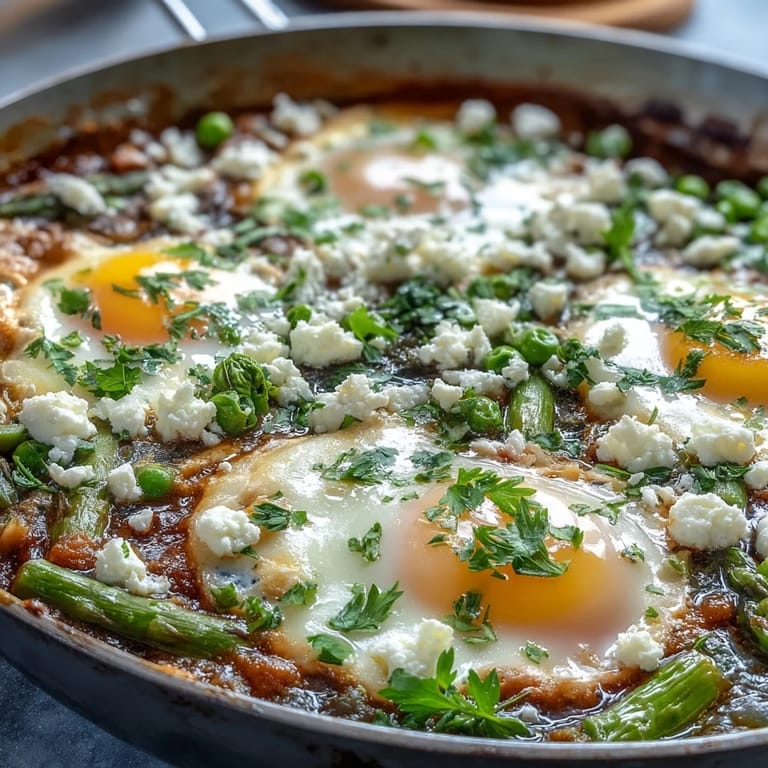
- Cover the pan and reduce the heat to low, cooking for 7 to 10 minutes until the egg whites are set and opaque but the yolks still jiggle slightly when you nudge the pan. You're looking for that perfect moment where the yolk is still runny enough to create a sauce when you break into it.
- Finish and serve:
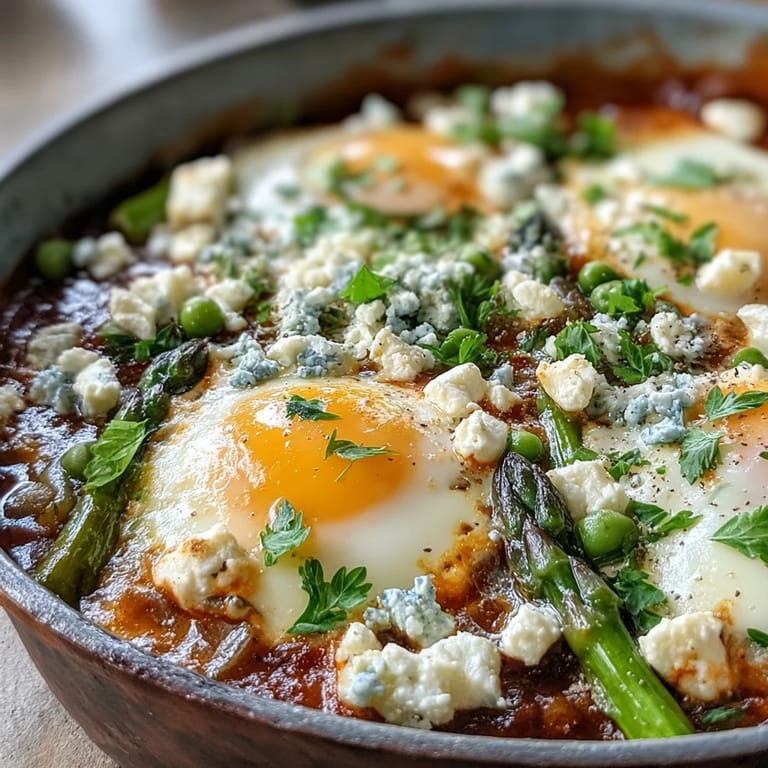
- Remove from heat, sprinkle crumbled feta and fresh herbs over everything, and drizzle generously with good olive oil. Serve directly from the pan with crusty bread or warm flatbread for scooping up the sauce and those precious runny yolks.
 Save to Pinterest
 Last summer, I made this for a meal with friends who were all going through different life changes—new jobs, relocations, breakups, the works. We sat around the kitchen table eating straight from the pan, and somehow the food just made everything feel a little more manageable. There's something about sharing a dish where everyone gets their own egg and their own little section of vegetables that feels democratic and kind.
Why Frozen Vegetables Are Your Friend
I used to feel slightly guilty about reaching for frozen peas and broad beans, but I've come to realize they're often better than fresh ones that have been sitting in supermarket bins for days. Frozen vegetables are typically picked and frozen at peak ripeness, which means they taste brighter and cook more evenly than some fresh options. I've made this shakshuka with both, and honestly, the frozen version sometimes edges out the fresh one, especially in winter when spring vegetables aren't at their best.
The Magic of Runny Yolks
The whole point of shakshuka is that moment when you break into the egg and the yolk flows into the spiced sauce, turning everything creamy and luxurious without any cream. This is why cooking on low heat matters so much—high heat will blow out your yolks before the whites are set, and you'll end up with scrambled eggs in sauce instead of the elegant dish you're after. If you prefer set yolks, you can absolutely do that, but you'll lose that magical element where the yolk becomes part of the sauce.
Variations and Flexibility
This recipe is genuinely flexible in a way that makes it perfect for cooking with whatever you've got on hand. I've made it with zucchini instead of asparagus on a hot summer day, thrown in spinach at the last minute when I had a bunch that needed using, and once even added some artichoke hearts because my partner had bought them on impulse. The spice profile stays the same, so the dish always tastes like itself, just with different vegetables dancing around the edges.
- For a vegan version, skip the eggs and feta, then add a handful of cooked chickpeas or white beans for protein and substance.
- Serve with harissa on the side for people who like serious heat, or offer chili oil as a gentler option.
- If you want to make this ahead, prepare the sauce completely and refrigerate it, then reheat gently and add your eggs just before serving.
 Save to Pinterest
 This dish has become one of my go-to meals for when I want something that feels special but doesn't require hours in the kitchen. It's the kind of food that makes you feel like you're taking care of yourself and anyone lucky enough to be eating with you.
Recipe FAQs
- → Can I use frozen peas and broad beans?
Yes, frozen peas and broad beans work perfectly in this dish. Simply blanch them briefly in boiling water before adding to the tomato sauce. No need to thaw beforehand.
- → How do I know when the eggs are done?
Cook covered on low heat for 7-10 minutes. The whites should be fully set while the yolks remain slightly runny. Gently shake the pan to check—the eggs shouldn't jiggle excessively.
- → What can I serve with this shakshuka?
Crusty bread, flatbreads, or pita are ideal for dipping. A crisp green salad with lemon dressing complements the rich tomato base perfectly.
- → Can I make this vegan?
Absolutely. Omit the eggs and feta cheese. Add chickpeas or white beans during the vegetable simmering step for protein, and finish with nutritional yeast or vegan cheese.
- → How spicy is this dish?
The chili flakes are optional, making this moderately mild to medium-spice. Adjust the amount to your preference, or serve with harissa on the side for those who want extra heat.
- → Can I prepare this ahead?
The vegetable base can be made up to a day in advance and reheated gently. Add the eggs and finish cooking just before serving for best results.