 Save to Pinterest
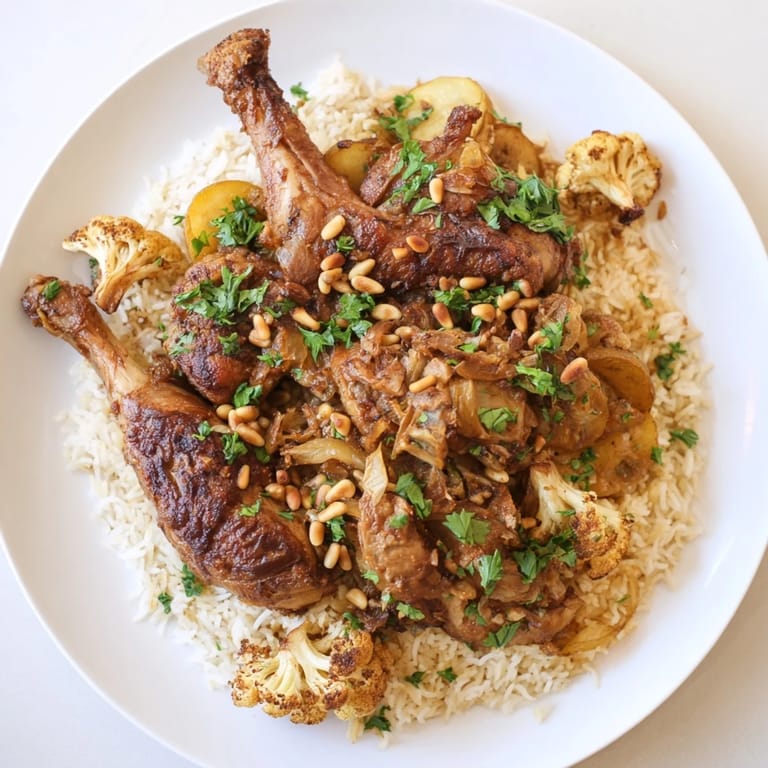
 The first time I watched my grandmother make maklouba, I didn't understand why she kept insisting we had to wait until the very end to see what we'd made. She worked methodically, layering rice and vegetables and chicken into a heavy pot with the kind of care you'd use assembling something precious. Then came the dramatic moment: she placed a platter over the pot, took a breath, and flipped the whole thing upside down. When she lifted away the pot, there it was—a golden, fragrant dome of perfectly spiced rice studded with caramelized vegetables. That theatrical reveal, that moment of suspense before the payoff, is what maklouba means: the name itself is Arabic for 'upside down.'
I made this for a small gathering of friends who'd never tried Palestinian food before, and I remember the nervous energy in my kitchen as I listened to the rice cooking quietly under the lid. The smell alone—cardamom and cinnamon mingling with golden chicken and fried cauliflower—had everyone hovering near the stove asking questions. When I flipped it onto the platter and the whole thing emerged intact, the room actually went quiet for a moment. Someone said it looked too beautiful to eat. We ate it anyway, and there were requests for the recipe before dessert.
Ingredients
- Bone-in chicken pieces (1.2 kg): Dark meat holds its moisture and flavor during the long cooking, giving you tender, succulent results that boneless breasts just can't match.
- Basmati rice (2 cups): The long grains stay distinct and don't turn mushy, which is essential when you're cooking it in broth with layered vegetables and proteins.
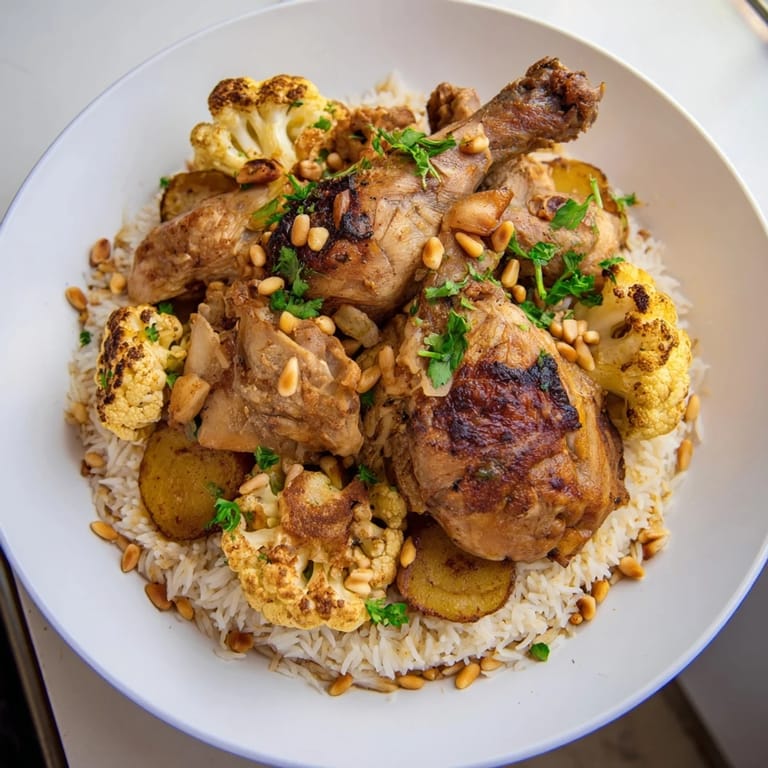
- Cauliflower florets: Golden and crispy on the outside from frying, they soften slightly during assembly but keep a gentle bite that contrasts beautifully with the soft rice.
- Potatoes (2 medium, sliced thin): These become almost creamy at the bottom of the pot where they soak up all the flavored broth, creating a hidden treasure when you invert.
- Large onion, sliced: The onions become the flavor foundation, melting into the broth and infusing everything with sweetness.
- Whole spices (cumin, coriander, cinnamon, turmeric, allspice, cardamom, bay leaves): This combination is the heart of maklouba—toasted briefly in the hot oil, they release their essential oils and create that unmistakable warm, slightly sweet, earthy aroma.
- Chicken stock or water (5 cups): Stock adds depth, but water works perfectly fine if that's what you have—the spices and browned chicken create plenty of flavor on their own.
- Toasted pine nuts or slivered almonds: These are optional but worth the small effort; they add a delicate crunch and nuttiness that feels luxurious without overwhelming the dish.
Tired of Takeout? 🥡
Get 10 meals you can make faster than delivery arrives. Seriously.
One email. No spam. Unsubscribe anytime.
Instructions
- Prepare your rice:
- Rinse the basmati thoroughly under cold water until the water runs clear—this removes excess starch and helps the grains stay separate. Soak it in salted water for 30 minutes, then drain it completely.
- Brown the chicken:
- Heat olive oil in your large pot over medium-high heat. Season the chicken generously and let it brown on all sides without moving it around too much; you want a golden crust that's going to add deep flavor to everything. This takes about 6 minutes total.
- Build the flavor base:
- Remove the chicken and add sliced onion to the same pot, letting it soften until it's translucent and sweet. Add all your spices and toast them for just a minute—this is when your kitchen will smell absolutely incredible. Return the chicken, pour in your broth, bring it to a boil, then reduce the heat and let it simmer gently for 20 minutes. The chicken will cook through, and the broth will carry all those spice flavors.
- Fry your vegetables:
- While the chicken simmers, heat vegetable oil in a deep pan and fry the cauliflower and potatoes in batches until they're golden and crispy on the outside. Don't crowd the pan, and don't rush this—you want a real golden crust that's going to caramelize beautifully in the final dish. Drain everything on paper towels.
- Layer with intention:
- Remove the chicken from the broth and set it aside. In your heavy pot, start with a layer of fried potato slices on the bottom—these will create a golden crust when inverted. Add your chicken pieces next, then the cauliflower, and finally your drained rice, pressing down gently as you go.
- Add the liquid and start cooking:
- Pour enough reserved broth over everything to just cover the rice; it should come up about half an inch above the top layer. Place the pot over medium heat and wait for the liquid to bubble at the edges, then reduce heat to low, cover tightly with a lid, and don't touch it for 35 to 40 minutes. The steam is doing all the work, and peeking will only let it escape.
- Rest and reveal:
- Turn off the heat and let the maklouba rest undisturbed for 10 to 15 minutes. This is the hardest part—waiting. Then place your serving platter over the top of the pot and flip it all in one confident motion. Lift away the pot slowly and carefully, and let the moment sink in before anyone takes a photo.
 Save to Pinterest
 I remember my grandmother telling me that maklouba was invented out of necessity—a way to stretch rice with vegetables and make one chicken feed an entire family. But what started as practical cooking became something almost ceremonial, a dish that demands attention and rewards it with beauty. Now every time I make it, I think about all the hands that have made this same dish in kitchens across Palestine, and how the ritual of the flip connects me to something much bigger than a Tuesday dinner.
The Spice Profile Explained
The genius of maklouba lives in how these spices work together. Cumin and coriander give you a warm, earthy base. Cinnamon adds sweetness and a subtle warmth that somehow feels both cozy and sophisticated. Turmeric brings a golden color and a subtle bitterness that keeps the dish from being one-dimensional. Allspice and cardamom—these are the notes that make people pause and ask what that flavor is, because it's not something they encounter every day. Toast them all together in hot oil for just a minute, and they transform from separate ingredients into one cohesive, haunting flavor that's going to live in your broth and your rice and every single bite.
Working With Layers and Timing
The trickiest part of maklouba isn't the cooking—it's the organization. Everything needs to be ready at specific times: the chicken cooked through but not overcooked, the vegetables fried and cooled, the rice drained and waiting, the broth at the right temperature. I used to try to do everything simultaneously, which meant constantly stopping one task to start another. Now I work backward from the flip: I fry my vegetables first so they have time to cool and drain. I brown the chicken and start the broth while the vegetables cool. I soak and drain the rice before anything else. When I come to the assembly, it's just a matter of layering things that are already ready, and suddenly the whole process feels calm instead of chaotic.
Variations and Additions
Maklouba is flexible enough to adapt to what's in your kitchen or what you're craving. Some families add eggplant sliced thin and fried until it's almost translucent—it adds a silky texture that's lovely. Carrots sliced on a diagonal add sweetness and color. If you're cooking vegetarian, vegetable broth and extra vegetables work beautifully, though you lose some of that rich, meaty depth. A pinch of saffron steeped in warm broth adds luxury and floral notes that elevate everything else. Some people add a layer of yogurt-soaked onions or a handful of roasted chickpeas for extra protein and texture. The structure stays the same; you're just playing with what goes inside.
- A vegetarian version works perfectly with vegetable broth, extra chickpeas, and maybe some soft white cheese crumbled between layers.
- For extra richness, add a pinch of saffron to your broth and let it steep while the chicken simmers.
- Eggplant or carrots make beautiful additions if you want to expand beyond the basic version.
 Save to Pinterest
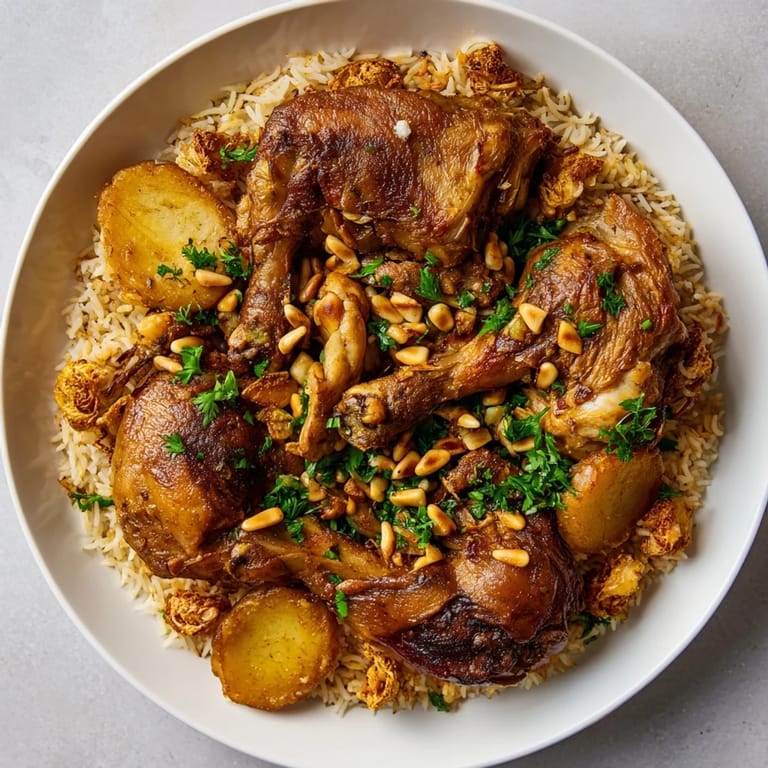
 Maklouba is the kind of dish that transforms a meal into an event. Serve it with cool yogurt to cut through the richness, or alongside a crisp Arabic salad with tomatoes and cucumbers and fresh herbs. Either way, you're serving something that connects you to generations of people who knew how to coax incredible flavor and beauty from simple ingredients and a little bit of theatrical flair.
Recipe FAQs
- → What is Maklouba and how is it traditionally prepared?
Maklouba is a Palestinian layered dish combining spiced rice, chicken, and vegetables that are cooked together, then inverted for serving, revealing a beautiful layered pattern.
- → Which spices enhance the flavor of this dish?
Spices such as cumin, coriander, cinnamon, turmeric, allspice, and cardamom provide a warm and aromatic profile typical of Middle Eastern cuisine.
- → Can vegetables other than cauliflower and potatoes be used?
Yes, variations often include eggplant, carrots, or other seasonal vegetables to add different textures and flavors.
- → How is the layered effect achieved when serving?
After cooking, the pot is carefully inverted onto a serving platter so the bottom becomes the top, displaying the distinct layers beautifully.
- → Are there vegetarian adaptations for this dish?
A vegetarian version omits the chicken and uses vegetable broth, maintaining the layered structure and aromatic spices.
- → What garnishes complement this dish best?
Toasted pine nuts or almonds along with freshly chopped parsley are traditional garnishes, adding crunch and color.