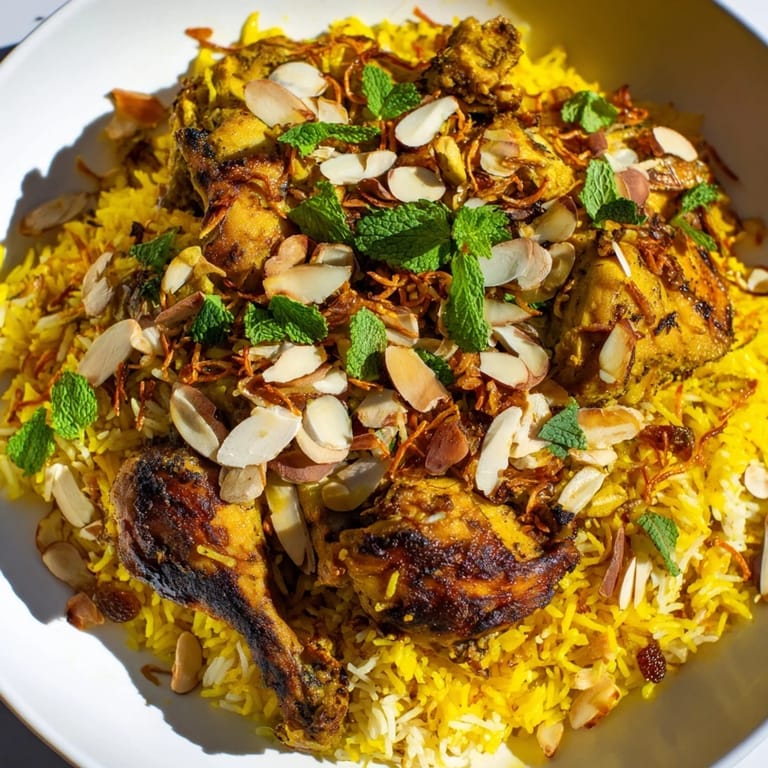
 Save to Pinterest
 My first encounter with proper Kuwaiti biryani wasn't in Kuwait at all—it was in a cramped kitchen in Dubai, where a friend's mother was preparing it for a family gathering. The smell that emerged from that pot was almost intoxicating: saffron, cardamom, cinnamon all mingling with caramelized onions and meat that had been coaxing flavor from its marinade overnight. I watched, mesmerized, as she layered everything with such confidence, as if the rice and meat already knew exactly where they belonged together. That evening, when we finally lifted the foil-covered lid and the steam rose up, I understood why this dish holds such ceremony in Gulf cooking—it's not just food, it's a conversation between spices and time.
Years later, I made this for a dinner party on a night when I was honestly not sure I had it in me—the kind of day where everything felt a bit heavy. But there's something about the rhythm of slicing onions, marinating meat, and watching rice turn from white to golden that pulled me back into the moment. When I served it, my guests fell quiet, and I realized that cooking this dish had actually healed something in me too.
Ingredients
- Bone-in chicken or lamb (900 g): The bone adds incredible depth to the biryani, releasing collagen and flavor as it cooks—don't be tempted to use boneless cuts, as you'll miss that richness.
- Plain yogurt (1 cup): This is your marinade's base and it should be full-fat; it clings to the meat and creates a tender, flavorful coating that absorbs the spices.
- Lemon juice (2 tbsp): The acidity is essential—it tenderizes the meat and brightens the marinade so it doesn't feel heavy.
- Ginger-garlic paste (1 tbsp): Fresh is always better than jarred for this; the sharp bite of fresh ginger cuts through the richness beautifully.
- Ground spices (turmeric, cumin, coriander, chili powder, garam masala): Toast these in a dry pan for 30 seconds before mixing into the yogurt if you want to deepen their flavor—it's a small step that makes a noticeable difference.
- Basmati rice (3 cups): Long-grain basmati is non-negotiable here; the grains should stay separate and slightly firm after cooking, never mushy.
- Whole spices for rice (cloves, cardamom, cinnamon, bay leaf): These perfume the rice from within; don't skip them or swap them out, as they're foundational to the dish's character.
- Ghee (5 tbsp total): This is where the magic happens—ghee carries fat-soluble flavors in a way butter can't quite match, and it browns the onions to a deeper, more complex color.
- Large onions (2 sliced): These need to be thinly sliced and cooked patiently until they're deeply caramelized and almost jammy; this takes time, but it's worth every minute.
- Fresh herbs (coriander and mint): Chop these just before assembly; the difference between freshly chopped and sitting for a while is noticeable in terms of brightness.
- Saffron threads (pinch, soaked in milk): Saffron is expensive, but even a small amount transforms the rice visually and adds a subtle, almost floral note that tells you this is special.
- Nuts and raisins (optional but encouraged): The almonds or cashews should be toasted to release their oils; they add texture and richness that makes each spoonful more interesting.
- Fried onions (for garnish): These add a final crispy element that contrasts beautifully with the soft rice and meat.
Tired of Takeout? 🥡
Get 10 meals you can make faster than delivery arrives. Seriously.
One email. No spam. Unsubscribe anytime.
Instructions
- Build your marinade:
- In a large bowl, combine the yogurt, lemon juice, ginger-garlic paste, and all the ground spices—turmeric, cumin, coriander, chili powder, garam masala, and salt. The mixture should be fragrant and cohesive, like a paste that's ready to embrace the meat. Add your meat pieces and turn them gently, making sure every piece gets coated in that yogurt mixture.
- Let the meat rest:
- Cover the bowl and let it sit in the refrigerator for at least an hour, though overnight is ideal—the yogurt will tenderize the meat while the spices seep in. You'll notice the meat releases some liquid; that's good.
- Prepare the rice:
- Rinse your basmati rice several times under cold running water until the water comes out mostly clear—this removes excess starch so the grains stay separate. Soak the rinsed rice in cold water for 30 minutes, then drain it well.
- Parboil the rice:
- Bring 5 cups of salted water to a rolling boil in a large pot, then add your soaked rice along with the whole spices—cloves, cardamom pods, cinnamon stick, and bay leaf. Cook for 6 to 7 minutes, stirring occasionally; the rice should still be slightly firm in the center when you bite it, not fully cooked. Drain the rice in a fine mesh sieve and set aside.
- Heat your oven:
- Preheat your oven to 180°C (350°F)—this gentle temperature allows the layered biryani to cook through evenly without the rice on top drying out.
- Caramelize the onions:
- In a large ovenproof pot or Dutch oven, heat the ghee over medium heat until it's shimmering. Add your thinly sliced onions and cook patiently for 12 to 15 minutes, stirring often, until they transform into a deep golden-brown color with slightly crispy edges. The onions should smell almost sweet and toasted—this is what gives biryani its distinctive flavor base. Remove about half of them for garnish later.
- Sear the marinated meat:
- With the remaining onions still in the pot, add your marinated meat pieces directly from the bowl, spreading them out in a single layer. Sear for 5 to 7 minutes, letting them brown on the bottom, then stir gently and reduce the heat to low. Cover and cook for 20 to 25 minutes if using chicken, or 35 to 40 minutes if using lamb, until the meat is just tender but not falling apart. Add a splash of water if the pot gets too dry.
- Begin the biryani layers:
- Sprinkle half of your chopped fresh herbs, raisins, and toasted nuts over the meat in the pot. Take half of your par-cooked rice and distribute it evenly over the top layer, breaking up any clumps with your fingers so it settles naturally. Then sprinkle the remaining herbs, raisins, and nuts, and top with the rest of the rice.
- Add the saffron milk:
- Drizzle the saffron milk (the saffron threads soaked in warm milk) evenly over the top layer of rice using a spoon or your fingers to distribute it gently. Dot the surface with small pieces of ghee or butter—these will melt down and keep the top rice from drying out.
- Seal and bake:
- Cover the pot tightly first with aluminum foil, pressing it against the rim, then place the lid on top. This double seal traps steam inside and allows the biryani to cook in its own moisture. Bake in the preheated oven for 30 to 35 minutes; the biryani is done when you hear a faint sizzling sound from underneath if you carefully lift one corner of the foil.
- Rest and serve:
- Remove the pot from the oven and let it stand, covered, for 10 minutes. This resting time allows the flavors to settle and the rice to finish absorbing the aromatic liquid. Gently fluff with a fork, being careful not to break the grains, and serve topped with the reserved caramelized onions and a handful of fried onions.
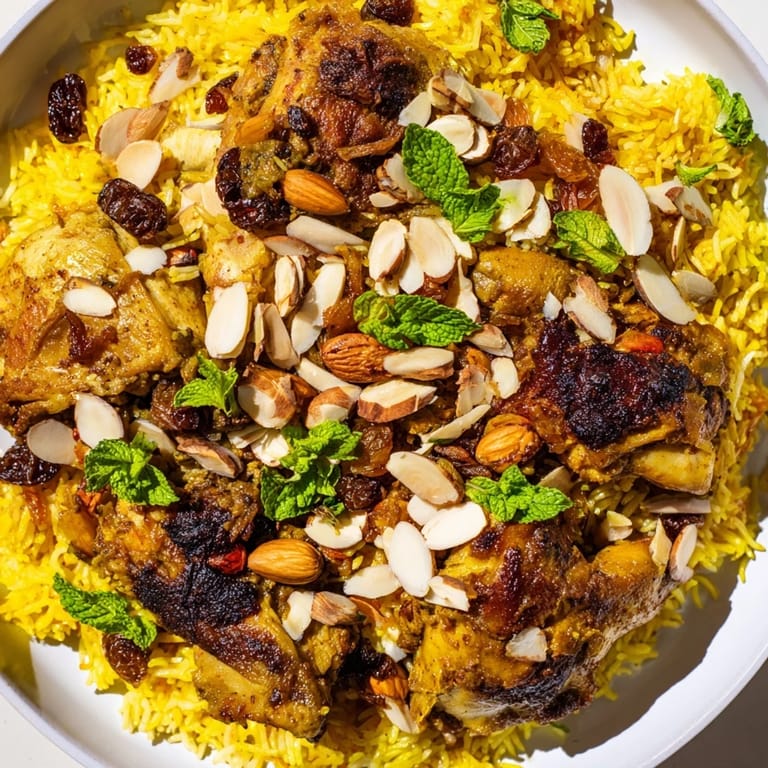 Save to Pinterest
 I remember the moment my biryani clicked for me—when I stopped worrying about whether I was doing it right and trusted the layers, the heat, and the time to do their work. It was a quiet confidence that came from understanding that every step had a reason, and when I lifted that foil 30 minutes later, the rice had absorbed the saffron just right, the meat was so tender it nearly fell from the bone, and the whole kitchen smelled like celebration.
The Spice Story
Kuwaiti biryani isn't spicy in the way some cuisines are—it's aromatic and warm, with spices layered so you taste each one without any single flavor dominating. The turmeric gives a gentle earthiness and golden color, the cumin adds a nutty depth, coriander brings brightness, and the warm spices like cardamom and cinnamon tie everything together in a way that feels almost floral. If you're sensitive to heat, the small amount of chili powder here is really just a whisper; it seasons rather than burns.
Why the Layering Matters
The genius of biryani is that it's not a casserole where everything gets mixed together and loses its identity. By layering the meat, herbs, nuts, and rice deliberately, you ensure that when you scoop into a bowl, you get the tender meat with its concentrated flavors, the fragrant rice that's been perfumed by the saffron and spices, the brightness of the fresh herbs, and the textural contrast of the nuts and caramelized onions all in one spoonful. It's orchestration, really—every component plays its part and the whole is infinitely better than the sum of its parts.
Serving and Pairing Suggestions
Biryani is substantial enough to be the main event—it doesn't need much to complete the meal, though a cool yogurt-based side dish does wonders to balance the richness. A simple cucumber and mint raita, or even just plain yogurt with fresh lime juice, provides a refreshing counterpoint to all those warm spices and caramelized flavors. Some families serve it with a simple tomato and onion salad, while others offer small bowls of achaar (pickled mango) for those who want an extra punch of sourness and spice.
- Always serve biryani warm, straight from the pot, with the fried onions scattered on top just before plating.
- Leftovers actually improve overnight in the refrigerator as the flavors marry; reheat gently in a covered pot with a splash of water.
- If you're feeding a crowd, this recipe doubles easily—just use a larger pot and extend the baking time by 10 to 15 minutes.
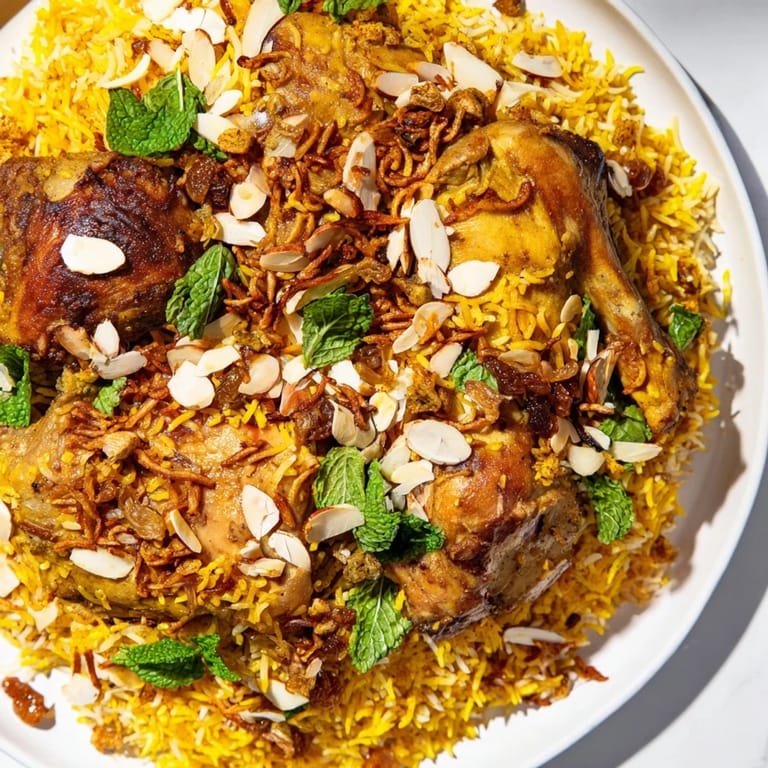 Save to Pinterest
 Every time I make Kuwaiti biryani, I'm reminded that some dishes become traditions because they work—they're reliable, they're beautiful, and they bring people together in a way that feels both festive and comforting. Once you've made it once, you'll understand why.
Recipe FAQs
- → What type of meat works best for this biryani?
Bone-in chicken pieces or lamb cut into serving sizes are ideal for marination and slow cooking, which helps retain moisture and develops rich flavor.
- → How should the basmati rice be prepared?
Rinse the rice until water runs clear, soak for 30 minutes, then partially cook with whole spices until about 70% done before layering.
- → What is the purpose of saffron in this dish?
Saffron soaked in warm milk adds a distinctive aroma, vibrant color, and subtle flavor that elevates the layered rice.
- → Can I substitute the ghee in the biryani?
Yes, unsalted butter or vegetable oil can be used, but ghee adds a richer, nuttier taste to the dish.
- → How long should the marination process be?
Marinating for at least 1 hour allows the spices to penetrate, though overnight in the refrigerator intensifies the flavor further.
- → What garnishes enhance this layered biryani?
Golden fried onions, toasted nuts like almonds or cashews, and fresh herbs such as coriander and mint provide texture and freshness.