 Save to Pinterest
 I'll never forget the day we moved into our new place—boxes everywhere, not a single dish unpacked, but we had invited friends over to celebrate. I stood in an empty kitchen, suddenly remembering that my grandmother always said the best way to welcome people into a home is with an abundant table. That's when I decided to build the most generous cheese and crackers board I could manage. It became our signature move for every open house after that, a way of saying 'we're so glad you're here, help yourself to anything.'
I remember one guest lingering at the board, trying a tiny piece of Brie with fig jam and a cracker, and their whole face just lit up. They told me later that moment—that simple combination of creamy cheese, sweet jam, and crispy bread—made them feel at home before they'd even seen the upstairs. That's what this spread does; it's not just food, it's an invitation.
Ingredients
- Sharp Cheddar, 250g, cut into blocks: This is your bold anchor flavor. I learned to always choose a sharp variety because it stands up beautifully against the sweetness of the fruits and jams without getting lost on the palate.
- Creamy Brie, 250g, cut into wedges: The star that makes people feel fancy. Cut it into wedges rather than slices so guests can take exactly what they want without it crumbling everywhere.
- Manchego, 200g, sliced: This Spanish cheese adds a slightly nutty, caramel note that bridges the gap between mild and bold. It's the cheese people ask about first.
- Blue cheese, 200g, crumbled or in blocks: For the adventurous eaters. I always keep it in a separate small bowl because people either love it or they don't, and that's perfectly fine.
- Smoked Gouda, 200g, cubed: The secret weapon. That subtle smokiness makes everything around it taste better, and guests always ask what the mystery cheese is.
- Assorted crackers, 1 large box (350g): Mix textures—some thin and crispy, some seeded, some plain. The variety keeps people interested and accommodates different preferences.
- Baguette, 1, sliced thinly: Toasted or fresh, these add elegance and substance. I always slice them myself because pre-sliced bread dries out quickly.
- Breadsticks, 1 packet (150g): These stand up visually and give guests something easy to grab. They're your board's architecture.
- Red grapes, 1 cup, in small clusters: The sweetness balances salty cheese perfectly. Keeping them in clusters means guests can take just a few without feeling wasteful.
- Green grapes, 1 cup, in small clusters: A visual pop of different color. Both grape colors together look intentional and generous.
- Apples, 2, sliced and tossed with lemon juice: The lemon juice is non-negotiable—it prevents browning and adds a subtle brightness that ties everything together. Slice them just before guests arrive.
- Dried apricots, 1/2 cup: Their gentle sweetness won't overwhelm like candy would. They pair beautifully with aged cheeses.
- Dried figs, 1/2 cup: These add elegance and a deeper sweetness. They're the fancy touch people notice.
- Roasted almonds, 1 cup: The crunch is essential. It adds textural contrast to the softness of cheese and bread.
- Walnuts, 1 cup: A different kind of crunch with earthy undertones. The combination of both nuts keeps things interesting.
- Honey, 1/2 cup: Serve this in a small bowl with a drizzle spoon. People love drizzling it over aged cheese—it's become one of my favorite flavor combinations.
- Fig or apricot jam, 1/2 cup: This is where magic happens. A small spoonful on a cracker with cheese creates something that tastes restaurant-worthy but took zero effort.
- Whole grain mustard, 1/3 cup: The tiny seeds add texture and a clean bite. Some guests will ignore it, others will wonder how they ever ate cheese without it.
- Cherry tomatoes, 1 cup: Their bright color fills gaps and their freshness cuts through the richness beautifully.
- Baby carrots, 1 cup: These feel lighter and fresher than other vegetables. They remind people they're eating something nourishing, not just indulging.
- Fresh herbs (rosemary, thyme), for garnish: A few sprigs scattered around add aroma and visual sophistication. They suggest care and intention.
Tired of Takeout? 🥡
Get 10 meals you can make faster than delivery arrives. Seriously.
One email. No spam. Unsubscribe anytime.
Instructions
- Start with your biggest pieces:
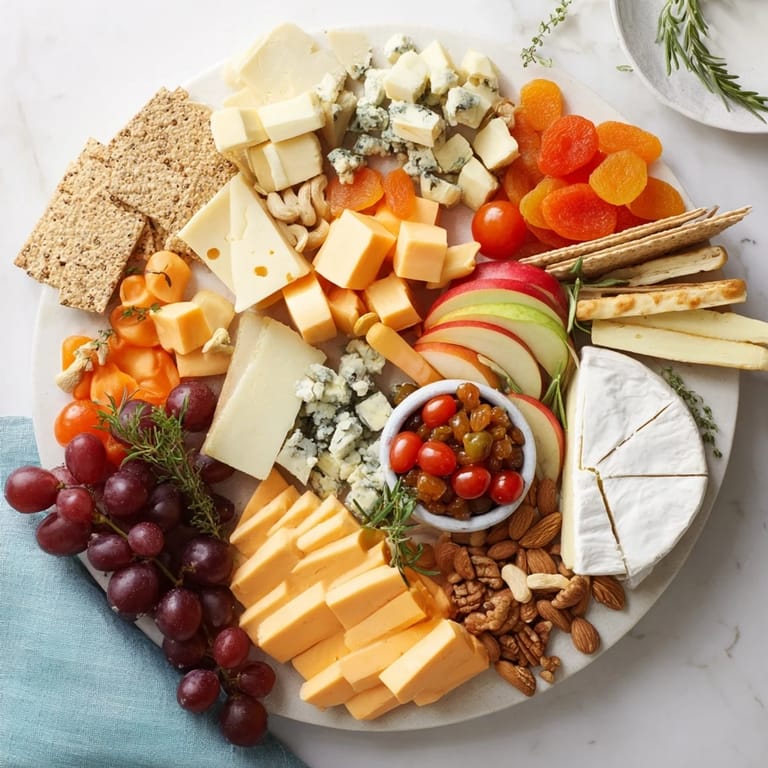
- Place your cheese blocks and wedges first, spacing them about two inches apart. Think of them as anchors. I usually put the most visually interesting cheeses (the Brie's creamy white, the blue's veining) where the eye naturally lands—center and upper corners of your board.
- Create pathways with crackers and bread:
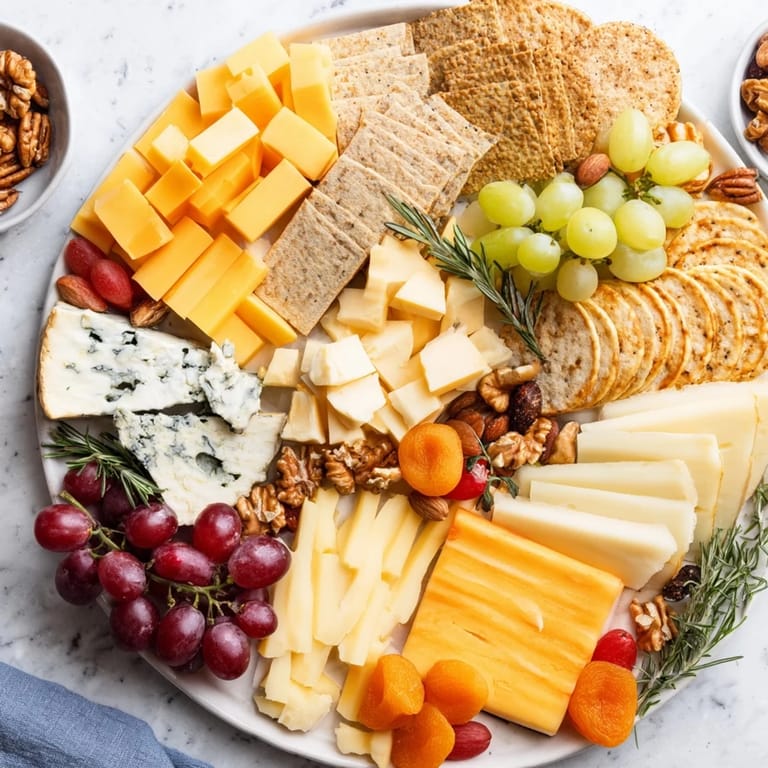
- Now fill the spaces between cheeses with generous piles of crackers and baguette slices. Not skimpy piles—abundant ones. This tells guests 'there's plenty here, you're welcome to take as much as you want.' Lean some breadsticks upright between the cheese blocks for height and visual interest.
- Tuck fruit into the remaining gaps:
- This is where it gets beautiful. Nestle bunches of grapes (keep them on the vine if possible, it looks more generous), scatter your apple slices, and arrange the dried fruit. The fresh fruit should feel nestled, not scattered randomly—each piece visible and inviting.
- Add your flavor amplifiers in small vessels:
- Place the honey, jam, and mustard in small bowls or ramekins. Position them where they're visible but don't overwhelm—usually in the lower third of the board. These are flavor multipliers, and their placement should say 'if you want to try something special, here's how.'
- Fill remaining gaps with vegetables:
- Tuck cherry tomatoes and baby carrots into any spaces. They add color, freshness, and balance all the richness. Arrange them so they peek out—they're supporting players, not the main event.
- Add the final touch:
- Scatter 3-4 sprigs of fresh rosemary or thyme across the board. It adds aroma (people smell it before they see it, which is wonderful), visual sophistication, and says 'this was thoughtfully prepared.' This step should feel like the last brushstroke on a painting.
- Arm your guests for success:
- Place small cheese knives, spreaders, toothpicks, and cocktail forks strategically around the board. Put a knife next to the Brie (it's soft and needs one), spreaders by the jam and mustard. These small tools transform the experience from wondering 'how do I eat this?' to confidently serving themselves.
- Keep an eye on the gaps:
- As people eat, you'll notice empty spaces opening up. This is your moment to gently replenish—add a few more crackers, top up the nuts, add fresh grapes. The goal is for it to look abundant the entire time, which is easier than it sounds because you have so much food.
 Save to Pinterest
 There's something about an open house that's more about feeling welcomed than about the food itself. I've watched people relax the moment they see a generous board—their shoulders drop, they smile, and they start saying yes to trying new things. That spread becomes the quiet ambassador of your home.
The Secret to Making This Look Effortless
The irony of this board is that it looks like it took hours when it actually takes maybe 30 minutes. The real secret is understanding that abundance is your design principle. You're not creating balance in the artistic sense; you're creating abundance in the practical sense. More cheese blocks than you think you need. More crackers than seems logical. More fruit scattered around. This isn't wasteful—it's generous, and generosity is what makes people feel at home. I learned this from watching my aunt, who could make a cheese board look like the spread at a five-star hotel using mostly the same ingredients anyone could find at their grocery store. Her trick? She just used more of everything and didn't apologize for it.
Customizing for Your Crowd
I've made this board for everything from casual housewarming to fancy wine nights, and the beauty is that you can adjust it based on who's coming. Add prosciutto, salami, or other cured meats for guests who want something savory beyond cheese. Swap out cheeses based on what's available locally or what you know people love—I once replaced the Manchego with a creamy goat cheese because that's what the local market had that day, and honestly, it was even better. For gluten-free friends, include fresh vegetable slices (cucumber rounds are surprisingly elegant) or gluten-free crackers. The structure stays the same; only the details change.
Pairing and Presentation Tips
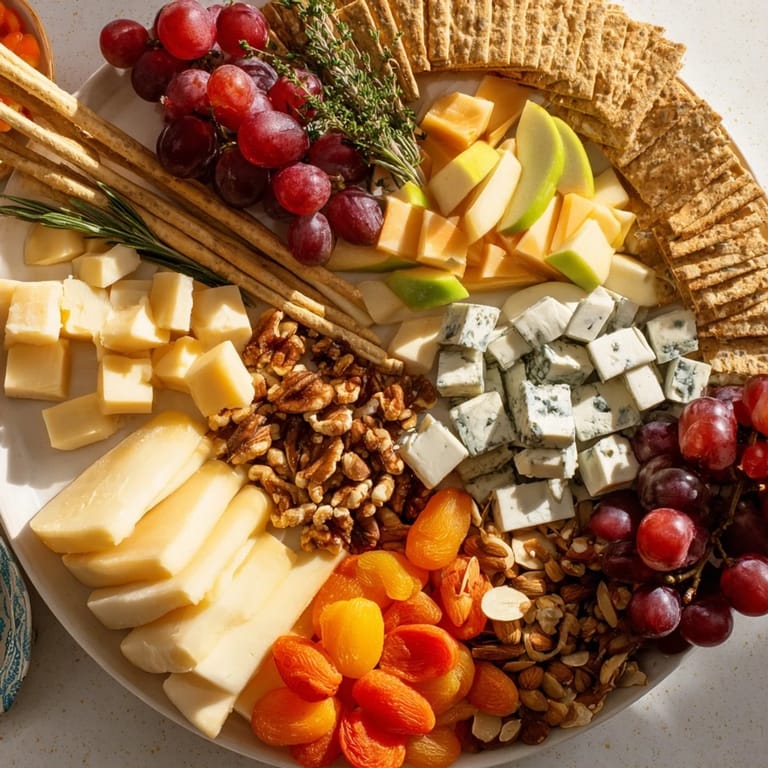
This board drinks well with both white wine and sparkling wine—the acidity cuts through the richness of the cheese beautifully. But it's also perfect with just water or coffee, depending on the time of day. The presentation matters more than you might think. Use your largest board or platter because white space makes things look sparse, while a full board in proportion to its size looks abundant. If you don't have a large enough board, use two smaller ones and position them close together—it feels like one generous offering. And here's something I discovered by accident: if you chill your board in the freezer for 15 minutes before adding cheeses, the soft cheeses hold their shape better and everything looks fresher longer.
- Remember that room-temperature cheese tastes better than cold cheese, so take your board out of the fridge 15 minutes before guests arrive for maximum flavor
- Use a marble or wooden board if you can—they keep cheese at a steadier temperature than ceramic and look more intentional
- Label your cheeses if they're unusual varieties so guests know what they're trying and can ask questions
 Save to Pinterest
 At the end of the day, this board is less about the specific cheeses and crackers and more about what it represents—a home that's open, abundant, and genuinely happy to have you there. That's the feeling worth creating.
Recipe FAQs
- → What types of cheeses work best for this spread?
Sharp cheddar, creamy brie, smoky gouda, manchego, and blue cheese all bring distinct flavors and textures, making the assortment appealing to various tastes.
- → How should the cheeses be arranged for easy serving?
Place cheese blocks and wedges spaced evenly across a large board, leaving gaps for crackers, fruits, and condiments to create an accessible layout.
- → What accompaniments complement the cheeses well?
Assorted crackers, sliced baguette, fresh grapes, apples, dried apricots and figs, roasted almonds, walnuts, honey, and jam add variety and balance.
- → How can I include vegetarian options?
This spread naturally includes vegetarian-friendly cheeses and nuts; you can omit cured meats and focus on fresh produce and condiments.
- → What tools should be provided for guests?
Offer cheese knives, spreaders, toothpicks, cocktail forks, and serving tongs to facilitate easy picking and spreading throughout the event.
- → Can this spread accommodate dietary restrictions?
Yes, consider gluten-free crackers or sliced cucumbers for gluten-sensitive guests, and omit nuts for nut allergies.