 Save to Pinterest
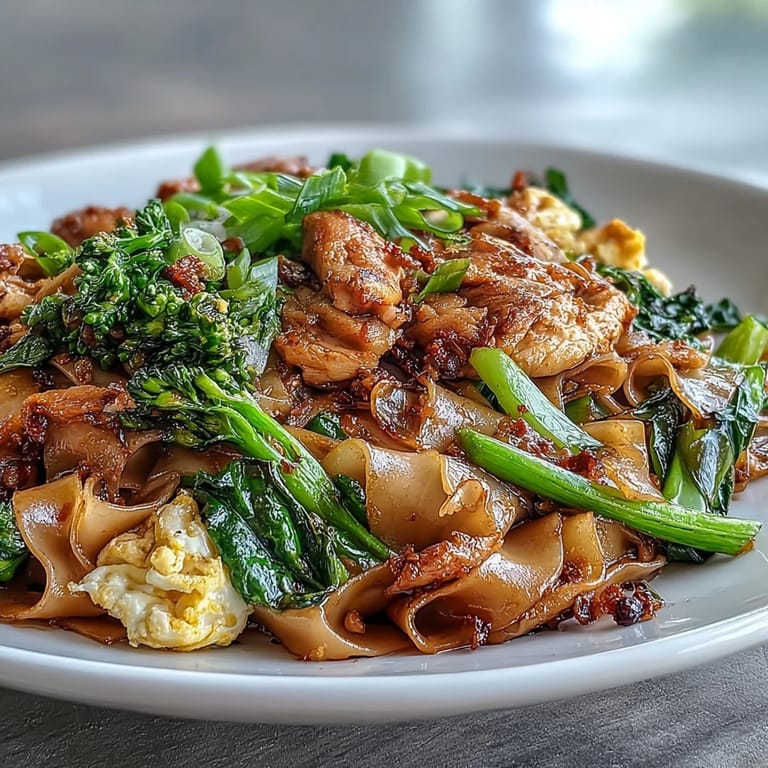
 The first time I tasted real Pad See Ew was at a tiny street stall in Bangkok where the wok hissed so loud I could barely hear my own thoughts. The noodles arrived at my table with that coveted charred aroma that only comes from extreme heat and years of practice. I spent months trying to recreate that experience at home, burning through countless batches of sticky, broken noodles until I finally understood the rhythm.
Last winter, my roommate came home from a terrible shift at work looking absolutely defeated. I whipped up a batch of these noodles, the smell of garlic and caramelized sauce filling our tiny apartment. She took one bite and actually started crying, not from sadness but because sometimes comfort food finds you exactly when you need it.
Ingredients
- 200g dried wide rice stick noodles or 450g fresh wide flat rice noodles: Fresh noodles from an Asian market are ideal but dried works beautifully if soaked properly
- 1 cup boneless skinless chicken thighs thinly sliced: Thighs stay tender during high heat cooking unlike breasts which can dry out quickly
- 4 stems Chinese broccoli gai lan: The stems add perfect crunch while the leaves wilt into the sauce beautifully
- 1 large egg: Creates those delicious scrambled ribbons throughout the noodles
- 2 tsp dark soy sauce: Provides the gorgeous dark color and deep caramel flavor
- 1½ tbsp oyster sauce: Adds umami richness that makes the sauce taste complex
- 1 tbsp light soy sauce: Balances the dark soy with saltiness
- 2 tsp white vinegar: Cuts through the sweetness and adds brightness
- 2 tsp sugar: Essential for achieving that authentic Thai flavor profile
- 2 cloves garlic very finely chopped: The foundation of flavor that infuses every strand
- 3 tbsp peanut or vegetable oil divided: Needed for each stage of cooking to prevent sticking
Tired of Takeout? 🥡
Get 10 meals you can make faster than delivery arrives. Seriously.
One email. No spam. Unsubscribe anytime.
Instructions
- Prepare the Noodles:
- If using dried rice noodles, soak in warm water for about 30 minutes until pliable but not fully cooked. Drain and set aside. If using fresh rice noodles, gently separate and set aside.
- Mix the Sauce:
- In a small bowl, combine dark soy sauce, oyster sauce, light soy sauce, white vinegar, and sugar. Stir until sugar dissolves completely.
- Prepare the Chinese Broccoli:
- Cut stems into 2 inch pieces and leaves into larger pieces to ensure even cooking.
- Cook the Chicken:
- Heat 1 tbsp oil in a wok or large skillet over high heat. Add sliced chicken and stir fry until just cooked through. Remove and set aside.
- Stir Fry the Chinese Broccoli:
- In the same wok, add 1 tbsp oil. Add broccoli stems and stir fry 1 minute. Add leaves and stir fry until just wilted. Remove and set aside.
- Scramble the Egg:
- Add remaining 1 tbsp oil to the wok. Add garlic and sauté a few seconds until fragrant. Crack in the egg and scramble quickly until just set.
- Combine Noodles and Sauce:
- Add soaked or fresh noodles to the wok. Pour sauce over noodles and toss well to coat evenly.
- Finish the Dish:
- Return chicken and Chinese broccoli to the wok. Stir fry everything together for 1 to 2 minutes until hot and well combined.
- Serve:
- Divide Pad See Ew among serving plates and serve immediately while hot and fragrant.
 Save to Pinterest
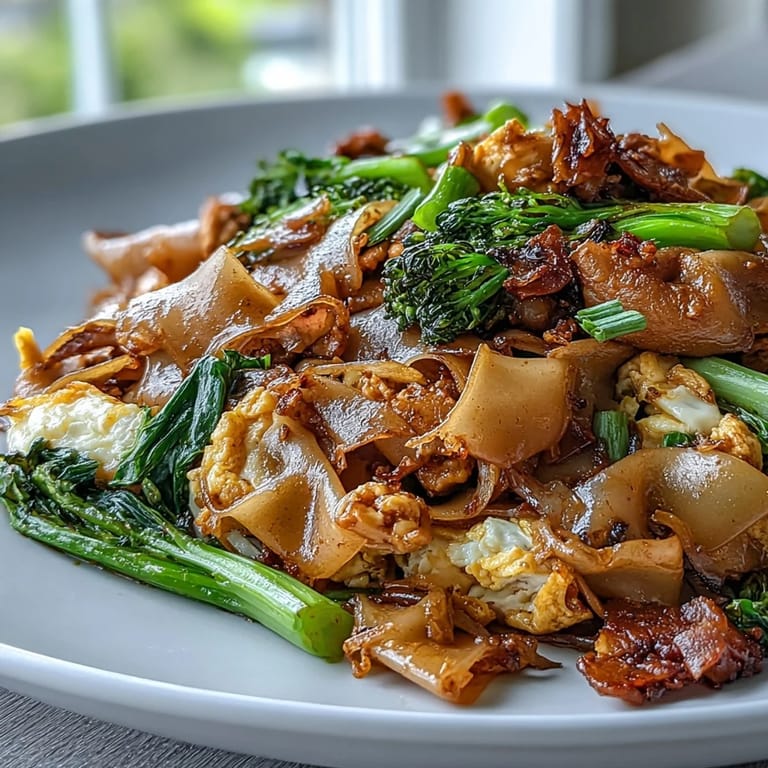
 My sister claims she could eat these noodles three times a week without getting bored, and honestly, I am not far behind her. There is something deeply satisfying about how the sauce clings to every single strand.
Choosing the Right Noodles
Fresh wide rice noodles are worth seeking out at Asian markets because they have the perfect chewy texture. If you can only find dried ones, do not soak them too long or they will turn to mush in the wok.
Mastering the Wok
The secret to restaurant quality Pad See Ew is getting your wok smoking hot before adding ingredients. Do not be afraid of the heat because that is what creates the beautiful caramelization on the noodles.
Perfecting the Sauce Balance
Every brand of soy sauce has different saltiness, so taste your sauce before adding it to the noodles. You can always adjust with a pinch more sugar or vinegar to find your ideal balance.
- Substitute chicken thighs with beef, pork, tofu, or shrimp if preferred
- Chinese broccoli can be replaced with broccolini or regular broccoli in a pinch
- Serve with lime wedges for a fresh finish that cuts through the richness
 Save to Pinterest
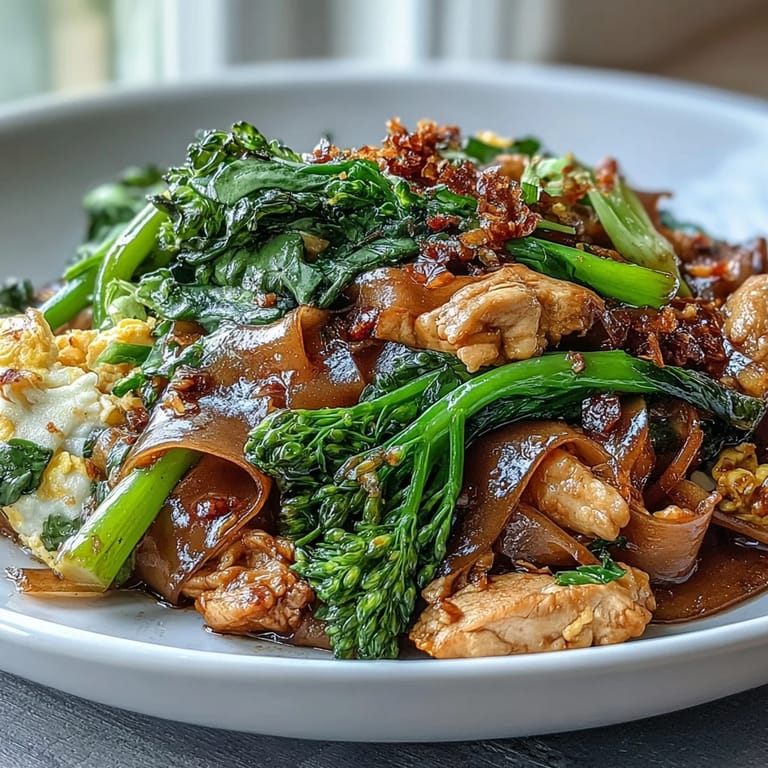
 Grab some chopsticks and dig in while the noodles are still hot and slightly charred. That first bite will transport you straight to a busy street corner in Bangkok.
Recipe FAQs
- → Can I use fresh rice noodles instead of dried?
Fresh wide rice noodles actually work best for Pad See Ew and are what Thai street vendors traditionally use. If you can find them at an Asian market, simply separate the noodles gently before cooking—no soaking required. They'll have a more tender, authentic texture.
- → What's the best protein substitute for chicken?
Thinly sliced beef, pork, or shrimp all work wonderfully in this dish. For a vegetarian version, use firm tofu pressed and cut into slices. The cooking time remains similar across all proteins—just cook until done before setting aside.
- → Why is my dish turning out too salty?
The sauce combines three salty ingredients (dark soy, light soy, and oyster sauce). If you're sensitive to salt, reduce the light soy sauce by half. You can always add more at the end if needed. The dark soy provides color more than saltiness.
- → Can I make Pad See Ew without a wok?
A large skillet or frying pan works perfectly fine. The key is using high heat and cooking in batches like the recipe specifies. A wok's shape helps with tossing, but a wide pan with sloping sides is a great alternative for home cooks.
- → How do I prevent noodles from sticking to the wok?
Make sure your wok or pan is properly heated before adding oil. Keep the noodles moving constantly once added, and don't overcrowd the pan. If needed, add a small splash of water to create steam and help release stuck noodles.
- → What vegetables can replace Chinese broccoli?
Broccolini is the closest substitute with a similar slight bitterness and crunch. Regular broccoli works too—just cut stems smaller and add a minute earlier since they're denser. Bok choy or baby bok choy also make excellent alternatives.