 Save to Pinterest
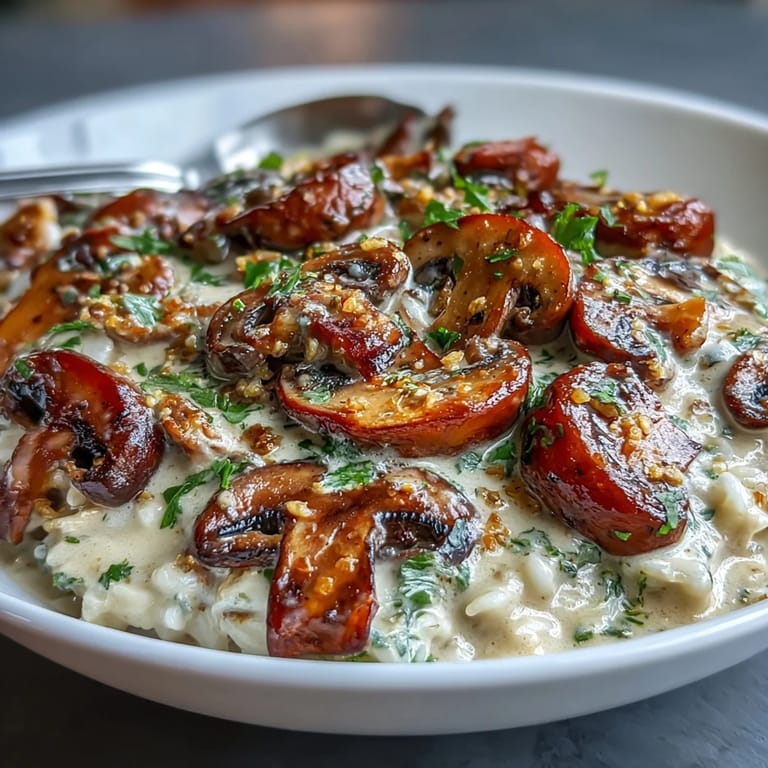
 My friend Marco called one rainy Tuesday asking if I could veganize his grandmother's stroganoff recipe, and honestly, I laughed at first. But standing in my kitchen that evening with a pile of mushrooms and a can of coconut milk, something clicked. The earthy smell of sautéing mushrooms filled the space, and I realized this wasn't about replacing anything—it was about discovering what stroganoff could become when you let go of tradition and just cook with what feels right. That first spoonful over brown rice made Marco cry, which tells you everything.
I made this for a potluck once where half the table was vegan and half weren't, and watch how it went completely silent at first—people just eating, no talking. Then someone asked for seconds before the main course was even finished. That's when I knew the recipe worked, not because it was clever or trendy, but because it tasted like actual comfort.
Ingredients
- Brown rice (1 cup): The whole grain base holds up beautifully to the creamy sauce without turning mushy, and it adds a gentle nuttiness that makes everything taste more intentional.
- Olive oil (1 tbsp): You need just enough to get things moving, but not so much that the mushrooms steam instead of sear.
- Yellow onion (1 medium, finely chopped): This is your flavor foundation—take time with it, let it soften properly, and you'll taste the difference.
- Garlic cloves (3, minced): Don't skip the mincing step; it distributes the flavor evenly and prevents bitter burnt bits.
- Mixed mushrooms (500 g): Use a combination if you can—cremini, button, and portobello each bring different textures and depths, making the dish more interesting.
- Smoked paprika (1 tsp): This ingredient carries more weight than you'd expect; it gives the stroganoff that authentic, almost meaty complexity.
- Dried thyme (1 tsp): Thyme is what makes this taste Russian rather than generic—don't substitute it carelessly.
- All-purpose flour (2 tbsp): This thickens the sauce naturally; cook it with the mushrooms first so it loses its raw taste.
- Vegetable broth (1.5 cups): Low-sodium lets you control the salt and taste the actual dish instead of salt.
- Soy sauce (2 tbsp): This adds umami depth that makes people wonder what your secret ingredient is—it's this.
- Coconut milk or non-dairy cream (0.5 cup): Full-fat coconut milk creates that silky texture; unsweetened non-dairy cream works too if coconut isn't your thing.
- Nutritional yeast (2 tbsp): This is what gives the sauce a subtle savory richness that mimics the missing dairy without being noticeable.
- Salt, black pepper, and lemon juice: These final seasonings brighten everything up and prevent the sauce from tasting flat.
- Fresh parsley (2 tbsp): The color matters, but more importantly, it adds a fresh contrast to the deep, cozy sauce.
Tired of Takeout? 🥡
Get 10 meals you can make faster than delivery arrives. Seriously.
One email. No spam. Unsubscribe anytime.
Instructions
- Rinse and start the brown rice:
- Run cold water over your brown rice, swishing it around—this removes surface starch and prevents sticky clumping. Combine with water and salt in a saucepan, bring to a boil, then lower the heat and cover; it'll simmer quietly for 35 to 40 minutes.
- Heat the oil and soften the onion:
- Get your large skillet medium-hot, add olive oil, then add the chopped onion. Stir it around for 3 to 4 minutes until it's soft and translucent, not brown—this is your flavor base, so don't rush it.
- Bloom the garlic:
- Add minced garlic and let it sit for about 1 minute, just until you smell it in the air. This one-minute step matters; garlic burns quickly and tastes bitter if you're not careful.
- Cook the mushrooms until golden:
- Add your sliced mushrooms and let them cook undisturbed for a minute or two, then stir occasionally. They'll release their moisture first, then start to brown around the edges—that's when the magic happens, around 6 to 8 minutes total.
- Toast the spices and flour:
- Sprinkle in paprika, thyme, and flour, stirring everything together so the mushrooms are coated. Cook for 1 minute to cook out the raw flour taste and bloom the spices.
- Build the sauce base:
- Slowly pour in the vegetable broth while stirring to prevent lumps from forming. Add soy sauce, bring to a simmer, and let it bubble gently for 3 to 4 minutes until it starts to thicken.
- Cream it up:
- Stir in the coconut milk and nutritional yeast, then simmer for another 2 to 3 minutes until the sauce looks silky and coats the back of a spoon. This is where it transforms into something genuinely luxurious.
- Season and taste:
- Add a pinch of salt, fresh black pepper, lemon juice, and chopped parsley. Taste it, then adjust—you might want more salt or lemon, and that's perfectly fine.
- Plate and serve:
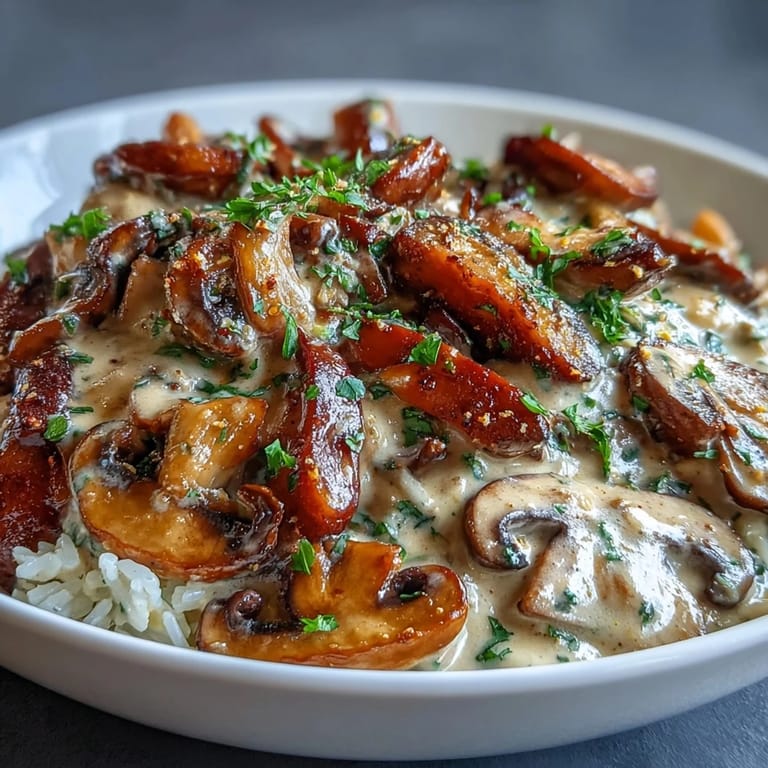
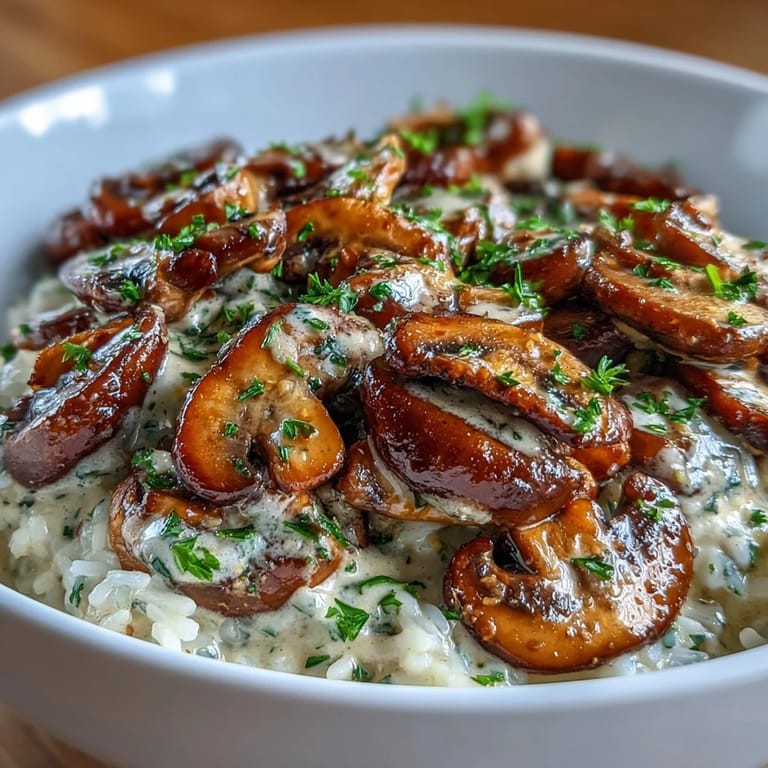
- Spoon the stroganoff over fluffy brown rice and scatter more parsley on top for color and brightness.
 Save to Pinterest
 There's something about sitting down to a bowl of this on a cold evening, steam rising off the rice, the sauce coating each grain—it feels less like dinner and more like giving yourself permission to rest. Food like this reminds you that vegan cooking isn't about what you're missing; it's about what you're discovering.
Why Brown Rice Instead of White
Brown rice has a subtly nutty flavor that holds its own against the deep, savory sauce instead of disappearing into it. The slightly chewy texture also catches and holds the stroganoff better, so every forkful has both elements working together. I learned this the hard way after making stroganoff over white rice once and feeling like the sauce needed more personality to compensate.
Making It Your Own
The beauty of stroganoff is that it's forgiving and adaptable, which means you can play with it. Some people swear by cashew cream instead of coconut milk for a less tropical flavor, and honestly, they're onto something—it's richer and more neutral. Others add a splash of dry white wine when they add the mushrooms, or swap in mashed potatoes for the rice if they're feeling less grainy that day.
Storage and Reheating Tips
This stroganoff actually tastes better the next day once the flavors have settled in together, which is a gift when you need an easy lunch. Keep it separate from the rice in an airtight container in the refrigerator for up to 4 days, and reheat gently on the stove with a splash of broth if it's gotten thick. The sauce can also be frozen for up to 3 months if you want to make it ahead for busy weeks.
- Reheat slowly over medium-low heat so the sauce doesn't break or separate.
- Taste and adjust seasonings when reheating; flavors sometimes mellow out after sitting.
- Fresh parsley on top brings it back to life like you just made it.
 Save to Pinterest
 This dish proves that you don't need fancy techniques or rare ingredients to create something genuinely nourishing and delicious. Cook it for yourself, cook it for friends, and watch how something so simple becomes the meal everyone remembers.
Recipe FAQs
- → How do I cook the brown rice perfectly?
Rinse the brown rice thoroughly, then simmer in salted water on low heat, covered, for 35–40 minutes until tender and water is absorbed. Fluff with a fork before serving.
- → Can I substitute different mushrooms?
Yes, feel free to use cremini, button, portobello, or a mix to achieve a rich, earthy flavor and satisfying texture.
- → What thickens the stroganoff sauce?
A combination of all-purpose flour and vegetable broth thickens the sauce, making it creamy and silky while coating the mushrooms beautifully.
- → Is coconut milk essential for creaminess?
Coconut milk adds a subtle richness and smoothness, but cashew cream can be used as an alternative for a different creamy profile.
- → How can I add extra depth to the dish?
A splash of white wine added with the mushrooms enhances the overall flavor with subtle acidity and aroma.
- → Is this dish suitable for gluten-free diets?
Using tamari instead of soy sauce and gluten-free flour keeps the dish gluten-free without compromising taste.