 Save to Pinterest
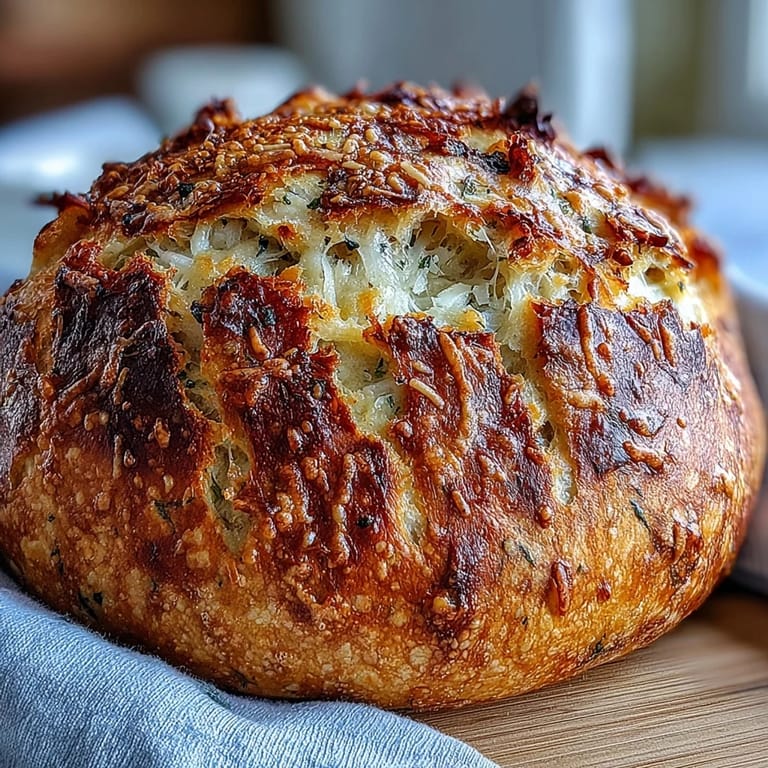
 Bring bakery-quality results to your home kitchen with this Perfect Parmesan Garlic Artisan Bread. This rustic loaf features a golden-brown crust and a tender, flavorful interior filled with savory Parmesan cheese and aromatic garlic, making it the ideal companion for your favorite dinner dishes.
Save to Pinterest This easy artisan bread relies on a slow rise to develop deep flavor and a beautiful texture. By letting the dough sit overnight, you allow the yeast to work its magic, resulting in a loaf that tastes just like it came from a professional bakery.
Ingredients
Tired of Takeout? 🥡
Get 10 meals you can make faster than delivery arrives. Seriously.
One email. No spam. Unsubscribe anytime.
- Dough
- 3 1/4 cups (390 g) all-purpose flour
- 2 teaspoons (10 g) salt
- 1 teaspoon (5 g) granulated sugar
- 2 teaspoons (7 g) active dry yeast
- 1 1/2 cups (360 ml) warm water (about 110°F/43°C)
- 2 tablespoons (30 ml) olive oil
- Add-ins
- 1 cup (100 g) freshly grated Parmesan cheese
- 2–3 cloves garlic, minced
- 1 tablespoon (15 g) chopped fresh rosemary or parsley (optional)
Instructions
- Step 1
- In a large mixing bowl, combine the flour, salt, and sugar.
- Step 2
- In a small bowl, dissolve the yeast in the warm water. Let stand for 5 minutes until foamy.
- Step 3
- Pour the yeast mixture and olive oil into the dry ingredients. Mix with a wooden spoon until a sticky dough forms.
- Step 4
- Fold in the Parmesan cheese, minced garlic, and optional herbs. Stir until evenly incorporated.
- Step 5
- Cover the bowl with a clean towel or plastic wrap. Let rise in a warm place for 12–18 hours, or overnight, until doubled and bubbly.
- Step 6
- Turn the risen dough onto a floured surface. Gently shape into a round loaf, handling lightly to retain airiness.
- Step 7
- Place the loaf on a piece of parchment paper. Let rest for 30 minutes. Meanwhile, preheat your oven to 450°F (230°C), placing a Dutch oven inside to heat.
- Step 8
- Score the top of the loaf with a sharp knife or lame.
- Step 9
- Using oven mitts, carefully transfer the dough (with parchment) into the hot Dutch oven. Cover with the lid and bake for 30 minutes.
- Step 10
- Remove the lid and bake for another 15 minutes, until golden and the loaf sounds hollow when tapped.
- Step 11
- Transfer to a wire rack and cool for at least 30 minutes before slicing.
Zusatztipps für die Zubereitung
For the best results, do not rush the rising stage; an overnight ferment is key to developing flavor. Always preheat your Dutch oven thoroughly, as the intense heat is what creates that signature crisp artisan crust.
Varianten und Anpassungen
You can easily customize this loaf by experimenting with other hard cheeses like Asiago or Gruyère. If you prefer different aromatics, try swapping the rosemary for fresh thyme or oregano.
Serviervorschläge
This bread is best enjoyed warm. Serve it with a side of softened butter, a dish of high-quality olive oil for dipping, or alongside a steaming bowl of tomato soup for a cozy dinner.
 Save to Pinterest
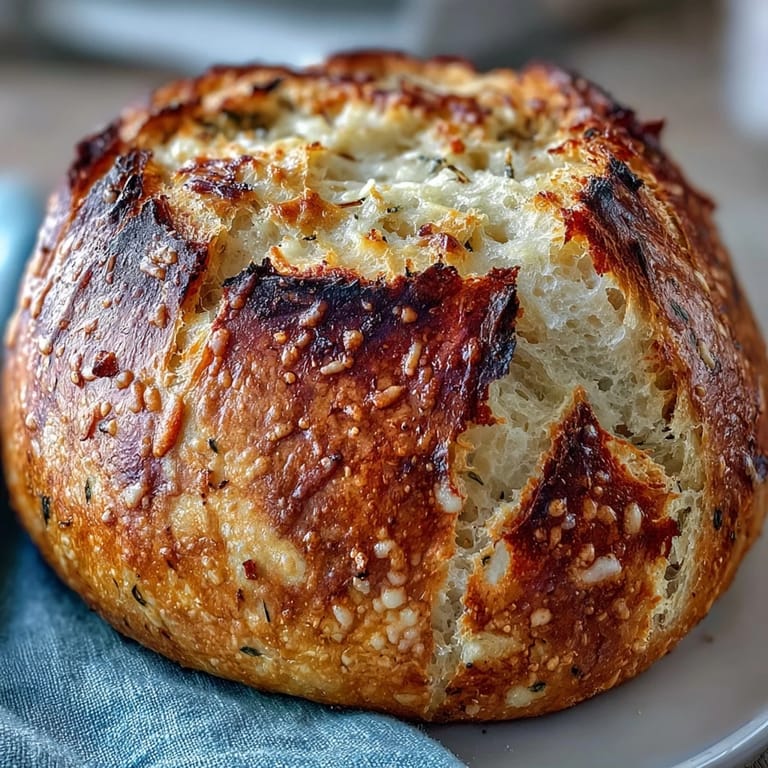
 Enjoy the satisfying crunch and aromatic, cheesy center of this homemade artisan masterpiece. It is a simple way to bring a touch of European bakery flair to your table.
Recipe FAQs
- → Why does the dough need to rise for 12-18 hours?
The extended fermentation allows natural enzymes to break down starches, creating complex flavors and a tender, airy crumb structure. This slow rise also develops subtle tanginess characteristic of traditional European breads.
- → Can I use instant yeast instead of active dry yeast?
Yes, you can substitute instant yeast directly without dissolving it in warm water first. Reduce the amount slightly to 1 3/4 teaspoons and mix it directly with the flour.
- → What if I don't have a Dutch oven?
A heavy cast iron pot with a tight-fitting lid or even a baking stone with a large metal bowl inverted over the loaf can create similar steam. The key is trapping moisture during the initial baking phase.
- → Can I freeze the dough or baked loaf?
Freeze the fully baked loaf once cooled, wrapped tightly in plastic and foil, for up to 3 months. Thaw at room temperature and refresh in a 350°F oven for 10 minutes. Avoid freezing the unbaked dough.
- → How do I know when the bread is fully baked?
The crust should be deep golden brown, and the loaf should sound hollow when tapped on the bottom. An instant thermometer inserted into the center should read 200-205°F for optimal texture.
- → Can I reduce the garlic amount?
Absolutely. Start with 1 clove minced if you prefer milder flavor. The garlic mellows significantly during baking, so 2-3 cloves provide a subtle background note rather than overwhelming intensity.