 Save to Pinterest
 There's something almost meditative about the first time you stand at a market stall in Beirut, watching someone assemble tabbouleh with the kind of speed that makes you wonder if your hands will ever move that fast. But what stuck with me wasn't the rush—it was the quiet moment afterward, when my cousin pressed a forkful into my mouth and I tasted something so bright, so alive with lemon and parsley, that I understood why this salad has survived generations. It's not fancy. It doesn't need to be. Just bulgur, herbs, vegetables, and the kind of patience that lets flavors find each other.
I made this for a potluck on a sweltering August evening when everyone was too hot to think about food, and somehow, everyone circled back to the tabbouleh. A friend who'd never had it before asked for the recipe right there on the patio, fork in hand, and I realized then that some dishes have a way of making people feel welcome without trying too hard.
Ingredients
- Fine bulgur wheat: Use fine, not medium—the difference is real, and fine bulgur softens gently without becoming mushy.
- Boiling water: This isn't a simmer; hot water is what coaxes the bulgur tender without cooking it into submission.
- Flat-leaf parsley: The backbone of this dish—don't use curly parsley, which has a different texture and a slightly bitter edge that throws everything off.
- Fresh mint: A whisper, not a shout; it brightens everything without overshadowing the parsley.
- Spring onions: The subtle bite that keeps the salad from feeling one-note.
- Tomatoes: Seeding matters here—it keeps the salad from becoming a watery mess.
- Cucumber: Dice it small and don't overthink it; just add freshness.
- Extra-virgin olive oil: Not the refined stuff; you want something with character.
- Fresh lemon juice: Bottled won't do—squeeze your own, and taste it as you go.
- Fine sea salt and pepper: The finishing touch that brings everything into focus.
Tired of Takeout? 🥡
Get 10 meals you can make faster than delivery arrives. Seriously.
One email. No spam. Unsubscribe anytime.
Instructions
- Hydrate the bulgur:
- Pour boiling water over the bulgur, cover it, and walk away for 10 to 15 minutes. You're not cooking it; you're waking it up. When you come back, it should be tender but still have a slight texture to it—not mushy.
- Build the base:
- Toss the parsley, mint, spring onions, tomatoes, and cucumber together in a large bowl. This is where the salad's personality happens; don't be shy with the herbs.
- Bring it together:
- Add the fluffed bulgur to the bowl and fold everything gently, as if you're tucking in something precious. This is not a stir-fry moment.
- Make the dressing:
- Whisk together the olive oil, lemon juice, salt, and pepper in a small bowl. Taste it alone—it should make you pause for a second, that sharp-bright hit of lemon with the richness of oil.
- Dress and taste:
- Pour the dressing over the salad and toss gently to coat everything. Take a bite, adjust the salt or lemon if it needs it, and trust your palate.
- Rest and serve:
- You can serve it right away at room temperature, or chill it for a couple of hours. Either way, eat it fresh—tabbouleh is at its best the day it's made.
 Save to Pinterest
 There was a moment during that first meal when someone asked what made this so different from other salads they'd had, and my cousin laughed and said it wasn't one thing—it was that someone cared enough to chop everything by hand and let the flavors speak. That's when food stops being food and becomes a small act of respect.
The Parsley Question
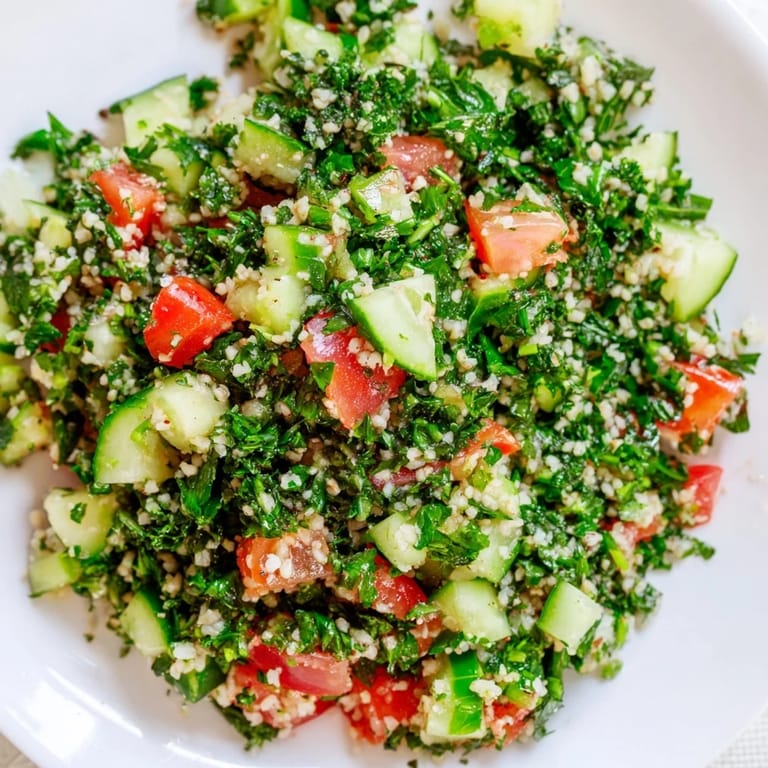
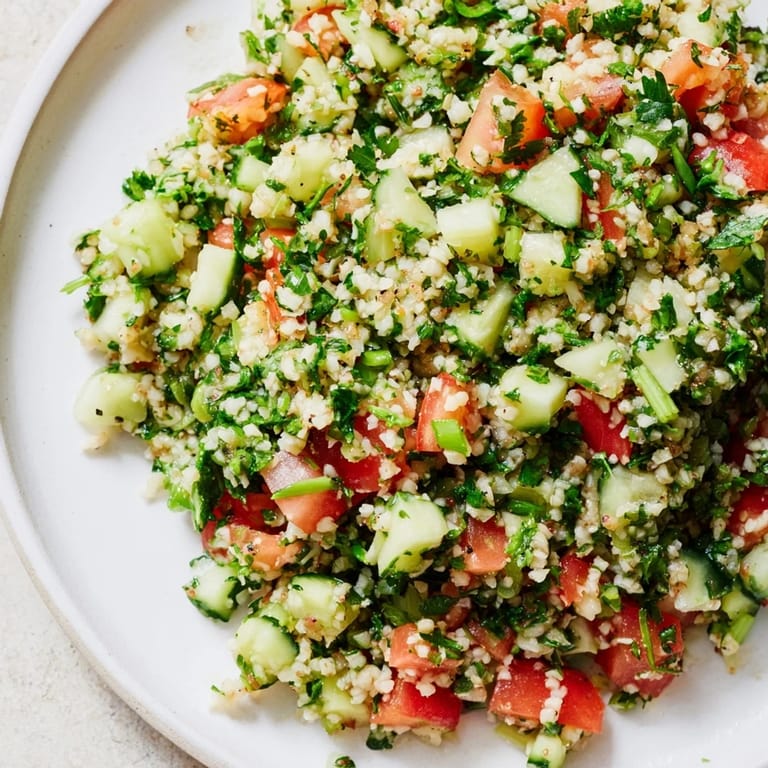
Parsley is not a garnish in tabbouleh; it's the star. You need enough that it dominates every bite, that the green is almost aggressive in the bowl. Many people underestimate how much they need—start with two large bunches and you'll understand. The mint is there to echo, not lead.
Timing and Temperature
This salad has no cooking in the traditional sense, which means everything hinges on how you prepare each component. Finely chop the herbs and vegetables so they integrate rather than feel like separate parts. The bulgur hydrates, not cooks, which keeps it light and lets it absorb the dressing without becoming dense.
Make It Your Own
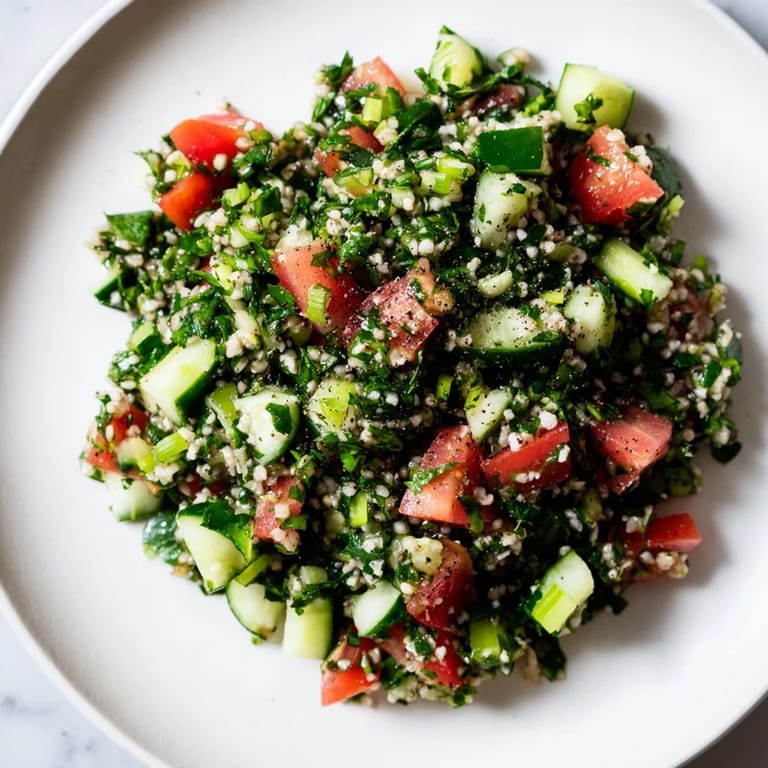
Tabbouleh is forgiving, which is why it's survived so long. Some families add pomegranate molasses for tang, others include more bulgur if they want something heartier. The core—parsley, bulgur, lemon, olive oil—is sacred, but everything else is negotiable. Once you understand the balance, you can play with it.
- For a gluten-free version, substitute the bulgur with cooked quinoa, cooled completely before mixing.
- Store leftovers in the refrigerator for up to two days, but know the flavors fade; it's always better fresh.
- Serve it chilled, at room temperature, or even slightly warm—it's good at every temperature.
 Save to Pinterest
 This salad is proof that some of the best dishes are the simplest ones, the ones that don't need anything extra to feel complete. Make it, share it, and watch people slow down long enough to really taste what's in front of them.
Recipe FAQs
- → Can I use quinoa instead of bulgur?
Yes, quinoa makes a great gluten-free substitute, offering a similar texture and nutty flavor when cooked and cooled properly.
- → What type of parsley is best for tabbouleh?
Flat-leaf parsley is preferred due to its robust flavor and tender texture, enhancing the salad's freshness.
- → How should the bulgur be prepared?
Pour boiling water over the bulgur, cover and let it sit for 10–15 minutes until tender, then drain any excess water and fluff with a fork.
- → Can tabbouleh be made ahead of time?
It’s best enjoyed fresh but can be stored in the refrigerator for up to two days without losing its vibrant flavor.
- → What dishes pair well with this salad?
Tabbouleh complements grilled meats, falafel, or works beautifully as part of a mezze platter offering a light, fresh contrast.
- → Is this salad suitable for vegan diets?
Absolutely, this dish contains no animal products and is dairy-free, nut-free, and soy-free, making it vegan-friendly.