 Save to Pinterest
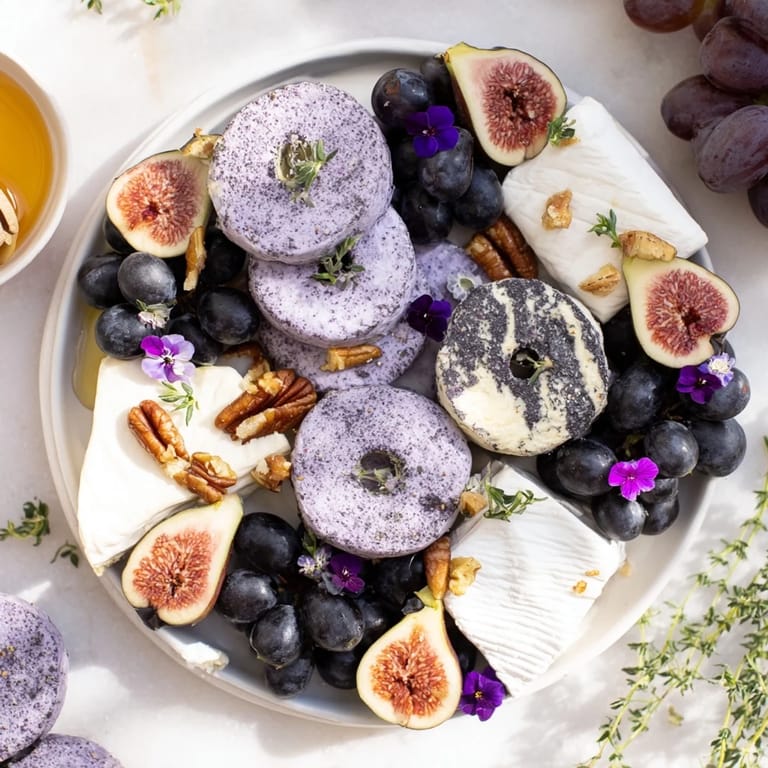
 I stumbled upon a lavender-coated goat cheese at a farmers market on an unseasonably warm April afternoon, and something about its soft purple coating made me stop and stare. The vendor mentioned it was perfect for entertaining, and I found myself imagining a board that felt less like a traditional charcuterie and more like edible art. That evening, I started sketching out what would become "The Lavender Haze"—a grazing board that celebrates sophistication through color and subtle floral notes rather than heavy cured meats.
I made this for my best friend's surprise birthday dinner last summer, and I'll never forget how she walked into the kitchen and went completely quiet. She has synesthesia and said the board literally looked like music to her—something about the purple and grey tones with those pops of edible flowers made her see jazz. We ended up sitting at the counter for an hour just grazing and talking before the actual meal, and honestly, that board became the highlight of the night.
Ingredients
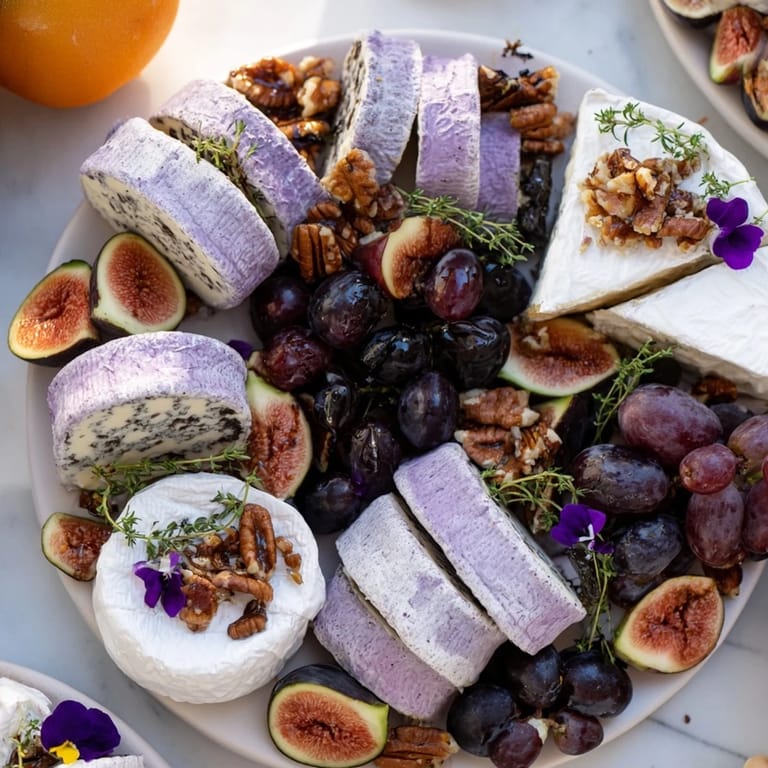
- Lavender-coated goat cheese (150 g, sliced into rounds): This is your star player, so source it from a quality cheesemonger if possible; the coating adds both flavor and visual drama that store-bought versions often lack.
- Ash-rinded brie (200 g, cut into wedges): The creamy texture and delicate ash exterior balance the tanginess of the goat cheese beautifully, and it gets silkier as it sits at room temperature.
- Seedless grapes (1 cup, halved): Red or black work equally well, though the color choice should consider your overall board aesthetic—I usually go with black for the contrast against the pastels.
- Fresh figs (1/2 cup, quartered): If they're in season, use fresh; if not, dried figs work just as well and actually hold up better on a board without weeping juice.
- Candied walnuts or pecans (1/4 cup): These add crunch and a touch of sweetness that bridges the gap between cheese and fruit.
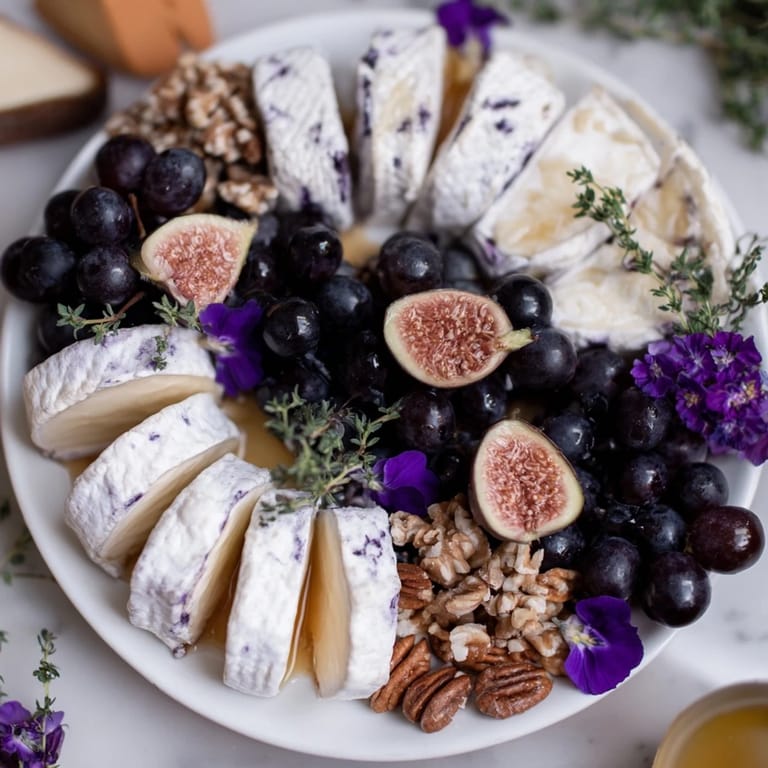
- Lavender honey (2 tbsp): This is optional but absolutely worth seeking out; if you can't find it, regular honey with a tiny pinch of culinary lavender stirred in works fine.
- Edible flowers (1/2 cup, such as violets or pansies): Purchase from a food-safe supplier or grow your own; they're purely decorative but they're what makes people say "wow" when they see the board.
- Fresh thyme sprigs: A small handful is plenty; the aroma alone adds to the experience.
- Toasted baguette slices: Slice your baguette on a bias about 1/4 inch thick, brush lightly with olive oil, and toast at 375°F for about 5 minutes until golden.
- Charcoal or black sesame crackers (1 packet): These provide visual intrigue and a contrasting texture; they're also naturally gluten-free if you use them.
Tired of Takeout? 🥡
Get 10 meals you can make faster than delivery arrives. Seriously.
One email. No spam. Unsubscribe anytime.
Instructions
- Set your stage:
- Pull your cheeses out of the fridge about 20 minutes before you plan to serve so they soften slightly and flavors open up. Choose a board or platter with some depth so nothing slides around, and give yourself plenty of real estate—a crowded board looks chaotic rather than curated.
- Position your anchors:
- Arrange the goat cheese rounds and brie wedges on the board first, spacing them so there's room for everything else. I usually put them slightly off-center to make the board feel more intentional and less symmetrical.
- Build pockets of flavor:
- Cluster the grapes and figs in small groups between the cheeses, creating little flavor zones that guide the eye and make it easy for people to grab compatible bites. The fruits should feel nested rather than scattered.
- Add texture and richness:
- Sprinkle candied walnuts throughout, filling gaps and adding pockets of crunch. They'll catch light and add visual warmth to the cooler lavender and grey tones.
- Drizzle with intention:
- Pour a small amount of lavender honey directly over the goat cheese (or into a tiny bowl on the side if you prefer), and let it pool slightly around the rounds. The honey deepens the lavender flavor and adds shine.
- Finish with ceremony:
- Scatter edible flowers and thyme sprigs over and around everything, focusing more density near the center and letting it fade toward the edges. This is where the board becomes art rather than just food.
- Complete the picture:
- Tuck baguette slices and charcoal crackers into any remaining gaps, angling them so they lean against the cheeses or fruit. These are your delivery vehicles, so make sure they're visible and accessible.
- Serve with calm:
- Bring the board to the table and let it sit for a moment before inviting people to graze. There's no rush—the whole point is to slow down and savor the experience.
 Save to Pinterest
 What surprised me most about this board is how it changed the way people ate together. Without the pressure of a formal platter where everything is portioned and arranged by someone else, my guests became explorers, making unexpected combinations and talking about what they were tasting. It turned out that creating beautiful constraints—offering choices rather than dictating the meal—is its own kind of generosity.
Why Floral Flavors Matter
Lavender has a reputation for being precious or overly perfumy, but when it's subtle and balanced against creamy cheese and sweet fruit, it stops being a gimmick and becomes genuinely sophisticated. The first time I tasted lavender honey paired with goat cheese, I realized that floral notes aren't about being fancy—they're about expanding what our palates expect from savory foods. It's the culinary equivalent of discovering that the color you thought you hated actually looks incredible when placed next to the right companion.
Sourcing and Substitution Philosophy
I've learned through trial and error that the quality of your base ingredients matters infinitely more than following the recipe exactly. If you can't find lavender-coated goat cheese, a simple fresh goat cheese with a drizzle of lavender honey serves the same purpose and might even taste better. The same goes for edible flowers—if they're impossible to find or prohibitively expensive in your area, the board is still stunning with just the cheese, fruit, and nuts. Cook with what's available and good rather than chasing an imaginary perfect version.
Building a Board That Works for Your Crowd
The beauty of a cheese board is that it's infinitely adaptable, and the formula matters more than the specific ingredients. Start with two cheeses of different textures, add fruit that's both fresh and dried, include something crunchy, something sweet, and something briny or acidic to balance richness. This board leans into purple and grey for visual harmony, but you could easily replace the lavender goat cheese with a plain version and add purple vegetables like radish slices or endive leaves if you want to keep that color story.
- Consider your crowd's preferences: if someone is strictly plant-based, this board is naturally vegetarian, though you might add a small bowl of marinated olives or roasted chickpeas for extra substance.
- Time of year matters: use fresh figs in summer and early fall, switch to dried ones the rest of the year, and always choose grapes that are actually in season for better flavor.
- If you're serving a large group, make the board more dramatic by increasing quantities proportionally, but maintain the same visual balance and spacing principle.
 Save to Pinterest
 This board has become my go-to when I want to serve something that feels intentional and beautiful without losing a whole afternoon to cooking. There's something deeply satisfying about creating something that looks like art and tastes like a gentle luxury all at once.
Recipe FAQs
- → What types of cheeses are featured in this board?
It uses lavender-coated goat cheese and ash-rinded brie, both offering creamy textures with delicate floral and earthy notes.
- → Can this platter accommodate gluten-free diets?
Yes, simply substitute the baguette with gluten-free crackers to keep it suitable for gluten-sensitive guests.
- → What flavors enhance the cheese selections?
Fresh figs, seedless grapes, candied walnuts or pecans, and a drizzle of lavender honey bring sweetness and crunch that balance the creamy cheeses.
- → How should the platter be garnished for best presentation?
Edible flowers like violets or pansies and fresh thyme sprigs provide vibrant color and subtle aromatic enhancement.
- → What wine pairings complement this grazing board?
Floral white wines like Gewürztraminer or a chilled Provence rosé create harmonious pairings that highlight the board's delicate flavors.