 Save to Pinterest
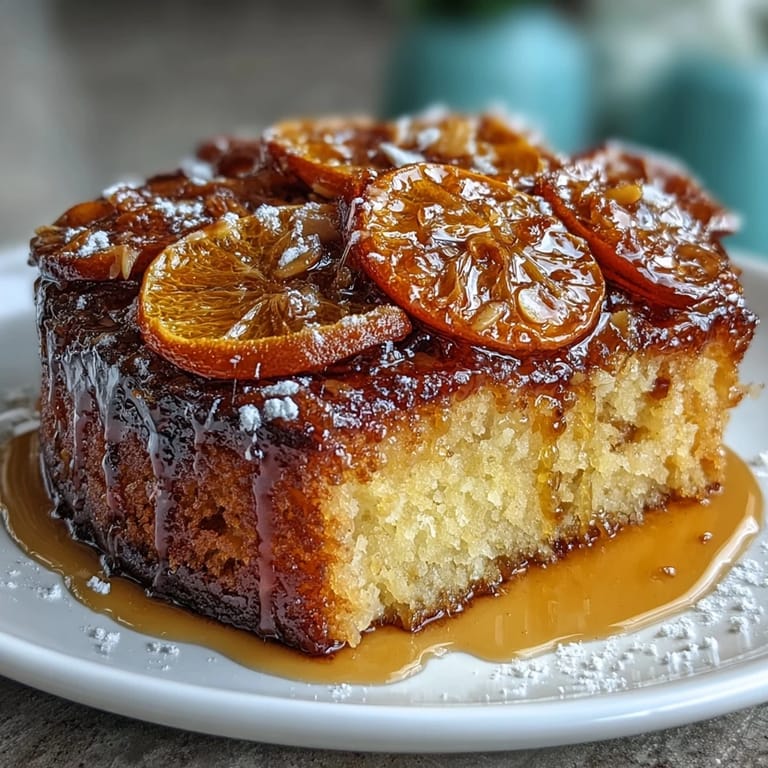
 There's something about the smell of orange syrup bubbling on the stove that makes you forget you're baking without flour. I stumbled into this cake by accident, really—leftover candied oranges from a jam project and a bag of almond flour I'd been meaning to use. What emerged was so tender and fragrant that my kitchen smelled like a Mediterranean market for hours afterward. The way those glossy orange slices catch the light when you flip it over feels almost too pretty to eat, except you absolutely will.
I made this for a friend who'd just moved to a new city and showed up at her door with it still warm, wrapped in cloth. She cut into it immediately at her kitchen table surrounded by half-unpacked boxes, and the way her face lit up when she bit into that candied orange was worth every sticky pan I had to wash. Somehow a cake became proof that someone was thinking of her during a lonely transition.
Ingredients
- Candied Oranges (2 medium, thinly sliced): These become your cake's crown jewel, so slice them evenly so they cook at the same rate and develop that beautiful translucency.
- Granulated Sugar (1 cup for candying, 1 cup for cake): You'll use sugar twice here—once to transform citrus into jewels, once to lighten your eggs into a pale ribbon.
- Water (1 cup for syrup): This keeps your orange slices tender rather than crystallized, and you'll brush that reserved syrup on top for extra shine.
- Almond Flour (2 cups, finely ground): The foundation of this cake's magic—look for truly finely ground flour, not the coarser kind, or your crumb will feel grainy instead of silky.
- Eggs (4 large): These are whisked until pale to trap air, which gives you lift without any baking soda helping out.
- Extra Virgin Olive Oil or Unsalted Butter (1/2 cup): Olive oil keeps this naturally dairy-free and adds a subtle fruity note that complements the citrus beautifully.
- Vanilla Extract (1 tsp): Just enough to warm the flavor without announcing itself loudly.
- Orange Zest (from 1 orange): This hits differently than juice—bright, intense, and it's where the real citrus magic lives in the actual cake.
- Salt (1/2 tsp): Enhances every flavor you've already added, especially important since almond flour is naturally mild.
- Baking Powder (1 tsp, gluten-free certified): Make sure it's actually certified gluten-free or your whole effort goes sideways.
- Sliced Almonds and Powdered Sugar (optional garnish): These are just for sparkle, but they transform a homey cake into something that feels intentional.
Tired of Takeout? 🥡
Get 10 meals you can make faster than delivery arrives. Seriously.
One email. No spam. Unsubscribe anytime.
Instructions
- Heat your oven and prepare the pan:
- Set your oven to 350°F (175°C) and grease a 9-inch springform pan, then line the bottom with parchment paper—this is your insurance against sticking when you flip it over to show off those candied oranges.
- Make the candied oranges:
- In a wide saucepan, combine 1 cup sugar and 1 cup water and bring to a gentle simmer. Lay your orange slices in a single layer (work in batches if needed) and simmer for 15–20 minutes, turning once or twice, until they turn from opaque to almost translucent and the edges look glossy. Transfer to a wire rack to cool completely—this matters because warm slices will stick together.
- Line the pan:
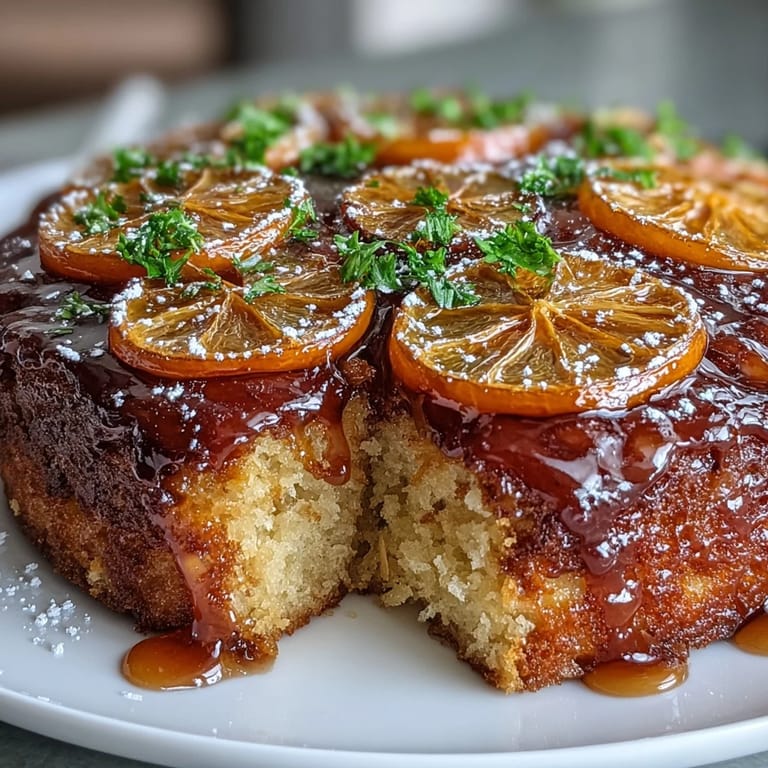
- Arrange your cooled candied orange slices in the bottom of the prepared springform pan in a single layer, overlapping them slightly like you're creating a pattern you actually want people to see.
- Whisk eggs and sugar:
- In a large bowl, whisk 4 eggs with 1 cup sugar for about 2 minutes until the mixture is pale, slightly thickened, and leaves a ribbon trail when you lift the whisk. This aerates your batter since you're not using much chemical leavening.
- Add wet ingredients:
- Whisk in your olive oil (or melted butter), 1 tsp vanilla extract, orange zest, and 1/2 tsp salt until completely smooth and incorporated. You'll notice the mixture getting slightly darker and more fragrant as the zest disperses.
- Fold in dry ingredients:
- Add 2 cups almond flour and 1 tsp baking powder and fold gently with a spatula until just combined—don't overmix or you'll deflate all that air you just captured in the eggs. A few streaks of flour are okay; you want to stop before it becomes completely smooth.
- Pour and bake:
- Gently pour the batter over your candied orange slices and smooth the top with an offset spatula or the back of a spoon. Bake for 45–50 minutes until the top is golden brown and a toothpick inserted in the center comes out clean or with just a few moist crumbs clinging to it.
- Cool and flip:
- Let the cake rest in the pan for exactly 15 minutes—this is enough time for it to set but still warm enough to release cleanly from the sides. Run a thin knife around the edges, release the springform, and flip it onto a serving plate so those candied oranges are now gloriously on top.
- Add shine and garnish:
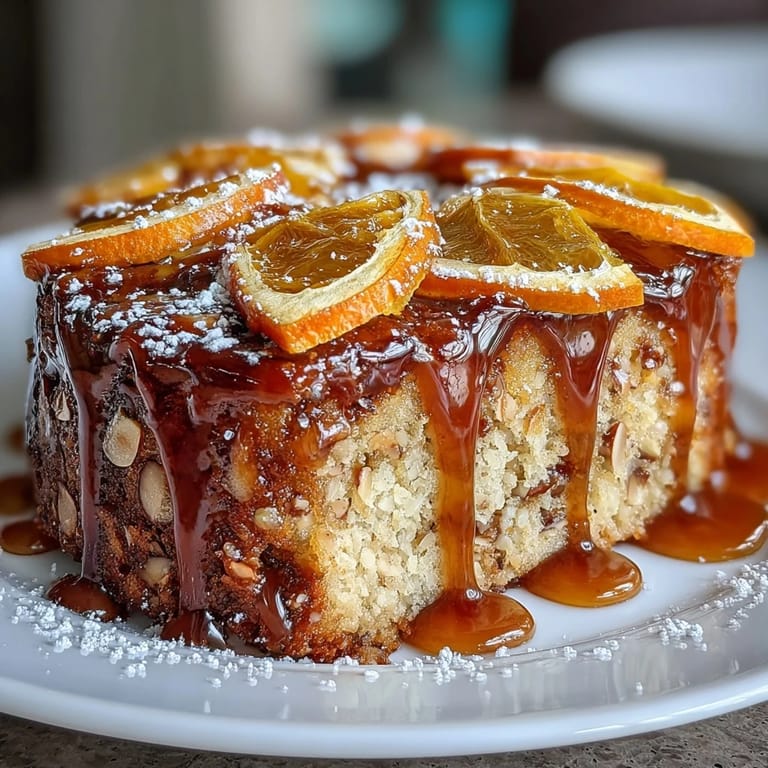
- Brush the top with that reserved orange syrup you saved from cooking the candied slices—it adds moisture and a subtle gloss. Scatter sliced almonds over the top if you'd like, then dust lightly with powdered sugar just before serving.
 Save to Pinterest
 What surprised me most was how this cake stayed moist for three days sitting on my counter covered loosely with cloth. On day two, the flavors had melded in a way that made it even better—the almond flour had softened even further, the orange syrup had redistributed throughout, and it genuinely tasted richer than when it came out of the oven.
Why This Works Without Flour
Almond flour isn't a substitute trying to mimic wheat flour—it's a completely different ingredient with more fat and protein naturally built in. That's why this cake doesn't need to be dense or weird or held together with extra eggs and binders. The ground almonds create a naturally tender structure, and the eggs add lift and richness that keeps everything together beautifully. Once you understand that you're building something intentional rather than recreating something lost, the whole approach shifts.
The Magic of Candied Citrus
Those orange slices aren't just decoration—they become part of the cake's actual structure and flavor. As they bake, they soften further and release their oils into the surrounding crumb, creating pockets of concentrated citrus throughout. That reserved syrup you brush on top isn't nostalgia or extra sweetness; it's actually tenderizing the surface and sealing in moisture. Some of my best kitchen moments have been realizing that what looks fancy is actually functional.
Serving and Storage Magic
This cake is one of those rare things that actually improves with time, making it perfect for bringing to gatherings or preparing a day ahead. The texture becomes silkier, the flavors more integrated, and you sidestep the stress of baking day-of. I've served it at room temperature with Greek yogurt on the side, warm with a small scoop of vanilla ice cream, and even straight from the fridge when I wanted something a little denser and chewier. Wherever you decide to go with it, you can't miss.
- Store covered at room temperature for up to three days—the almond flour keeps it remarkably moist without needing the fridge.
- For extra flavor, try substituting one orange with a lemon when candying if you want a brighter, more complex citrus note.
- A dollop of whipped cream, Greek yogurt, or even a drizzle of honey on individual slices takes it from simple cake to something you'd serve at an actual dinner party.
 Save to Pinterest
 This cake taught me that you don't need to apologize for what something isn't—you can just celebrate what it is. Serve it with pride, because it honestly tastes like you spent way more time on it than you did.
Recipe FAQs
- → How do I make candied oranges for the cake?
Simmer thinly sliced oranges in sugar and water until translucent, then cool on a wire rack before arranging on the cake base.
- → Can I substitute butter with oil in this cake?
Yes, using extra virgin olive oil instead of butter makes the cake dairy-free while maintaining moistness.
- → Is this dessert gluten-free?
Yes, the use of almond flour and gluten-free baking powder ensures the cake remains gluten-free.
- → What is the purpose of brushing the cake with orange syrup?
Brushing with reserved syrup adds shine and enhances the candied orange flavor on top.
- → How should the cake be stored to keep it moist?
Store the cake covered at room temperature for up to three days to maintain moisture and freshness.
- → Can I add a citrus twist to the topping?
Substituting one orange with a lemon in the candied topping offers extra citrus brightness.