 Save to Pinterest
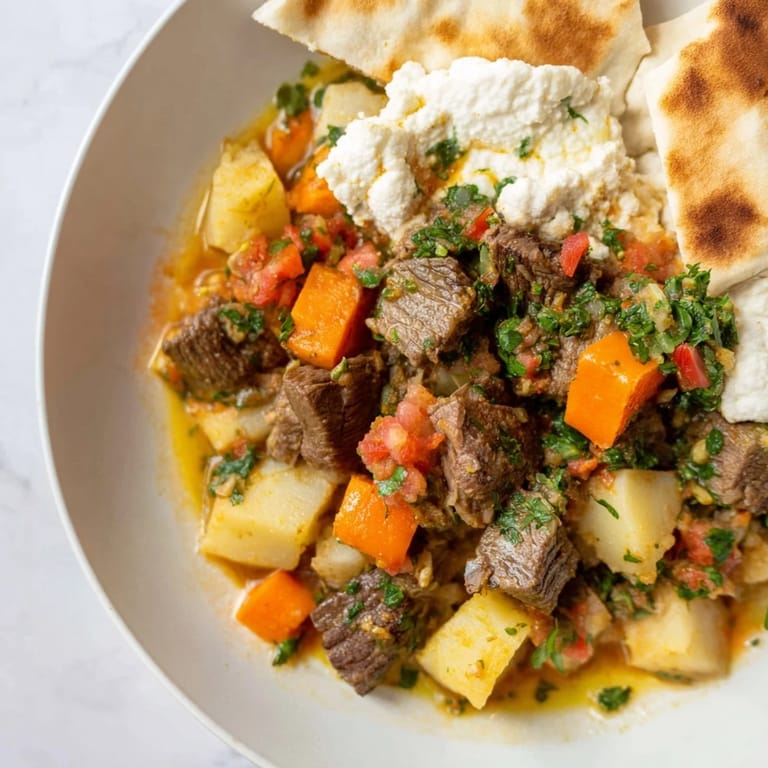
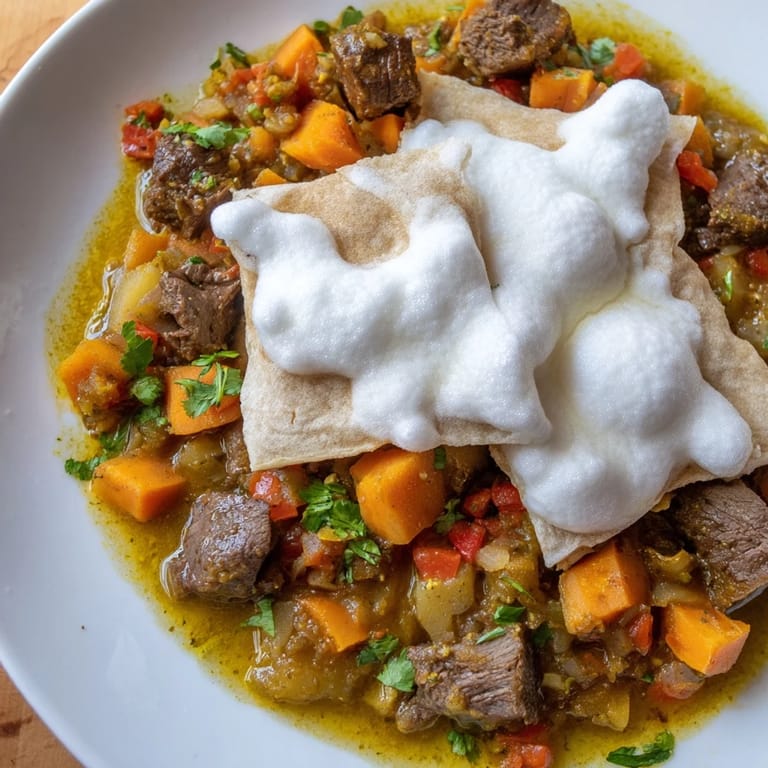
 The first time I encountered Saltah, it was at a small gathering where someone's grandmother had prepared it, and the moment the bowl arrived—steam rising, layers visible like edible architecture—I understood why this dish has sustained families for generations. There's something about the way the spiced broth saturates the bread, how the whipped fenugreek foam sits on top like a cloud, that makes you want to slow down and savor each spoonful. What struck me most was how humble the ingredients felt, yet together they created something unexpectedly sophisticated and deeply comforting.
I remember making this for friends who were skeptical about a stew served over bread, watching their faces change when they tasted how the layers worked together—the bread softening just enough, the spices building in intensity with each bite. One friend even asked for the recipe before finishing their bowl, which told me everything I needed to know about whether this was worth mastering.
Ingredients
- Beef or lamb, cubed: Use meat with a bit of marbling so it becomes tender and flavorful after simmering; lamb gives a richer, more traditional taste.
- Vegetable oil: A neutral oil helps the meat brown properly without competing with the spices.
- Onion, garlic, tomatoes: This aromatic base is where the flavor foundation starts; don't rush browning the onions.
- Green chili: Optional but recommended—it adds a whisper of heat without overwhelming the dish.
- Potato and carrot: They absorb the broth beautifully and add texture that breaks up the richness of the meat.
- Cumin, coriander, black pepper, turmeric, ground fenugreek: Each spice builds on the last; this is an intentional blend, not a guess.
- Ground fenugreek seeds for hulbah: This is the soul of the topping—soaking and whipping it creates something almost creamy from a single ingredient.
- Yemeni flatbread: Malawah or lahoh is traditional, but pita works in a pinch; the bread needs to hold up to hot broth without dissolving.
Tired of Takeout? 🥡
Get 10 meals you can make faster than delivery arrives. Seriously.
One email. No spam. Unsubscribe anytime.
Instructions
- Brown the aromatics and meat:
- Heat oil and let the onions go golden and caramelized—this takes patience, maybe 5-7 minutes, but it's where deep flavor begins. Once garlic and chili hit the pan, you'll smell it transform; add the meat and let it sit untouched for a minute on each side before stirring, so it actually browns instead of steaming.
- Build the stew base:
- Stir in tomatoes and spices, cooking for just a few minutes until everything is fragrant and toasted. This blooming of spices releases their oils and makes them taste more alive in the finished dish.
- Simmer low and slow:
- Pour in broth, bring to a boil, then drop the heat low and cover—the meat needs time to become tender, ideally 1 to 1.5 hours depending on the cut and your stove. The longer it simmers, the more the vegetables dissolve into the broth, thickening it naturally.
- Whip the fenugreek into clouds:
- While the stew cooks, soak the ground fenugreek in cold water for a full hour; this softens it and prepares it to become foam. Drain it, then whisk or beat it vigorously with a fork—it should go from paste-like to light and fluffy, almost like whipped egg whites.
- Fold in freshness:
- Once the hulbah is airy, fold in the tomato, cilantro, chili, and lemon juice—this adds brightness and prevents the topping from tasting one-note.
- Assemble in layers:
- Tear bread into pieces and lay them in bowls, ladle the hot stew over so the bread softens but doesn't disappear into mush, then crown it with a generous spoonful of hulbah. The bread should still have slight resistance when you bite it.
 Save to Pinterest
 There was a moment, eating this with someone who grew up eating Saltah, when they explained how it's meant to be mixed at the table—everyone stirring their own bowl so the bread, meat, broth, and foam blend into something uniquely personal. That's when I realized this isn't just a recipe; it's an invitation to slow down and eat with intention.
Why the Layering Matters
The genius of Saltah is that nothing should be fully mixed before it reaches the table—each layer serves a purpose. The bread acts as a canvas, the broth becomes the paint, the meat provides substance, and the hulbah brings this ethereal, almost savory-sweet element that ties everything together. When you combine them all at once, the flavors feel chaotic; when you eat in layers, you taste how they were meant to interact.
Timing and Temperature
This dish demands respect for temperature; serving it lukewarm defeats the purpose entirely because the bread won't soften correctly and the hulbah will lose its appeal. Start your stew well before you plan to eat so that when you're ready to serve, everything is piping hot and the assembled bowl is actually steaming. I've found that preheating the bowls themselves makes a difference—it keeps the dish at the right temperature even as you eat.
Variations and Adjustments
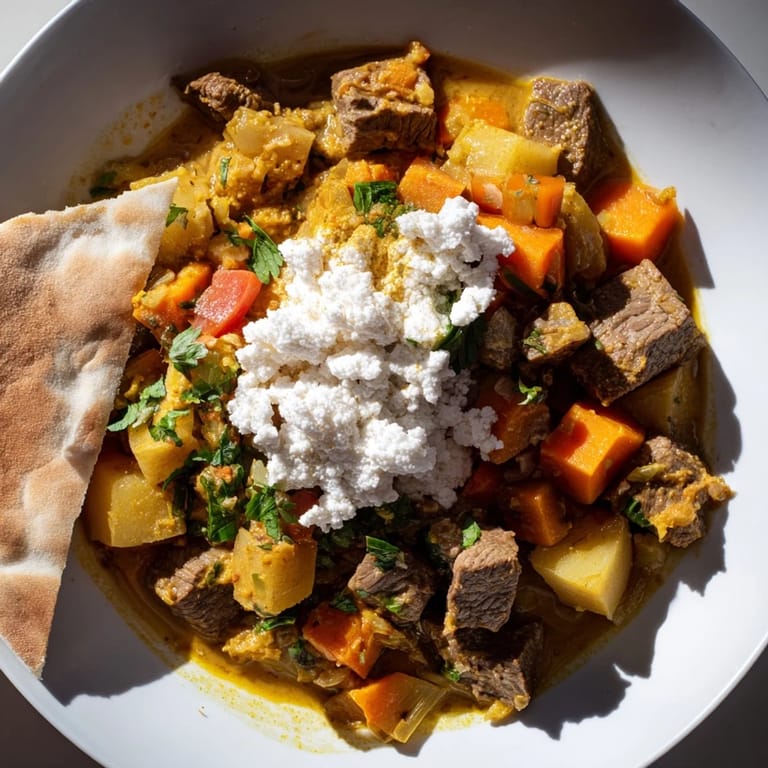
While this recipe feels traditional and complete as written, I've learned that Saltah is forgiving if you understand its core logic: spiced broth, tender protein, softened bread, and an airy topping. Some versions include zhug, a bright green cilantro-based sauce, drizzled on top instead of mixed in. Others swap the meat for chickpeas or add extra root vegetables to bulk it up.
- For vegetarian saltah, skip the meat and double the potatoes, carrots, and add chickpeas or lentils for protein.
- Make zhug by blending cilantro, jalapeño, garlic, lemon juice, and oil if you want a sharper, fresher topping instead of hulbah.
- If you can't find traditional flatbread, sturdy pita or even thick naan will absorb the broth without falling apart.
 Save to Pinterest
 Making Saltah taught me that some of the most satisfying meals come from understanding why ingredients are layered, not just how to throw them together. It's a dish that rewards attention and patience, and every time you make it, it gets better because you understand it more.
Recipe FAQs
- → What cuts of meat work best for this dish?
Beef or lamb cut into 2 cm cubes works best to ensure tenderness and rich flavor during slow simmering.
- → How is the fenugreek topping prepared?
Ground fenugreek is soaked in water, then whipped until fluffy and mixed with diced tomato, cilantro, chili, lemon juice, and salt for brightness.
- → What type of bread complements the stew?
Traditional Yemeni flatbreads like malawah or lahoh are used, but pita or naan can be good substitutes to soak up the broth.
- → Can the stew be made vegetarian?
Yes, omit the meat and add extra root vegetables or beans to maintain a hearty texture and flavor.
- → How long should the stew simmer?
Simmer gently for 1 to 1.5 hours until the meat is tender and vegetables are soft, allowing flavors to meld deeply.
- → What spices define the flavor profile?
Cumin, coriander, turmeric, black pepper, and ground fenugreek create the distinctive aromatic and earthy flavors of this dish.