 Save to Pinterest
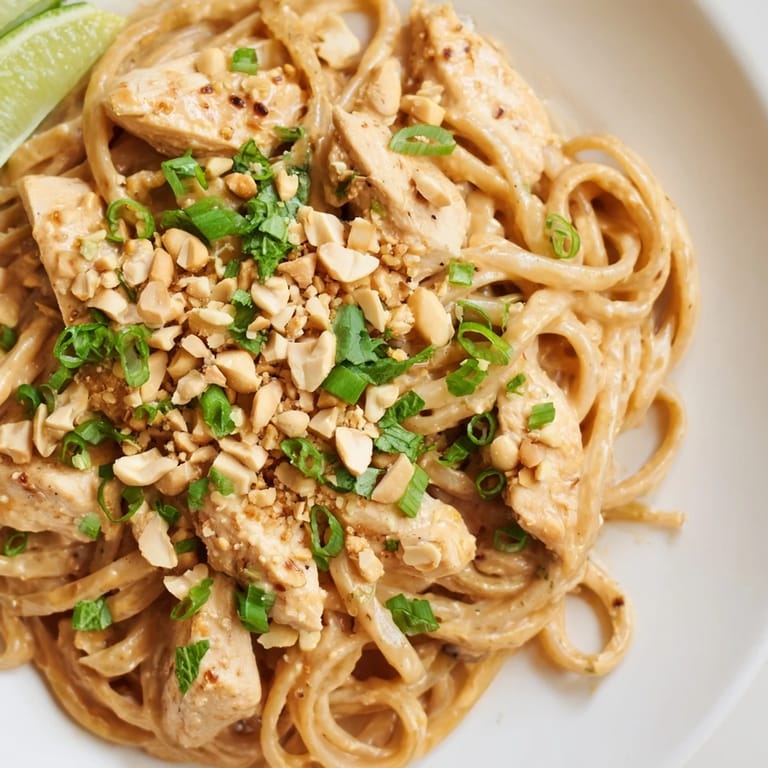
 There's something about the smell of garlic hitting hot oil that makes you stop whatever you're doing. I was rushing through dinner one weeknight, craving something bright and comforting, when I decided to throw together a Thai-inspired pasta instead of ordering takeout. That first tangle of noodles coated in creamy peanut sauce, the lime hitting my tongue, the cilantro snapping between my teeth—it was the kind of happy accident that becomes a regular thing. Now this dish is my go-to when I want something that tastes like it took hours but actually comes together in less than 40 minutes.
I made this for a friend who'd just moved into her first apartment, and I watched her face light up when she twirled that first forkful. She kept asking how I made the sauce taste so balanced, and I realized it was because I'd actually tasted as I went, adjusting the lime and soy until it sang. That's the moment it stopped being just a weeknight dinner and became something I wanted to share.
Ingredients
- 340 g (12 oz) linguine or spaghetti: Use something sturdy enough to hold the sauce without breaking apart—linguine's flat surface is actually ideal for clinging to creamy coatings.
- Salt for boiling water: Make it taste like the sea, not just water, so the pasta carries flavor even before the sauce touches it.
- 450 g (1 lb) boneless, skinless chicken breast, thinly sliced: Thin slices cook faster and absorb the sauce better than chunks; I usually freeze the breast for 15 minutes first to make slicing easier.
- 1 tbsp vegetable oil: You need enough to create that golden sear without the chicken steaming in its own moisture.
- Salt and black pepper: Season the chicken generously before it hits the pan—this is your only chance to build flavor into the protein itself.
- 1 cup (240 ml) ready-made Thai peanut sauce: This is the backbone, so choose one you'd actually eat straight from the jar; quality matters here since there's nowhere for mediocrity to hide.
- 2 tbsp soy sauce: This adds depth and salt that simple peanut sauce alone won't deliver.
- 2 tbsp lime juice (about 1 lime): Bottled works in a pinch, but fresh lime juice makes the difference between flat and vibrant.
- 1 tsp grated fresh ginger: Don't skip this; it prevents the sauce from tasting one-dimensional and sweet.
- 2 cloves garlic, minced: Mince it fine so it distributes evenly and disappears into the sauce rather than appearing as chunks.
- 1/4 cup chopped fresh cilantro: Add this at the end so it stays bright and doesn't lose its personality to heat.
- 2 tbsp chopped fresh mint (optional): This is what takes it from good to 'where did you learn to cook?'—don't skip it if you can find it.
- 2 green onions, thinly sliced: Split the batch: half goes in at the end, half goes on top for a textural contrast and fresh bite.
- 1/4 cup roasted peanuts, chopped: Rough chop them so some pieces stay chunky and provide actual texture.
- Lime wedges for serving: Let people adjust the tartness themselves—some will want more, some less, and that's okay.
Tired of Takeout? 🥡
Get 10 meals you can make faster than delivery arrives. Seriously.
One email. No spam. Unsubscribe anytime.
Instructions
- Get the pasta water going:
- Fill your pot about three-quarters full with water, add a generous handful of salt, and bring it to a rolling boil while you prep everything else. The salt should make it taste like seawater—this is your seasoning base.
- Slice and season the chicken:
- Cut your breast into thin strips about quarter-inch thick and season them evenly with salt and pepper. Let them sit for a minute so the seasoning actually sticks instead of sliding off into the pan.
- Cook the pasta to al dente:
- Add pasta to boiling water and stir immediately so nothing sticks together. Set a timer for one minute less than the package says—you want it tender but still with a tiny bit of resistance when you bite it.
- Sear the chicken until golden:
- Heat oil in your skillet over medium-high heat until it shimmers, then add chicken in a single layer. Resist the urge to move it around for the first couple minutes; let it sit and develop that golden crust, then stir and cook until just cooked through, about 5-7 minutes total.
- Build the sauce in the same pan:
- Lower the heat, add peanut sauce, soy sauce, lime juice, ginger, and garlic directly to the skillet. Stir gently and let it warm through for 2-3 minutes, tasting as you go to see if you need more lime or soy.
- Bring it all together:
- Drain your pasta, add it to the skillet with the cooked chicken, and toss everything until the pasta is coated evenly. If the sauce seems too thick, add a splash of pasta water to loosen it.
- Finish with fresh herbs:
- Pull from heat and stir in cilantro, mint, and half the green onions. The residual heat will gently wilt them but keep them alive.
- Plate and garnish:
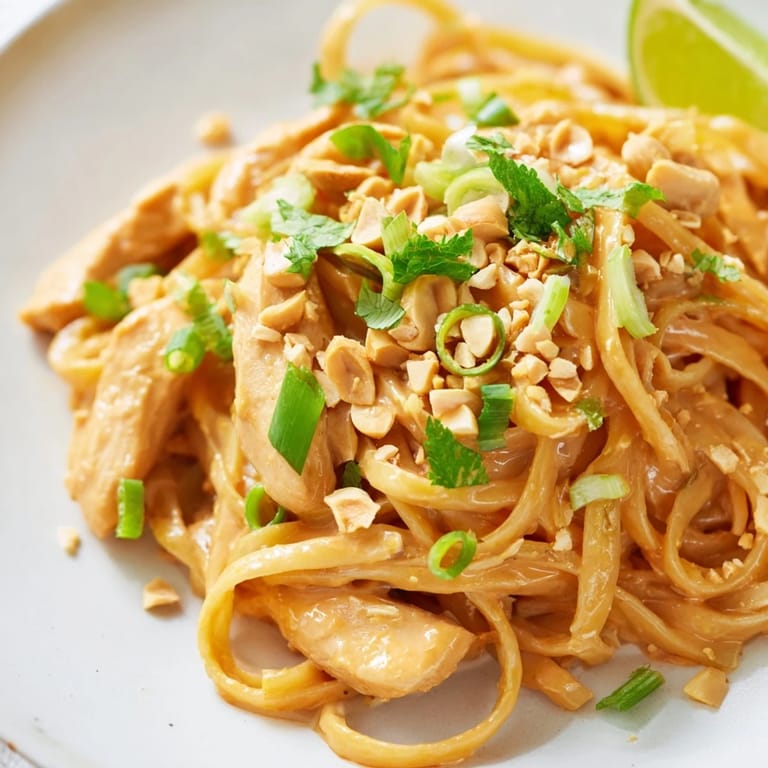
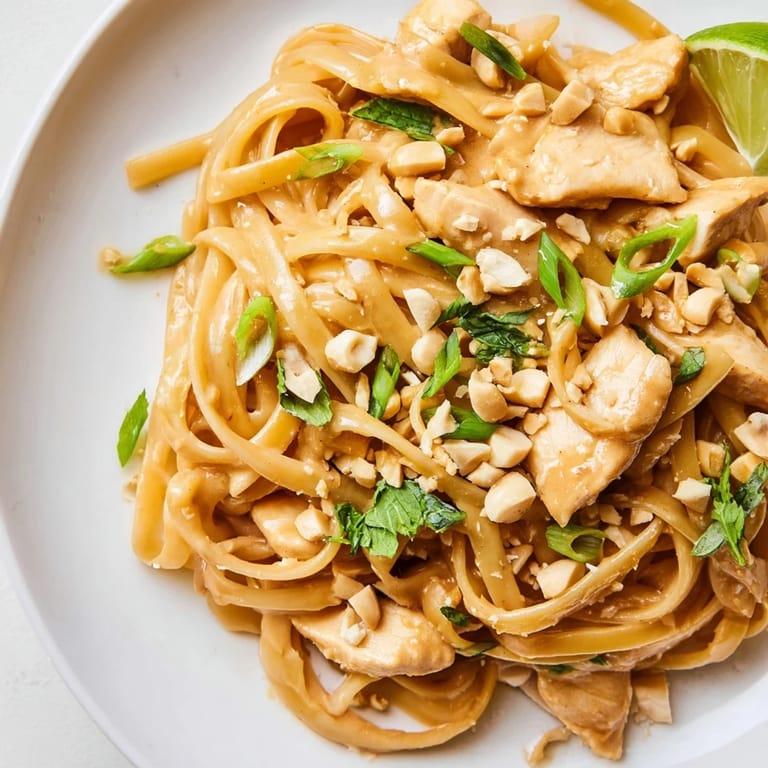
- Divide among bowls, scatter peanuts and remaining green onions on top, and serve with lime wedges on the side so people can adjust as they eat.
 Save to Pinterest
 I remember my partner taking that first bite in silence, which is always a sign something worked. When he finally looked up and said 'this is actually better than the place on Fifth Street,' I felt that small proud feeling you get when something homemade surprises you both. That's when I knew this dish belonged in our regular rotation.
Why This Fusion Works
Thai flavors are built on balance—creamy and tangy, rich and bright, spicy and soothed. Pasta is the perfect vehicle because it's neutral enough to let the sauce shine but substantial enough to make the dish feel complete. What makes this fusion successful is that nothing feels forced; the peanut sauce doesn't pretend to be Thai restaurant-level, and the pasta doesn't apologize for being Italian. They just meet in the middle and create something that works because it's straightforward and honest.
Making It Your Own
This recipe is a starting point, not scripture. I've made it with crispy tofu when I didn't have chicken, with cilantro-lime rice noodles for something lighter, and once with cashew sauce instead of peanut because that's what I had open. The formula is flexible: a good sauce, a protein you like, fresh herbs at the end, and you're set. Some nights I add a poached egg on top for richness, other nights I pile on extra lime and sriracha because I'm in a mood. Trust your instincts and your palate.
Storage and Leftovers
This dish is honestly best eaten fresh, right out of the skillet when everything's still warm and the cilantro hasn't had time to turn dark. That said, leftovers store fine in the fridge for 2-3 days in an airtight container, though the pasta will absorb more sauce as it sits. Reheat gently on the stove with a splash of water to loosen it up, and add fresh cilantro again right before eating so you capture that fresh herb brightness. If you're meal prepping, cook the sauce and chicken together, keep pasta separate, and combine just before serving for the best texture.
- Don't refrigerate it hot; let it cool first so condensation doesn't turn the noodles mushy.
- A splash of lime juice mixed in before you eat leftovers wakes everything up.
- If you're doubling this for the week, keep the garnishes separate and add them fresh each time.
 Save to Pinterest
 This is the kind of dish that tastes like you tried, feels easy because you did, and leaves everyone wondering why they haven't made it a hundred times already. Make it once and you'll understand why it became my weeknight anchor.
Recipe FAQs
- → What type of pasta works best?
Linguine or spaghetti hold the peanut sauce well and maintain a nice texture for this dish.
- → Can I substitute the chicken?
Yes, tofu works well for a vegetarian twist, and it absorbs the sauce flavors nicely.
- → How can I add more heat?
Incorporate sriracha or red chili flakes into the sauce for an extra spicy kick.
- → Is this dish gluten-free?
Using rice noodles and gluten-free soy sauce makes this meal suitable for gluten-free diets.
- → What garnishes enhance the flavors?
Fresh cilantro, mint, green onions, roasted peanuts, and lime wedges add brightness and texture.