 Save to Pinterest
 The first time I tasted muhammara was at a crowded Damascus market, but it wasn't until years later, standing in my own kitchen with a bag of fresh red peppers, that I understood why this dip had stayed with me. There's something about the way roasted peppers transform—how they collapse into something sweet and smoky—that makes you want to capture that moment in a bowl. I'd burned the first batch trying to rush the charring, but that mistake taught me patience. Now, whenever I make muhammara, I'm chasing that balance of tangy pomegranate molasses, earthy walnuts, and the gentle heat of Aleppo pepper, all coming together like a conversation between flavors.
I remember serving this to my neighbor during a quiet evening last summer when she stopped by with fresh tomatoes from her garden. We spread muhammara on toasted pita, added her tomatoes, and somehow that simple meal became the kind of conversation that stretches into twilight. She told me she'd never had anything like it before, and watching her taste it—really taste it—reminded me why cooking for people matters more than I sometimes remember in the rush of weekdays.
Ingredients
- Red bell peppers (3 large): The foundation of this dip—roasting them brings out a natural sweetness and creates that essential smoky depth that makes muhammara unmistakable.
- Walnuts (1 cup, lightly toasted): Toasting them yourself makes a difference you can actually taste; they add earthiness and body without overpowering the peppers.
- Pomegranate molasses (2 tbsp): This is the secret keeper—that tangy, slightly bitter punch that makes people wonder what makes this taste so complete.
- Garlic cloves (2): Just enough to whisper in the background, not shout; I learned this after a batch where I got overzealous and it tasted like vampire repellent.
- Breadcrumbs (2 tbsp): They act as a gentle thickener and add a subtle texture that prevents the dip from becoming too wet or loose.
- Smoked paprika (1/2 tsp): This amplifies the roasted flavor, giving you the taste of open flames even if you're using an oven.
- Aleppo pepper or red chili flakes (1/2 tsp): Aleppo pepper is less harsh than regular chili flakes—it adds warmth without overwhelming, but start small and taste as you go.
- Ground cumin (1 tsp): The spice that ties everything together and makes this unmistakably Middle Eastern.
- Extra virgin olive oil (2 tbsp, plus more for drizzling): Use good oil here; it's not hidden in cooking, it's part of the final taste.
- Lemon juice (1–2 tbsp): This brightens everything and helps balance the earthiness of the walnuts and the sweetness of the peppers.
- Salt and black pepper (to taste): Season in layers, not all at once—your palate will tell you when it's right.
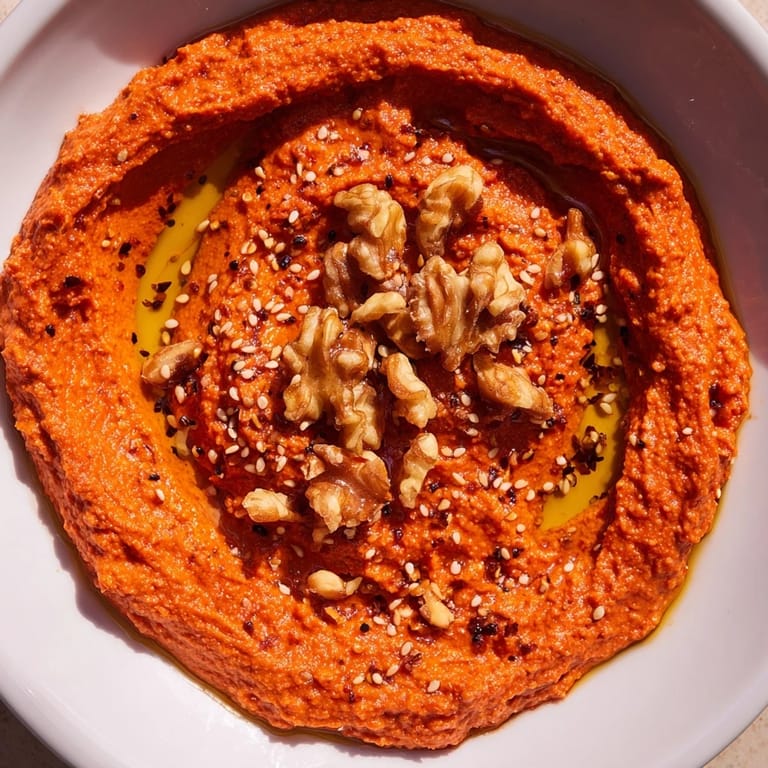
- Toasted sesame seeds (1 tbsp, optional): A finishing touch that adds nuttiness and a visual pop, though the dip is beautiful without them.
Tired of Takeout? 🥡
Get 10 meals you can make faster than delivery arrives. Seriously.
One email. No spam. Unsubscribe anytime.
Instructions
- Char the peppers until they collapse:
- Preheat your oven to 220°C (425°F), place whole peppers on a baking tray, and roast for 20–25 minutes, turning them halfway through so every side gets blistered and blackened. You'll know they're ready when the skins look almost burned—don't be afraid of that char, it's where the flavor lives.
- Let them rest and soften:
- Transfer the hot peppers to a bowl, cover it tightly with plastic wrap or a plate, and let them steam for 10 minutes—this is when the magic happens and the skins practically fall away on their own. Once cooled enough to handle, peel away the charred skin, remove the seeds and stems, and you're left with silky roasted pepper flesh.
- Build the base in your food processor:
- Combine the peeled peppers, toasted walnuts, garlic, breadcrumbs, cumin, smoked paprika, Aleppo pepper, salt, and black pepper, then pulse until the mixture is coarse and textured. This isn't about smoothness yet—you want to see the pieces coming together, building flavor.
- Create the right consistency:
- Pour in the pomegranate molasses, olive oil, and lemon juice, then process until the mixture reaches a smooth, spreadable consistency with just a bit of texture remaining—not a paste, not too chunky. Taste as you go and adjust the lemon juice, molasses, or seasonings to suit your preference.
- Finish and serve with intention:
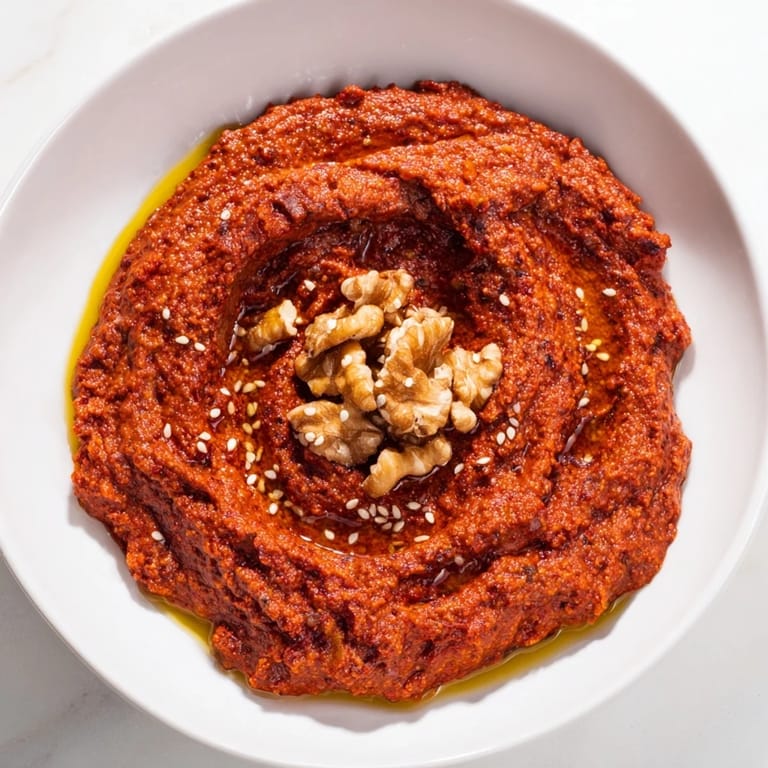
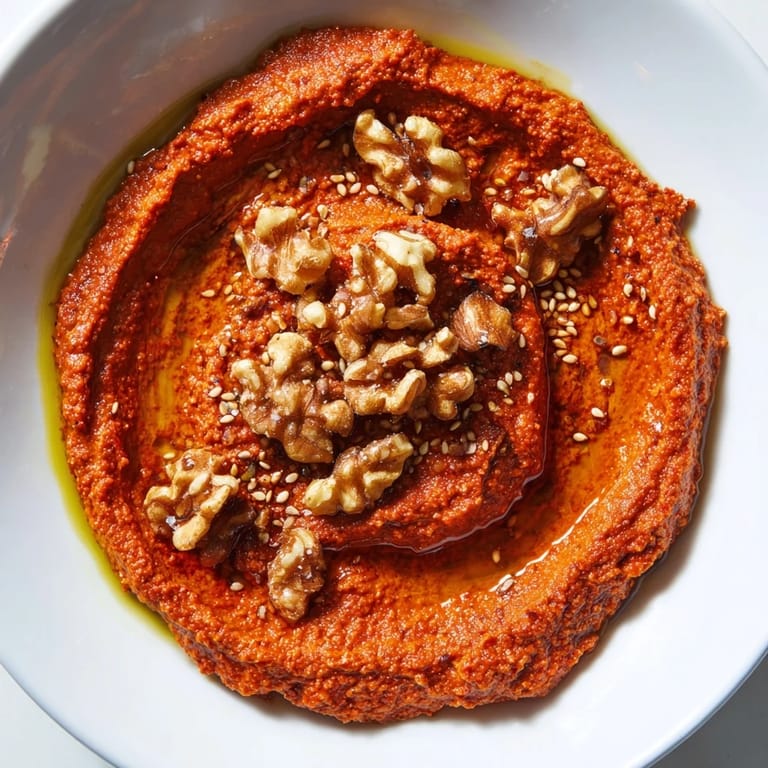
- Spoon the muhammara into a shallow bowl, create a gentle well in the center, and drizzle with more olive oil. Scatter sesame seeds on top if using, then arrange it on a table with warm pita, fresh vegetables, or crackers—and watch people gather around it.
 Save to Pinterest
 There's a moment when muhammara stops being just an appetizer and becomes something more—it's when someone you care about reaches for another spoonful without asking, or when a stranger at a dinner party asks about the ingredients with genuine curiosity. For me, that moment happens every time because this dip carries stories: the market in Damascus, my neighbor's garden tomatoes, the evening when time seemed to pause.
The Soul of Charred Peppers
Roasting peppers is one of those kitchen techniques that teaches you something fundamental: heat transforms. The moment you pull those blackened peppers from the oven and smell that smoky sweetness, you understand why muhammara works. That char isn't a mistake—it's intentional, it's the dish's backbone. If you're feeling adventurous, try grilling the peppers over an open flame instead of roasting; the flavor becomes even more pronounced, smokier in a way that makes you feel connected to older ways of cooking.
Tasting and Adjusting as You Go
I've learned that the best recipes are conversations between your hands and your palate. Muhammara teaches you this because each pepper is different, each bottle of pomegranate molasses varies slightly in tartness, and your taste preferences might shift from day to day. This is why I taste and adjust continuously—adding a squeeze more lemon juice, a pinch more cumin, scaling back the Aleppo pepper if my guests prefer gentler heat. The recipe is a guide, but your mouth is the real authority.
From Appetizer to Centerpiece
Muhammara is patient in the way it fits into meals. Serve it as an appetizer before something Mediterranean and grilled, spread it on sandwiches the next day, or nestle it into a mezze platter alongside hummus, baba ghanoush, and olives for a whole story on one table. It keeps well refrigerated for up to five days, which means one batch can become multiple moments—a quick lunch with pita, a canvas for roasted vegetables, even a surprise topping for grilled fish.
- Pair it with warm pita bread, fresh vegetables, or crackers and watch it disappear.
- Spread it on sandwiches, stuff it into roasted vegetables, or use it as a sauce for grilled chicken or fish.
- Make it ahead and bring it to gatherings—it's the kind of dish that makes you look like you spent hours in the kitchen.
 Save to Pinterest
 This dip is less about following rules and more about trusting yourself in the kitchen—about understanding that a recipe is really just someone sharing what worked for them. Make muhammara your way, taste constantly, and watch it become a reason people sit a little longer at your table.
Recipe FAQs
- → What is the best way to roast the peppers?
Roast the red bell peppers in a hot oven at 220°C (425°F) until skins are charred and blistered, then steam under cover to loosen the skin for easy peeling.
- → Can I make muhammara less spicy?
Adjust the heat by reducing the Aleppo pepper or red chili flakes according to your taste preferences.
- → What alternatives can I use for walnuts?
To maintain texture and flavor, use other toasted nuts like almonds or pecans, though walnuts are traditional.
- → How should muhammara be stored?
Store in an airtight container in the refrigerator for up to five days to preserve freshness and flavor.
- → What dishes pair well with this dip?
This dip complements fresh pita bread, crackers, vegetable sticks, or can be included in a mezze platter with hummus and baba ghanoush.
- → Can I add sesame seeds?
Toasted sesame seeds can be sprinkled on top for added texture and a nutty aroma, but are optional.