 Save to Pinterest
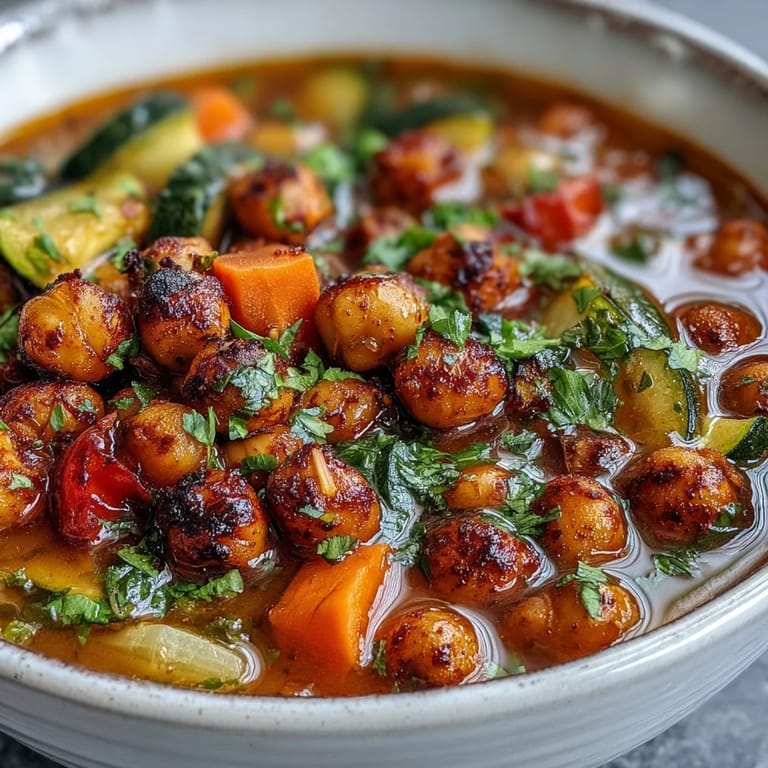
 There's something about autumn that makes me crave soups that taste like they've been simmering for hours, even though they haven't. This spiced chickpea and vegetable soup came together one Tuesday evening when I had leftover roasted chickpeas in the fridge and a bunch of vegetables that needed rescuing. The combination of warm spices—cumin, coriander, turmeric, cinnamon—fills your kitchen with this incredible aroma that makes everyone ask what's cooking before they even see the pot. What started as a simple way to use what I had on hand became a weeknight staple that somehow tastes different every time, depending on whatever vegetables I grab first.
I made this for a friend who'd just moved into a new apartment with barely any furniture and definitely no groceries. She was overwhelmed, so I showed up with ingredients and we cooked together in her mostly empty kitchen, laughing because the smell of roasting chickpeas was apparently the best housewarming gift she could've asked for. She's made it maybe twenty times since then, and she texts me photos of her variations—once she added sweet potato, another time coconut milk from day one instead of at the end. It's become her default when she wants to feel grounded, which says something about the quiet power of a good soup.
Ingredients
- Chickpeas (1 can, drained and rinsed): These are your protein and heartiness; rinsing them removes excess sodium and helps them crisp better when roasted.
- Olive oil (for roasting and sautéing): Use a good quality oil for roasting the chickpeas—it makes them taste almost nutty and golden.
- Smoked paprika (½ tsp for chickpeas): This adds a subtle depth without heat; it's the secret to making roasted chickpeas taste restaurant-quality.
- Ground cumin (¼ tsp plus 1½ tsp for broth): Cumin appears twice because it anchors the whole flavor profile and becomes more complex when toasted.
- Carrot, celery, zucchini, bell pepper (diced fresh): Fresh vegetables provide natural sweetness and texture; don't skip any of them because they each contribute something different.
- Garlic and onion (freshly minced and chopped): These are your flavor foundation—they should release their aroma immediately when they hit the hot pan.
- Kale or spinach (2 cups, chopped): Kale holds its shape better in simmering soup, but spinach adds a silkier texture if you prefer.
- Diced tomatoes (1 can): Canned tomatoes are consistently good and they add acidity that brightens all the warm spices.
- Vegetable broth (5 cups): Use a broth you'd actually drink on its own; it becomes the backbone of everything.
- Ground coriander, turmeric, cinnamon, cayenne (in spice section): These four spices work together to create warmth and complexity; toasting them for one minute before adding liquid releases their essential oils.
- Fresh lemon juice and cilantro or parsley (for finishing): The lemon brightens everything and prevents the soup from tasting heavy, while fresh herbs add a final layer of freshness.
Tired of Takeout? 🥡
Get 10 meals you can make faster than delivery arrives. Seriously.
One email. No spam. Unsubscribe anytime.
Instructions
- Roast the chickpeas until they're golden and crispy:
- Preheat your oven to 200°C (400°F), toss the drained chickpeas with olive oil, smoked paprika, cumin, and salt, then spread them on a baking sheet. Shake them halfway through the 20-minute roast so they brown evenly on all sides—you want some to be golden and slightly crunchy.
- Build your flavor base in the pot:
- While chickpeas roast, heat olive oil in a large pot over medium heat and sauté the chopped onion and minced garlic for 2–3 minutes until softened and fragrant. You'll know it's ready when the kitchen smells like you're about to make something good.
- Add the rest of the fresh vegetables and let them start softening:
- Stir in the diced carrot, celery, zucchini, and bell pepper, cooking for about 5 minutes while stirring occasionally. The vegetables should start to soften at the edges but still hold their shape.
- Toast the dry spices to wake them up:
- Add the ground cumin, coriander, turmeric, cinnamon, and cayenne pepper to the vegetables and stir constantly for about 1 minute. You'll immediately smell how the heat brings out their warmth—that's when you know they're ready.
- Bring the soup to life with tomatoes and broth:
- Stir in the canned diced tomatoes and vegetable broth, then bring everything to a boil before reducing the heat to a simmer. Let it bubble gently for 15 minutes so the vegetables finish cooking and the flavors start mingling.
- Add the greens and half of your roasted chickpeas:
- Stir in the chopped kale or spinach and half of the crispy roasted chickpeas, then simmer for another 5 minutes until the greens are completely wilted and the vegetables are tender. The soup should look vibrant and full.
- Finish with brightness and seasoning:
- Squeeze in the fresh lemon juice and taste as you season with salt and black pepper—the lemon is crucial because it prevents the soup from feeling heavy. Adjust the spices if you want more warmth or heat.
- Serve and crown it with the remaining chickpeas:
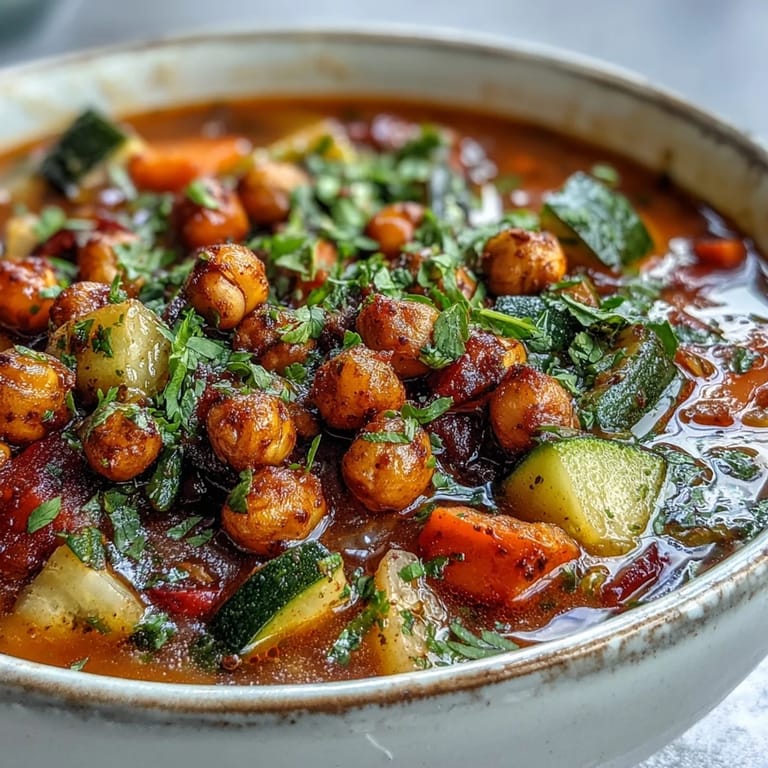
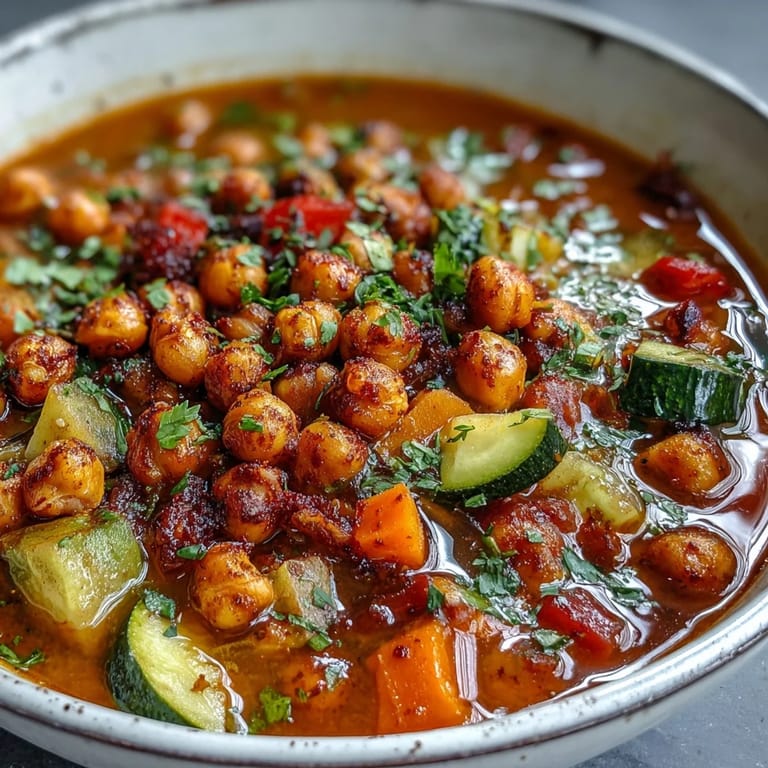
- Ladle the soup into bowls and top each serving with the remaining roasted chickpeas and a generous handful of fresh cilantro or parsley. The contrast between the warm soup and crispy chickpeas is part of what makes this recipe feel special.
 Save to Pinterest
 My sister made this soup the night before she left for a job across the country, and we sat at her kitchen table eating it straight from the pot, talking about everything and nothing. Years later, whenever she visits, that's what she requests—not because it's fancy, but because it reminds her of that particular moment when everything felt uncertain but the soup felt certain, warm, and enough.
Why Roasted Chickpeas Matter
The roasting step might seem like an extra effort, but it's actually what separates this soup from dozens of others. When chickpeas hit that hot oven with oil and spices, they transform from soft to crispy, developing a nutty flavor and a texture that makes each spoonful interesting. I learned this the hard way by once skipping the roasting and adding raw chickpeas directly to the soup—it tasted fine but felt flat, and I've never made that mistake again.
Adapting This Soup to Your Season
One of the best things about this soup is that it actually tastes different depending on when you make it. In autumn, the warm spices feel like they're meant to be there; in late winter, the cinnamon seems to hug you from the inside out. I've made versions with butternut squash in November, added fresh green beans in July, and once threw in chopped sweet potato when that's all I had left.
Small Moments That Elevate Everything
The final squeeze of lemon juice is what I think about most when someone asks what makes this soup work. It's just two tablespoons, but it's the difference between a soup that tastes comforting and one that tastes alive. I've also discovered that swirling in a splash of coconut milk at the end creates a silkier texture without changing the core identity of the dish, and finishing with fresh cilantro instead of parsley gives it a completely different feel.
- Make it ahead: This soup tastes even better the next day when the spices have had time to deepen, though always save the roasted chickpeas topping for just before serving.
- Serve alongside something: Crusty bread for soaking or a small bowl of cooked rice transforms this into a full meal that feels more substantial.
- Taste as you go: Everyone's idea of salt, spice, and lemon brightness is different, so trust your own palate over the recipe numbers.
 Save to Pinterest
 This soup is the kind that makes you want to call someone after you've made it for the first time, just to say you finally understand why it matters. It's warm, it's elegant in its simplicity, and it proves that you don't need complicated techniques to create something that tastes like it came from somewhere real.
Recipe FAQs
- → Can I use dried chickpeas instead of canned?
Yes, soak 1 cup dried chickpeas overnight, then cook until tender before roasting. This takes longer but yields excellent texture and flavor.
- → How can I make this soup creamier?
Swirl in ½ cup coconut milk during the last 5 minutes of simmering. You can also blend a portion of the soup before adding greens for a thicker base.
- → What other vegetables work well in this soup?
Butternut squash, sweet potatoes, or cauliflower add sweetness. Swiss chard, escarole, or collard greens can replace kale. Adjust cooking times for harder vegetables.
- → How long does this soup keep?
Store in an airtight container for up to 4 days. The roasted chickpeas will soften over time—keep them separate and add just before serving for maximum crunch.
- → Can I freeze this soup?
Yes, freeze for up to 3 months. Omit the roasted chickpea topping and fresh herbs when freezing; add fresh roasted chickpeas and garnish after reheating.
- → How can I adjust the spice level?
Reduce or omit cayenne for milder flavor. Add more cayenne, a pinch of red pepper flakes, or diced jalapeño during step 4 if you prefer extra heat.