 Save to Pinterest
 My neighbor Marcus showed up at my door one autumn afternoon with a paper bag overflowing with roasted red peppers from his garden, insisting I do something brilliant with them. I'd never roasted peppers at home before, but watching their skins blister and char in the oven that evening felt like unlocking something I'd been missing. That single batch became this soup, and now whenever the seasons shift and peppers show up at the market, I find myself back in that kitchen moment.
I made this for my sister's dinner party when she mentioned offhand that she was tired of bland soups at restaurants. She took one spoonful and actually closed her eyes, which doesn't happen often with her. That bowl somehow became the thing everyone asked about, not the fancy main course I'd stressed over for days.
Ingredients
- Red bell peppers (4 large): The foundation of everything here; roasting them concentrates their natural sugars and gives the soup a gorgeous depth that raw peppers simply can't match.
- Olive oil (2 tablespoons for soup, 2 for croutons): Don't skimp on this, it carries all the flavor and makes the final texture luxurious.
- Yellow onion (1 medium): Gets sweet and mellow when sautéed, balancing the peppers' intensity.
- Garlic (2 cloves): Just enough to add complexity without pushing the dish into garlic-soup territory.
- Carrot (1 medium): Adds subtle sweetness and body to the broth.
- Tomato paste (1 tablespoon): Deepens the color and adds umami richness that makes people ask what your secret is.
- Harissa paste (1 tablespoon): This North African staple brings warmth and a hint of smoke; start small if you prefer milder heat.
- Smoked paprika (1 teaspoon): Echoes the roasting process and adds layered flavor complexity.
- Vegetable broth (1 liter): Quality matters here since it's the liquid backbone of the entire soup.
- Heavy cream or coconut cream (100 ml, optional): Smooths everything together into pure silk; coconut cream works beautifully if you're avoiding dairy.
- Lemon juice (2 teaspoons): Brightens the earthiness and makes each spoonful taste fresher than it should.
- Sea salt and black pepper: Always taste and adjust; this is where your personal seasoning style comes through.
- Rustic bread (3 thick slices): Use yesterday's bread if you have it; slightly stale bread makes croutons that stay crispy longer.
- Dried oregano (1/2 teaspoon): Ties the croutons to the Mediterranean flavors of the soup.
Tired of Takeout? 🥡
Get 10 meals you can make faster than delivery arrives. Seriously.
One email. No spam. Unsubscribe anytime.
Instructions
- Char those peppers until they blister:
- Set your oven to 220°C (425°F) and lay whole peppers directly on a baking tray. They'll look angry and blackened after 25–30 minutes of roasting, turning them halfway through; this is exactly what you want. The charred skin is flavor, and the steam that follows will let you peel it away like it's nothing.
- Let them steam themselves calm:
- Transfer the roasted peppers to a bowl, cover tightly with plastic wrap or a lid, and walk away for 10 minutes. The steam loosens the skin from the flesh, making peeling almost meditative. Once cooled, the skins slip off in satisfying strips, and you can scoop out the seeds with ease.
- Build the flavor base slowly:
- Heat olive oil in a large pot over medium heat and add your chopped onion and carrot. Give them 5–7 minutes to soften and turn translucent, then add garlic for just 1 minute until the kitchen smells incredible. This isn't rushing; it's allowing the vegetables to release their sweetness.
- Wake up the spices:
- Stir in tomato paste, harissa, and smoked paprika, cooking for about 1 minute. You'll smell the transformation immediately; that's the heat releasing the oils. Don't skip this step; it's what separates good soup from one that actually lingers in your memory.
- Simmer everything into harmony:
- Add your roasted pepper flesh and vegetable broth, bring to a gentle simmer, cover, and let it cook for 15 minutes. The soup will deepen in color and the flavors will start talking to each other.
- Toast croutons while the soup rests:
- Toss bread cubes with olive oil, dried oregano, and sea salt, then spread on a baking tray. Bake at 200°C (400°F) for 8–10 minutes, tossing halfway, until they're golden and crisp enough to shatter between your fingers.
- Blend until it's velvet:
- Remove the soup from heat and use an immersion blender to purée until completely smooth, or work in batches with a regular blender if that's what you have. The texture should be rich and pourable, not chunky.
- Finish with brightness and richness:
- Stir in lemon juice and cream (if using), then taste and adjust salt and pepper. This final step is crucial; the lemon makes everything pop, and the cream ties it all together into something elegant.
- Serve immediately with crunch on top:
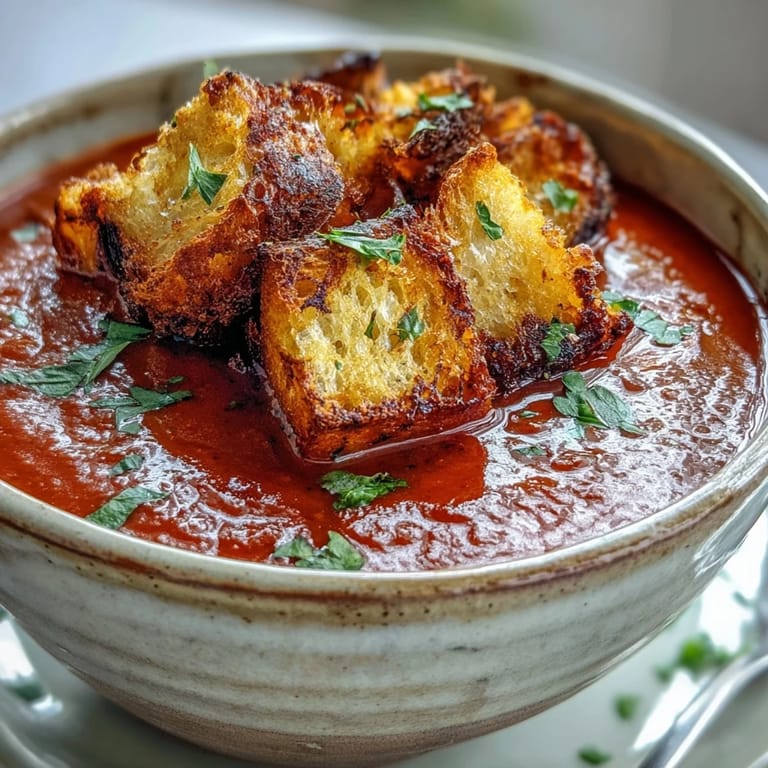
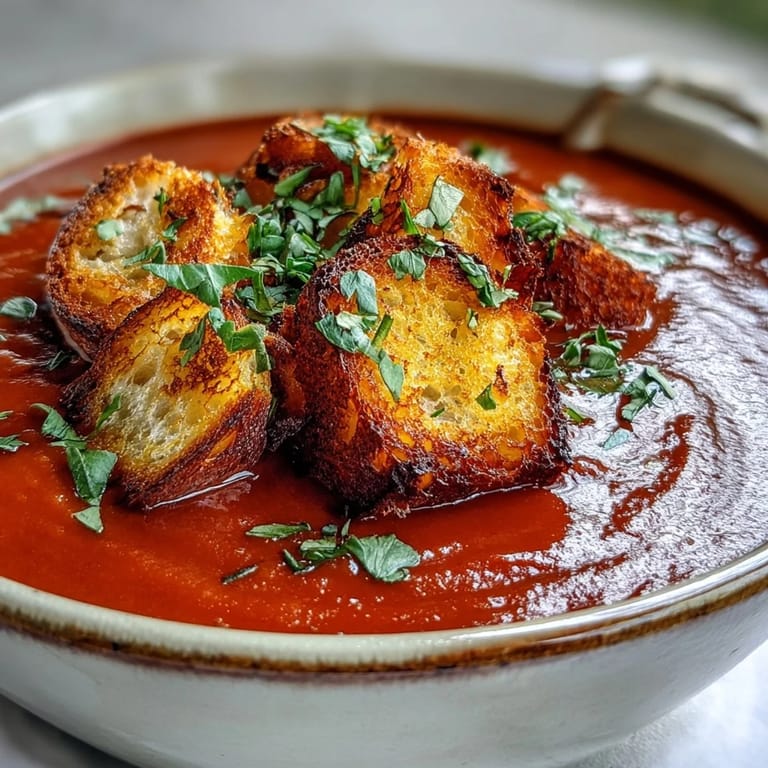
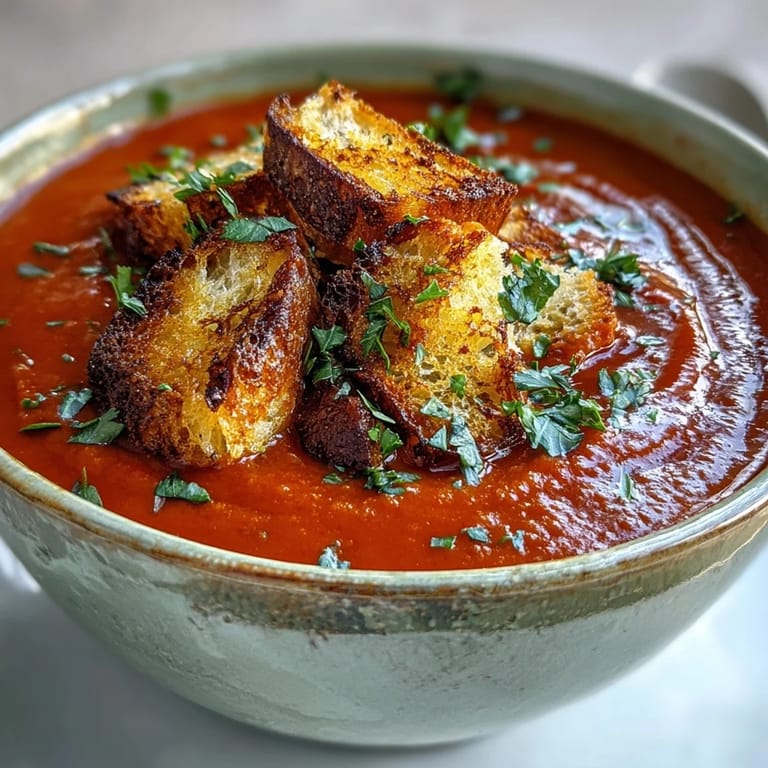
- Ladle the soup into bowls and crown each one with a handful of croutons. The contrast between silky soup and crispy bread is where the magic lives.
 Save to Pinterest
 There's something about watching someone taste this soup for the first time that makes cooking feel worth it. They always pause and say something like, 'Wait, this is just peppers?' Yes, and also no.
The Science of Roasting
Roasting peppers isn't just for show; it's chemistry. The high heat breaks down the cell walls and concentrates the natural sugars, which is why roasted pepper soup tastes exponentially better than something made from raw peppers blended with broth. The charred skin, while it looks intimidating, contains deep caramelized flavors that become part of the final taste through the steam and the flesh itself. This is why the 10-minute rest in a covered bowl matters so much.
Playing with Heat and Harissa
Harissa is a paste from North Africa that can range from mildly warm to absolutely face-melting depending on the brand and how many chiles went into it. Start with half a tablespoon, taste the soup, and add more if you want. I've learned this the hard way after making bowls that sent guests reaching for water. The beauty of harissa is that it brings complexity beyond just heat, adding smoky and slightly fruity notes that make people wonder what your secret ingredient is.
Texture and Timing
The contrast between the silky soup and crispy croutons is the entire point of this dish. Don't make the croutons ahead of time unless you're serving within an hour; they soften as the soup steams them slightly. If you're making this for guests, you can prep everything in advance and finish the croutons while the soup simmers, so they're still warm and crunchy when you serve. The whole rhythm of this recipe is designed so you're not panicking at the end.
- Make the croutons while the soup simmers so they're perfect and warm when you ladle.
- If you need to make this ahead, blend and season the soup but don't add cream until right before serving.
- Leftover soup keeps for three days in the fridge, though the croutons must be fresh or they turn into sad bread chunks.
 Save to Pinterest
 This soup has become my answer to those moments when I want to cook something that feels special without spending hours in the kitchen. It's proof that simple ingredients, when treated with attention and a little heat, become something that tastes like love.
Recipe FAQs
- → Can I use jarred roasted red peppers instead of roasting fresh ones?
Yes, you can substitute with jarred roasted red peppers to save time. Use about 2 cups (500g) of drained jarred peppers. The flavor will be slightly less intense than freshly roasted, but still delicious.
- → How can I make this soup spicier?
Increase the harissa paste gradually, adding an extra tablespoon for more heat. You can also add a pinch of cayenne pepper or red pepper flakes. Taste as you go to reach your preferred spice level.
- → Can I make this soup ahead of time?
Absolutely. The soup stores well in the refrigerator for up to 4 days. Prepare the croutons separately and store in an airtight container at room temperature. Add croutons just before serving to maintain their crispness.
- → What can I use instead of heavy cream?
Coconut cream works beautifully for a dairy-free option. You can also use cashew cream, Greek yogurt, or simply omit the cream entirely for a lighter, vegan-friendly version without compromising flavor.
- → How do I prevent the croutons from getting soggy?
Add croutons immediately before serving rather than letting them sit in the hot soup. Store leftover croutons separately and add fresh to each reheated portion to maintain maximum crunchiness.
- → Can I freeze this soup?
Yes, this soup freezes well for up to 3 months. Freeze without the cream, then stir it in after reheating. Always prepare fresh croutons rather than freezing them for best texture.