 Save to Pinterest
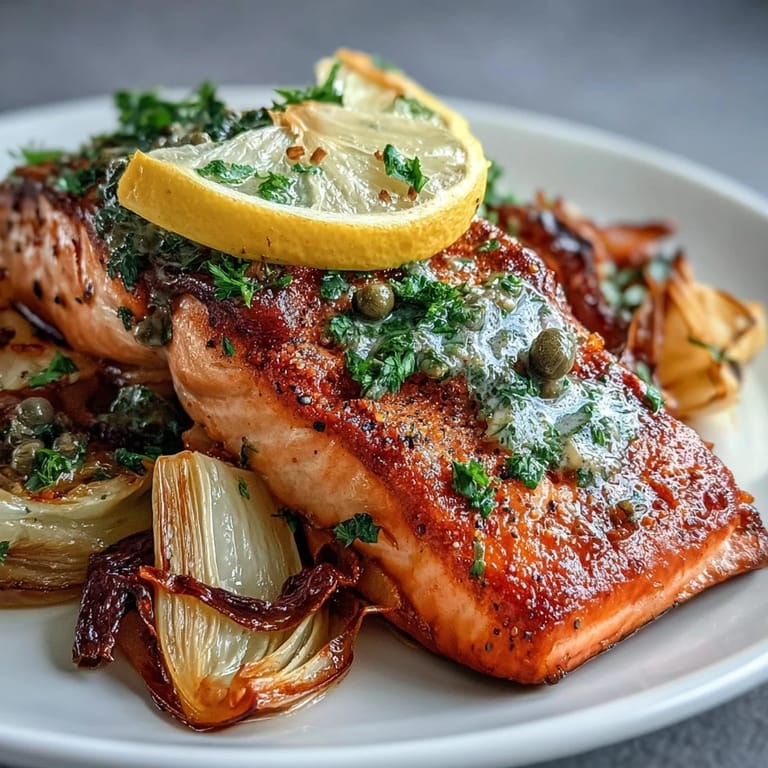
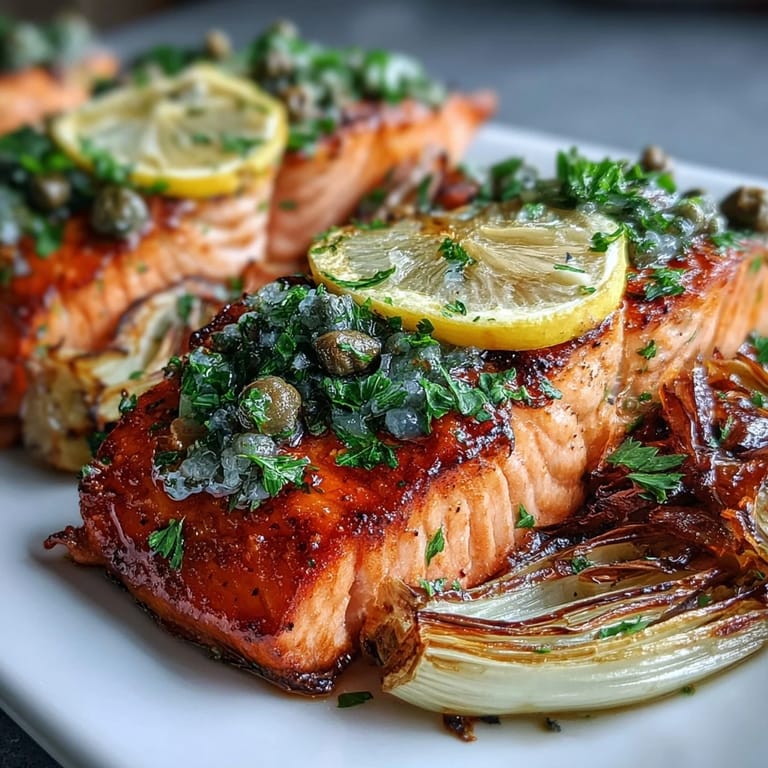
 There's something about a sheet pan that makes me feel like I've got my life together, even when I'm juggling work emails and dinner plans. One Wednesday evening, I was standing in front of my fridge with exactly forty minutes before guests arrived, and this salmon dish practically assembled itself. The leeks caramelized into something almost buttery, the salmon stayed impossibly moist, and that parsley dressing—tangy with capers and lemon—made everyone ask for the recipe before they'd even finished their first bite.
I made this for my sister's dinner party last spring when she was newly pescatarian and I wanted to prove that eating fish didn't mean sacrificing bold flavors. She took one bite, closed her eyes, and said it tasted like something she'd order at that place downtown with the exposed brick. That's when I knew the capers and the mustard had done their job—creating this bright, unexpected complexity that made simple roasted salmon feel like an event.
Ingredients
- Salmon fillets (4, about 150 g each, skin-on): Skin-on keeps the flesh tender and adds richness; ask your fishmonger to leave it on and pat the skin dry before roasting for maximum crispness.
- Leeks (2 large, trimmed and sliced into 1/2-inch rounds): They caramelize into something almost creamy without any cream involved; slice them crosswise to create little rings that nestle around the salmon.
- Red onion (1 large, sliced into wedges): The natural sweetness balances the sharpness of the dressing and gets jammy at the edges when roasted.
- Olive oil (2 tbsp for roasting): Plain olive oil for the vegetables, nothing fancy needed here.
- Sea salt and black pepper (1/2 tsp and 1/4 tsp): Season generously before roasting so the vegetables develop flavor, not just surface salt.
- Lemon (1, sliced): Fresh lemon slices on top of the salmon perfume it while it cooks and look beautiful on the plate.
- Fresh flat-leaf parsley (1 cup, finely chopped): The backbone of the dressing; flat-leaf (Italian) parsley has more personality than the curly kind.
- Garlic clove (1 small, minced): Just enough to wake up the dressing without overpowering the delicate fish.
- Dijon mustard (1/2 tsp): This is the secret ingredient that makes people wonder what they're tasting; it adds depth and a subtle tang.
- Capers (1 tsp, drained and chopped): Briny little flavor bombs that cut through the richness of the salmon beautifully.
- Lemon zest (1/2 tsp): Zest before juicing the lemon, and don't be shy—this is where the brightness lives.
- Extra-virgin olive oil (3 tbsp for dressing): This one matters; use something you actually like the taste of.
- Fresh lemon juice (1 tbsp): Freshly squeezed, never the bottled stuff in the plastic lemon.
Tired of Takeout? 🥡
Get 10 meals you can make faster than delivery arrives. Seriously.
One email. No spam. Unsubscribe anytime.
Instructions
- Heat your oven and prep the pan:
- Set your oven to 400°F (200°C) and grab your largest baking sheet—you want everything to fit in a single layer so the vegetables roast properly and nothing steams. A crowded pan is the enemy of caramelization.
- Get the vegetables started:
- Spread your leek rounds and red onion wedges on the sheet, drizzle with olive oil, season with salt and pepper, and toss until everything is coated. Roast them alone for 10 minutes so they get a head start and become slightly tender before the salmon joins them.
- Nestle in the salmon:
- Pull out the baking sheet carefully, arrange your salmon fillets skin-side down among the vegetables, and lay lemon slices across the top of each fillet. The lemon will steam the fish gently from above while the heat from below crisps the skin.
- Finish roasting:
- Return everything to the oven for 12 to 15 minutes—the salmon should be opaque throughout when you peek at it (you can insert a fork into the thickest part and it should flake easily), and the leeks should be completely tender. Don't overcook the salmon or it becomes dry and loses its delicate texture.
- Make the dressing while everything roasts:
- In a small bowl, combine your finely chopped parsley, minced garlic, Dijon mustard, chopped capers, lemon zest, extra-virgin olive oil, and fresh lemon juice. Stir it together well, taste it, and season with salt and pepper until it makes your mouth light up a little.
- Plate and serve:
- Transfer your salmon and roasted vegetables to plates while everything is still warm, and spoon that vibrant parsley dressing generously over the top. Serve immediately so you catch the contrast between the warm fish and the bright, fresh dressing.
 Save to Pinterest
 What struck me most about this dish wasn't just how it tasted, but how it transformed an ordinary Wednesday into something that felt intentional and thoughtful. My guests left that evening talking not about the food specifically, but about how the meal made them feel—relaxed, nourished, like they'd been taken care of in a way that mattered.
Why This Recipe Works So Well
The beauty of roasting everything together is that the vegetables release their moisture and seasonings, which pool slightly around the salmon and keep it incredibly moist while the skin gets crispy. The timing is forgiving too—a few minutes difference won't ruin anything, which means you can actually stay in the moment instead of watching the clock. And because there's only one pan, the flavors have a chance to mingle and marry rather than being scattered across multiple burners and pans.
The Dressing Is Everything
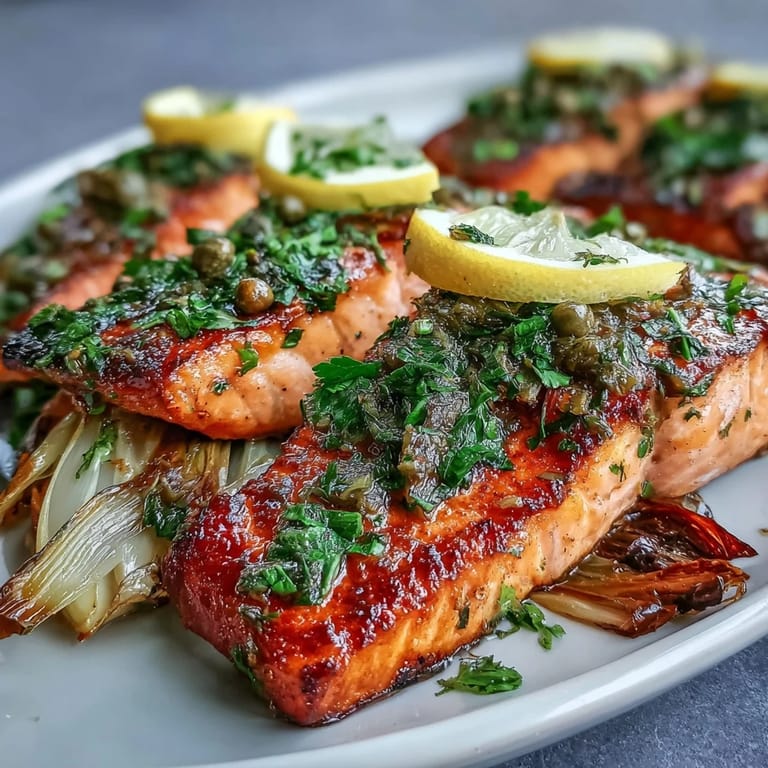
I learned this lesson the hard way by making salmon dozens of different ways before discovering that a simple parsley dressing could completely change the story. The mustard and capers work together like a tag team, creating this unexpected briny-sharp moment that makes the rich salmon taste lighter and more interesting. It's the kind of technique that feels fancy but is genuinely simple, and once you understand how it works, you'll start using it on roasted vegetables, grilled chicken, even boiled potatoes.
Flexibility and Swaps
This recipe adapts beautifully depending on what's in your kitchen or what you're in the mood for. I've made it with trout when salmon was out of my budget, with cod when I wanted something milder, and once even with thick slices of halibut that I happened to find at the market. The vegetable lineup is equally flexible—I've swapped in fennel, asparagus, or even thick-cut carrots depending on the season, and the dressing works with all of them.
- If you want extra heat, add a pinch of crushed red pepper flakes to the dressing and watch how it wakes everything up.
- Serve alongside roasted potatoes or steamed rice to make it heartier, or just enjoy it as is if you're eating lighter.
- Any leftover dressing keeps for a day in the fridge and tastes wonderful on salads or roasted vegetables the next day.
 Save to Pinterest
 This is the kind of recipe that feels special without requiring any special skills, which is exactly when cooking becomes a joy instead of a chore. Make it once and you'll find yourself reaching for it again and again.
Recipe FAQs
- → Can I use frozen salmon fillets?
Yes, just ensure they are completely thawed and patted dry before roasting for best results and even cooking.
- → What other fish works well with this preparation?
Trout, cod, or halibut are excellent alternatives. Adjust cooking time based on thickness—thinner fillets may need 10-12 minutes.
- → Can I make the parsley dressing ahead of time?
Absolutely. Prepare the dressing up to 24 hours in advance and refrigerate. Bring to room temperature before serving for optimal flavor.
- → How do I know when the salmon is perfectly cooked?
The salmon should flake easily with a fork and reach an internal temperature of 145°F. It should appear opaque with a slightly translucent center.
- → What side dishes pair well with this salmon?
Roasted potatoes, steamed rice, quinoa, or a simple green salad complement the dish beautifully without overwhelming the flavors.
- → Can I add other vegetables to the pan?
Yes, bell peppers, cherry tomatoes, or asparagus work wonderfully. Add them with the leeks and onions, adjusting roasting time as needed.