 Save to Pinterest
 I made this salad on a whim one afternoon when a friend mentioned she was tired of boring vegetables. I'd been daydreaming about how light behaves through a prism in my kitchen window, and something clicked—why not arrange vegetables the same way? Within minutes of gathering cherry tomatoes, peppers in every hue, and blueberries from the fridge, I realized I was creating something that looked almost too beautiful to eat. The real magic happened when my friend walked in, stopped mid-sentence, and just stared. That's when I knew this dish was special.
I served this at a small dinner party where someone was dealing with dietary restrictions, and instead of feeling like a compromise, it became the star of the table. Everyone reached for it first, drawn in by the colors before they even tasted it. Watching people discover the sweetness of corn, the peppery snap of radishes, and the cool creaminess of ricotta all in one forkful reminded me that the best meals are the ones that surprise you.
Ingredients
- Ricotta cheese: The creamy, slightly sweet anchor that holds everything together—use full-fat if you want it richer, or Greek yogurt if you're keeping it light and tangy.
- Extra-virgin olive oil: Not the moment to skimp; a good one adds warmth and depth to both the base and the dressing.
- Lemon zest: This tiny addition brightens the ricotta and ties all the vegetables together with a subtle citrus thread.
- Cherry tomatoes: Pick ones that are still slightly firm; they hold their shape better when halved and don't turn to mush under the weight of other ingredients.
- Bell peppers in red, orange, and yellow: These are your visual backbone—slice them thin enough that they're tender but thick enough to hold their color and shape.
- Orange bell pepper and carrots: The carrots add a pleasant crunch and earthiness that deepens the warmth of the orange layer.
- Yellow bell pepper and corn: Fresh or frozen corn works equally well; the sweetness creates a natural bridge between vegetables.
- Cucumber, edamame, and fresh herbs: These provide the cooling, herbaceous notes that make the green section feel refreshing rather than heavy.
- Blueberries and purple cabbage: The blueberries are juicy and delicate, while the cabbage stays crisp; together they create visual impact without overpowering.
- Red grapes and radishes: Grapes add sweetness and smoothness; radishes bring a peppery snap that keeps things interesting in the violet section.
- Dressing: A simple vinaigrette that's light enough not to wilt anything but bright enough to tie all these separate colors into one cohesive bite.
Tired of Takeout? 🥡
Get 10 meals you can make faster than delivery arrives. Seriously.
One email. No spam. Unsubscribe anytime.
Instructions
- Build your creamy foundation:
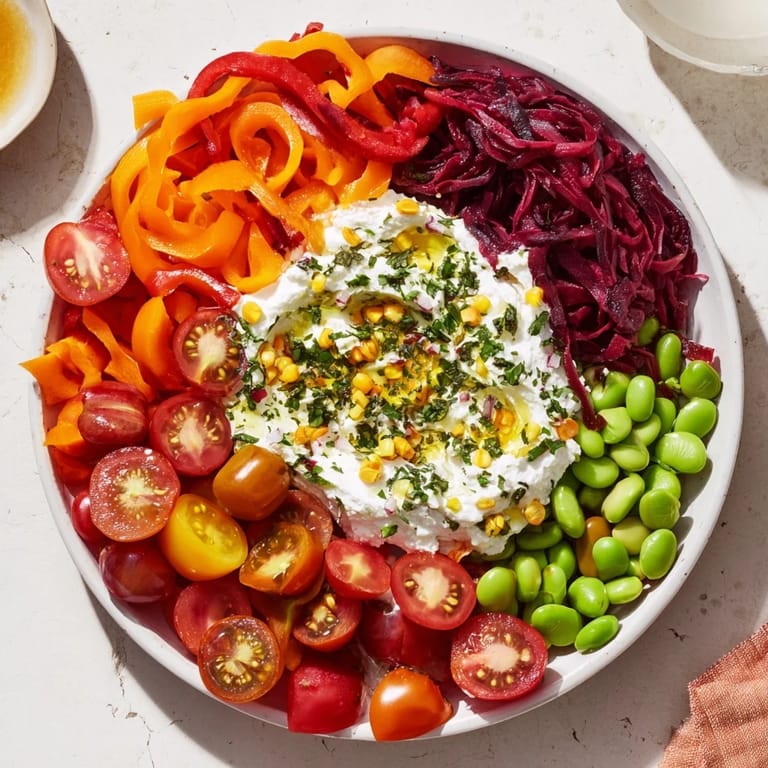
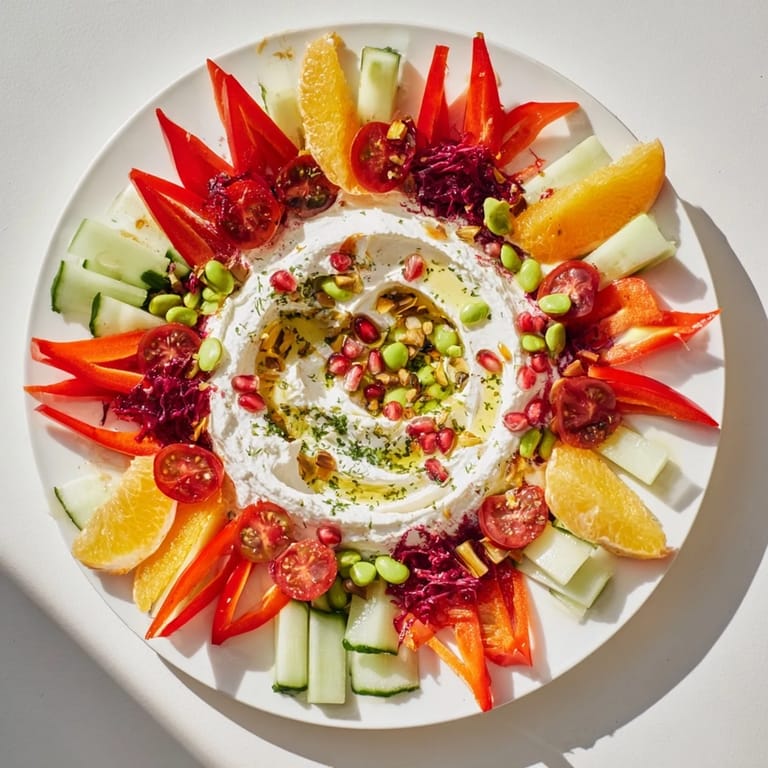
- Combine ricotta, olive oil, lemon zest, salt, and pepper in a small bowl, stirring until smooth and spreadable. Spoon this onto the center of your platter and gently spread it into a small white circle—this is your anchor point, the still center from which everything radiates.
- Prep your colors in advance:
- Arrange each color group—reds, oranges, yellows, greens, blues, violets—into their own small bowls. This takes just a few minutes but makes assembly feel orchestrated rather than chaotic.
- Fan outward like light through glass:
- Starting at the white center, begin placing your red layer in a fan shape radiating outward, keeping the colors visibly separate. Continue with orange, yellow, green, blue, and violet, letting each new color ring expand a little further. Take your time here; this is where the dish becomes itself.
- Make a bright, simple dressing:
- Whisk olive oil, lemon juice, honey, salt, and pepper together in a small bowl until emulsified. Taste it and adjust the balance—it should feel fresh and slightly honeyed, never acidic.
- Dress lightly and serve immediately:
- Drizzle the dressing over the salad just before serving, or offer it on the side so people can control their own amount. Finish with a final sprinkle of black pepper and fresh herbs if you like.
 Save to Pinterest
 There's something almost meditative about standing at a kitchen counter, arranging colors in a precise fan, knowing that the person eating it will feel cared for before they even taste it. It reminded me that food isn't just fuel—it's a small rebellion against the ordinary.
The Science of the Colors
This salad works because it follows the visible light spectrum, which your eye instinctively recognizes as harmonious and balanced. The progression from warm reds and oranges through cool greens and blues creates a natural rhythm that feels right without you needing to think about why. Each color group also brings its own nutritional profile: reds and pinks from tomatoes and grapes deliver lycopene and antioxidants, yellows and oranges are rich in beta-carotene, greens offer iron and minerals, and blues come loaded with anthocyanins. It's beautiful and good for you—a rare combination.
Customizing Your Prism
The magic of this dish is that it adapts to whatever's in season or in your crisper drawer. In summer, swap corn for fresh peas and use heirloom tomatoes in every shade of red and pink you can find. In fall, shredded beets replace some of the reds, and thinly sliced apples add sweetness to the yellow section. Winter calls for roasted vegetables—thin slices of beet, butternut squash, and Brussels sprouts tossed with a touch of olive oil create warmer, deeper tones. The structure stays the same, but the story changes with the season.
Making It Your Own
Once you understand the framework, this salad becomes a playground. Toasted nuts or seeds add crunch and richness without disrupting the visual harmony. Microgreens scattered across the top catch the light and add sophistication. Edible flowers—pansies, nasturtiums, borage—bring unexpected delicacy and color. For a vegan version, swap ricotta for cashew cream or silken tofu blended with lemon juice and garlic. Some people drizzle a tahini-based dressing instead of vinaigrette, which adds earthiness and helps the salad feel more substantial.
- Fresh herbs work best when added just before serving so they stay vibrant and don't wilt into the dressing.
- If you're making this ahead, keep the dressing separate and the vegetables loosely covered in the fridge for up to 4 hours.
- Serve this salad on your prettiest platter—it deserves the right stage.
 Save to Pinterest
 This salad taught me that beauty and flavor don't have to compete—they can be the same thing. Make it when you want to slow down and pay attention to what you're creating.
Recipe FAQs
- → What is the base layer made of?
The base is a creamy blend of ricotta cheese or Greek yogurt, enhanced with olive oil, lemon zest, salt, and pepper, forming a smooth central foundation for the salad.
- → How are the colorful layers arranged?
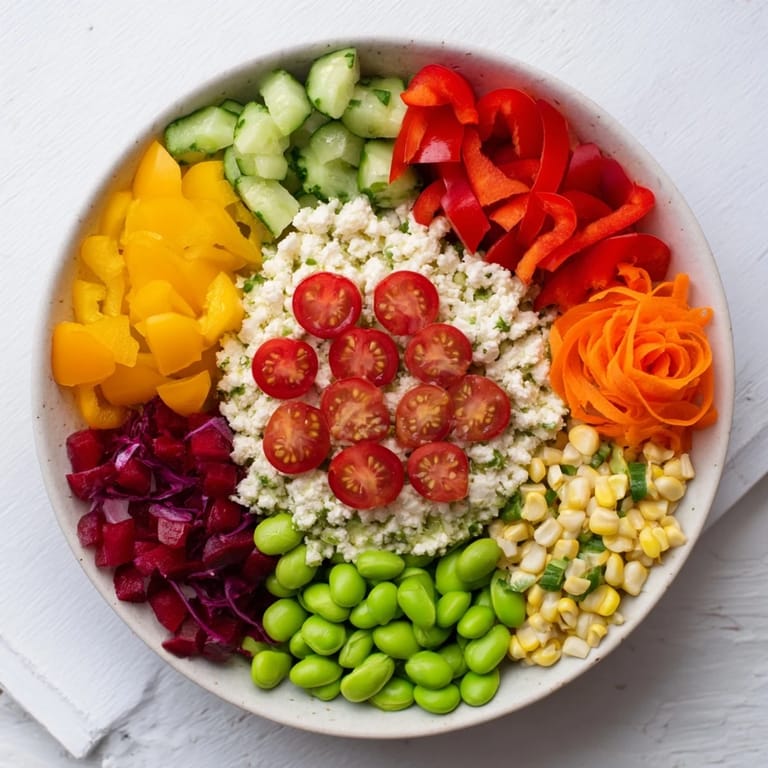
Each color group—red, orange, yellow, green, blue, and violet—is arranged in fan-like stripes radiating outward from the central white base, creating a prism-inspired presentation.
- → Can the salad be made vegan?
Yes, substituting the ricotta with vegan cream cheese or plant-based yogurt makes this dish suitable for vegan diets.
- → What kind of dressing is used?
A simple dressing of olive oil, lemon juice, honey or agave syrup, salt, and pepper is whisked together and gently drizzled over the salad to enhance freshness without overpowering the flavors.
- → Are there any suggested additions for texture?
To add crunch, toasted nuts or seeds such as pumpkin seeds or pine nuts can be sprinkled on top, complementing the dish's crispness.
- → How long does it take to prepare?
The entire preparation is quick, taking about 25 minutes, as no cooking is required beyond prepping and arranging the ingredients.