 Save to Pinterest
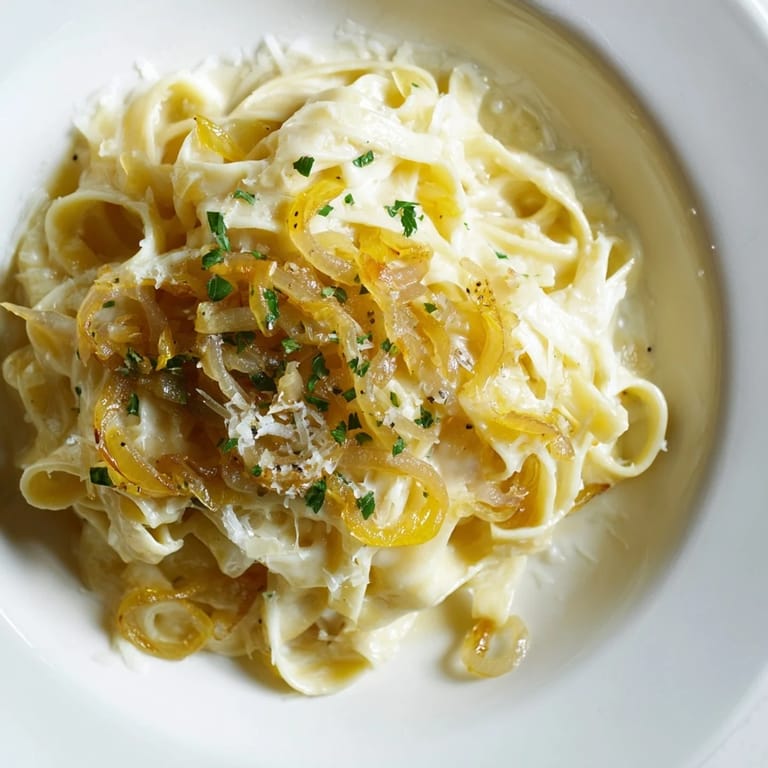
 One night, standing in my kitchen with a nearly empty pantry and the rain drumming against the window, I found three onions rolling around in a drawer and suddenly remembered a bowl of French onion soup I'd had years ago—that deep, golden richness that made everything feel like home. I wondered if I could capture that same magic in pasta form, cooking it all in one pot while the onions slowly transformed into something almost sweet and caramelized. What emerged was something between a soup and a pasta, creamy and comforting in a way that surprised even me.
I made this for my sister on a quiet Sunday afternoon, and she came back for thirds without saying much—just the kind of quiet appreciation that means everything. The cheese pooled at the bottom of her bowl, the pasta had soaked up all that golden broth, and somehow this simple dish had turned an ordinary day into something she still talks about.
Ingredients
- Large yellow onions (3): These are your foundation—the longer they cook, the sweeter they become, so don't rush them or swap for red onions, which turn mushy and lose their subtle depth.
- Garlic (2 cloves, minced): Just enough to whisper its presence without overpowering; add it after the onions are golden so it doesn't burn.
- Dry fettuccine or linguine (350 g): The flat noodles catch the broth better than smaller shapes, creating pockets of flavor in every bite.
- Dry white wine (60 ml): This cuts through the richness and adds brightness; don't skip it even if you think you dislike wine-cooked food.
- Vegetable or beef broth (1 L): Beef broth deepens the flavor into something almost meaty, but vegetable broth keeps it lighter and lets the onions shine.
- Unsalted butter (2 tbsp): Combine this with olive oil to get the right balance of browning power and caramelization without burning.
- Gruyère cheese (120 g, grated): The nutty, complex flavor is worth seeking out; it melts into the dish like it was always meant to be there.
- Parmesan cheese (60 g, grated): This adds a sharp edge that keeps the dish from becoming one-note and rich.
- Olive oil (2 tbsp): Choose a neutral one so the onions stay the star of the show.
- Sugar (1 tsp): A small amount helps the onions caramelize faster without making the dish taste sweet.
- Dried thyme (1/2 tsp): Earthy and subtle, it bridges French onion soup and pasta in a way fresh herbs can't.
- Bay leaf (1): Remove it before serving, but while it's cooking, it quietly deepens everything around it.
- Salt and freshly ground black pepper: Taste as you go because the broth, cheese, and cooking process all affect final seasoning.
Tired of Takeout? 🥡
Get 10 meals you can make faster than delivery arrives. Seriously.
One email. No spam. Unsubscribe anytime.
Instructions
- Start the foundation with butter and oil:
- Heat them together in your largest, deepest skillet over medium heat until the butter foams and the kitchen starts smelling rich and inviting. This combination gives you the caramelization power you need without the risk of burning.
- Caramelize the onions slowly:
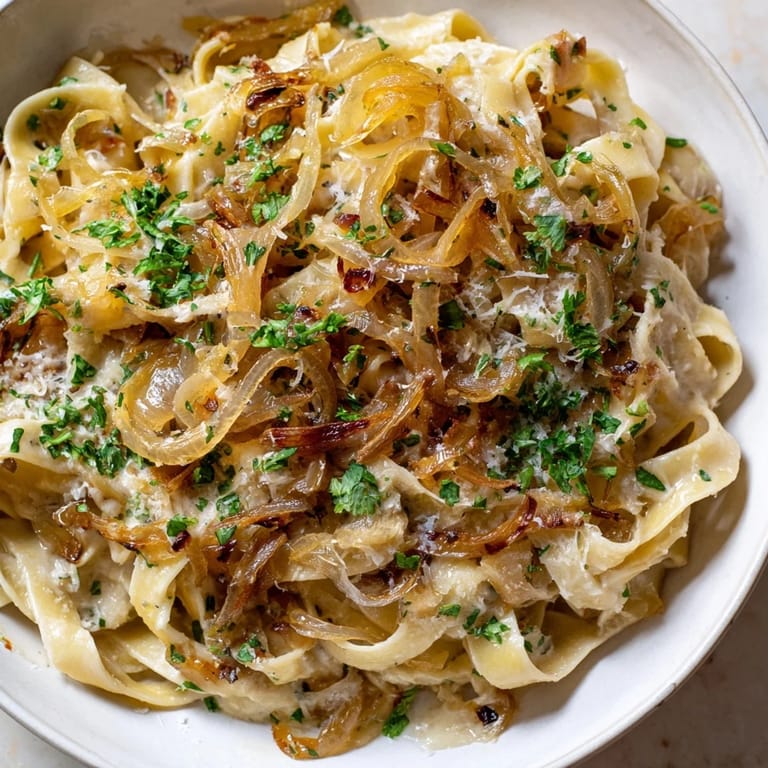
- Add your sliced onions and that small spoon of sugar, then let them sit undisturbed for a minute or two before stirring—this helps them brown instead of steam. Keep stirring occasionally for the next 20–25 minutes, letting them go from pale gold to deep amber, almost honey-colored; this patience is what transforms ordinary onions into liquid gold.
- Wake up the garlic:
- Add minced garlic and cook just until it becomes fragrant, about a minute—your nose will tell you when it's right. Don't let it sit longer or it'll turn bitter and harsh.
- Deglaze with wine:
- Pour in the white wine and scrape the bottom of the pan with your wooden spoon, lifting all those caramelized bits into the liquid. Let it bubble down until you can barely smell the raw wine and most of it has cooked away, about 2 minutes.
- Build the broth base:
- Add the thyme, bay leaf, and all your broth, then bring it to a rolling boil—you'll see it really come alive. This is your liquid now, and it's ready to cook the pasta right in it.
- Cook the pasta in the broth:
- Break the pasta in half if it's too long for your pot, then stir it in well so every piece gets coated and nothing sticks to the bottom. Turn the heat down to medium-low and let it simmer uncovered, stirring every couple of minutes, for 10–12 minutes until the pasta is tender and the liquid is mostly absorbed but still creamy.
- Finish with cheese:
- Fish out the bay leaf, then remove from heat and stir in both cheeses until they melt into something silky and creamy. Taste it now and season with salt and pepper—trust your palate here because it's your dish.
- Serve while it's still steaming:
- Scoop it into bowls and top with fresh parsley and maybe a little extra cheese if you're feeling generous. The longer it sits, the thicker it becomes, so eat it while it's still got that luxurious, creamy consistency.
 Save to Pinterest
 The first time I served this to guests, they kept talking long after dinner ended—not about the food itself, but about how it made them feel, how it tasted both simple and special. That's when I understood this dish had somehow bridged something, taking the elegance of French cooking and turning it into something you could make on a quiet Tuesday night.
Why This Works as a One-Pot Meal
Cooking the pasta directly in the broth means it absorbs all that caramelized onion flavor instead of being added at the end like an afterthought. The pasta releases its starch into the liquid, making everything naturally creamy without needing cream, and by the time everything is done, you have a cohesive dish instead of separate components. It's the kind of efficiency that feels less like a shortcut and more like wisdom.
Wine, Cheese, and Flavor Layers
The white wine does more than just add taste—it cuts through the richness of the butter and cheese, keeping the whole dish bright even as everything else pulls toward comfort and density. Gruyère brings a subtle nuttiness that feels sophisticated, while Parmesan adds a sharp, almost salty edge that keeps you coming back for another bite. Together, they create layers instead of a single flat flavor, which is what separates a good dish from one that stays with you.
Making It Your Own
I've learned that recipes are invitations, not rules, and this one has room for your own touches. Some nights I add mushrooms sautéed until they're deeply golden, or swap beef broth for vegetable when I want something lighter. The bones of the dish—caramelized onions, pasta, cheese—stay strong enough to hold whatever variations you introduce.
- Beef broth makes this feel almost meaty and luxurious, while vegetable broth lets the onions and cheese be the stars.
- Sautéed mushrooms add an earthy depth that some people swear they didn't know they needed until they tasted it.
- Fresh thyme stirred in at the end, or even a whisper of tarragon, changes the entire character while keeping the same comforting base.
 Save to Pinterest
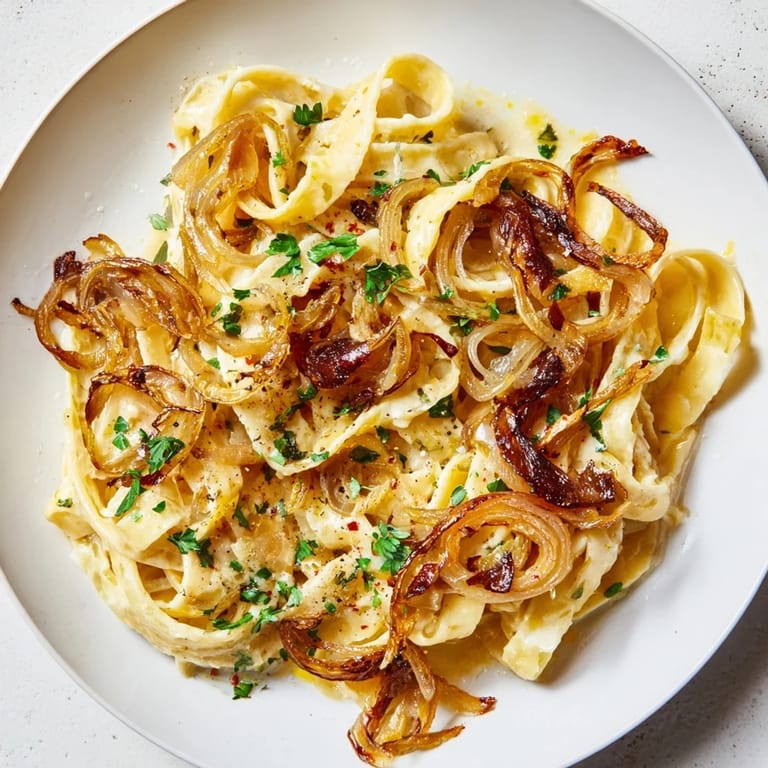
 This dish reminds me that sometimes the most comforting meals come not from complexity, but from patience—from giving ordinary ingredients time to become something remarkable. Make it when you want to feel like you're cooking something special without the stress.
Recipe FAQs
- → How do I caramelize onions perfectly for this dish?
Cook thinly sliced onions slowly over medium heat in butter and olive oil, stirring occasionally for 20–25 minutes until they turn deep golden brown and sweet.
- → Can I use a different type of pasta?
Yes, linguine or fettuccine work best, but you may substitute other long pasta shapes keeping the cooking time similar.
- → What alternatives exist for the broth?
Vegetable broth keeps it vegetarian, while beef broth adds richer, deeper flavor. Choose based on preference.
- → How should I melt the cheese evenly into the pasta?
Remove the bay leaf and stir grated Gruyère and Parmesan into hot pasta off-heat to achieve a creamy, even melt.
- → Is this dish suitable for gluten-free diets?
Use certified gluten-free pasta to adapt this dish for gluten-sensitive individuals without altering flavor.