Save to Pinterest
 There's something grounding about watching spices bloom in hot oil—that moment when your kitchen fills with warmth and possibility. I discovered this curry during a particularly busy week when I needed something that felt special but wouldn't demand hours at the stove. What started as throwing together what I had in the pantry became the dish I now make whenever I want to feel both nourished and a little bit indulged, all in under forty minutes.
I made this for my sister on an evening when she'd had one of those days—you know the kind—and watching her face soften over that first spoonful reminded me that food is really just an excuse to say I see you and I care. She's asked me to make it every time she visits now, and I don't think it's actually about the curry anymore.
Ingredients
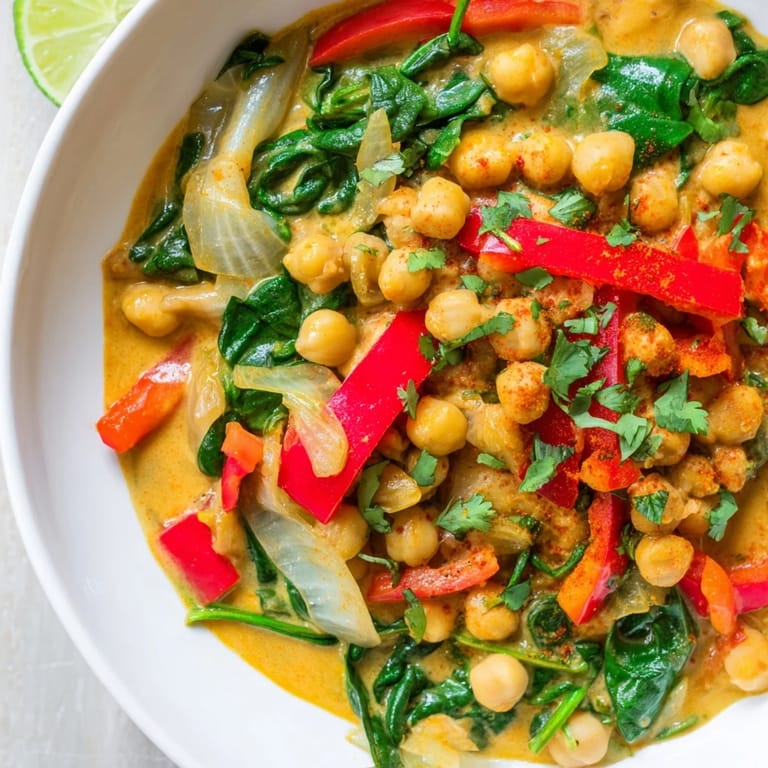
- Yellow onion: The foundation that should turn golden and soft, releasing its sweetness into the oil—don't rush this part.
- Garlic and ginger: These two are the heartbeat; fresh ginger makes all the difference, so skip the jar if you can.
- Red bell pepper: It stays slightly tender and adds both color and a gentle sweetness that balances the spices.
- Baby spinach: Wilts right at the end, adding brightness without any fuss.
- Carrot: Optional but good for texture and a little earthy sweetness—I usually include it.
- Chickpeas: Rinse them well; this small step makes them taste fresher and helps the sauce cling better.
- Coconut milk: Full-fat creates a richer sauce, but light works if that's what you have—the curry won't judge.
- Vegetable broth and diced tomatoes: Together they build a base that tastes intentional and deep.
- Curry powder, cumin, turmeric, and smoked paprika: Toast these spices briefly so they wake up and become something more than powder.
- Chili flakes: Add only if you want heat; the curry is wonderful either way.
- Coconut oil or olive oil: Either works, though coconut oil echoes the milk and feels right here.
Tired of Takeout? 🥡
Get 10 meals you can make faster than delivery arrives. Seriously.
One email. No spam. Unsubscribe anytime.
Instructions
- Heat your oil and soften the onion:
- Pour the oil into a large pot and let it warm over medium heat until it shimmers slightly. Add your diced onion and let it cook for three to four minutes, stirring occasionally, until it turns golden and starts to smell sweet.
- Build the aromatic base:
- Stir in the minced garlic, grated ginger, and diced red bell pepper, cooking for about two minutes until the mixture becomes fragrant and the kitchen smells like something special is happening.
- Toast your spices:
- Add the curry powder, cumin, turmeric, smoked paprika, chili flakes if you're using them, salt, and black pepper. Stir constantly for about a minute—you're coaxing out their deeper flavors and preventing them from tasting flat.
- Add the main ingredients:
- Pour in the diced tomatoes, coconut milk, vegetable broth, chickpeas, and carrot if you're adding it. Stir everything together so the spices distribute evenly and nothing sticks to the bottom.
- Simmer gently:
- Bring the curry to a simmer, then lower the heat and cover the pot. Let it bubble gently for about fifteen minutes, stirring now and then, so everything softens and the flavors begin talking to each other.
- Finish with spinach:
- Uncover the pot and stir in your chopped spinach, letting it wilt for two to three minutes. The curry will thicken slightly as it cooks down—stop when it feels right to you.
- Taste and adjust:
- Take a spoonful, let it cool slightly, and taste. Maybe it needs more salt, maybe a squeeze of something bright—trust yourself here.
 Save to Pinterest
 This curry became my answer to the question "What can we eat tonight?" and somehow also became the answer to "What do you make when you want to feel okay?" There's something about a meal that's both simple and deeply satisfying that makes you want to keep returning to it.
Why This Curry Works as a Complete Meal
The chickpeas offer real protein and fiber that makes you feel full and grounded, not just fed. The spinach adds a whisper of iron and nutrition without being obvious about it. The coconut milk and broth create a sauce that clings to every ingredient, so you're not eating separate components but something unified and whole. If you serve it over rice or with naan, you've got carbs and substance; if you eat it on its own, it's still entirely satisfying. It's the kind of meal that works for weeknight dinner or when you're cooking for someone whose tastes you're still learning.
The Spice Profile Explained
Curry powder is the backbone here, doing most of the work, but the supporting spices prevent it from becoming one-note. The cumin adds earthiness, turmeric brings both color and a subtle warmth, and the smoked paprika gives a hint of something almost smoky without overpowering. The chili flakes are there for people who want more heat, but the recipe is genuinely delicious without them—the warmth comes from the spice blend itself, not from fire. If you want to adjust the flavor, you can bump up the cumin slightly for earthiness, add a touch more turmeric if you want more golden color, or include the chili flakes if you like your food with a little edge.
Storage, Scaling, and Small Moments
This curry gets better after a day in the fridge as the flavors settle and deepen, so it's perfect for making ahead or doubling if you're feeding more people. It freezes well too, though the spinach will lose some brightness—add fresh spinach when you reheat if you want that green vibrancy back. The recipe as written feeds four generously, but it scales beautifully; just keep the proportions the same and you'll be fine.
- If you're cooking this for someone, watch their face when they take the first taste—that pause before they smile is the real reward.
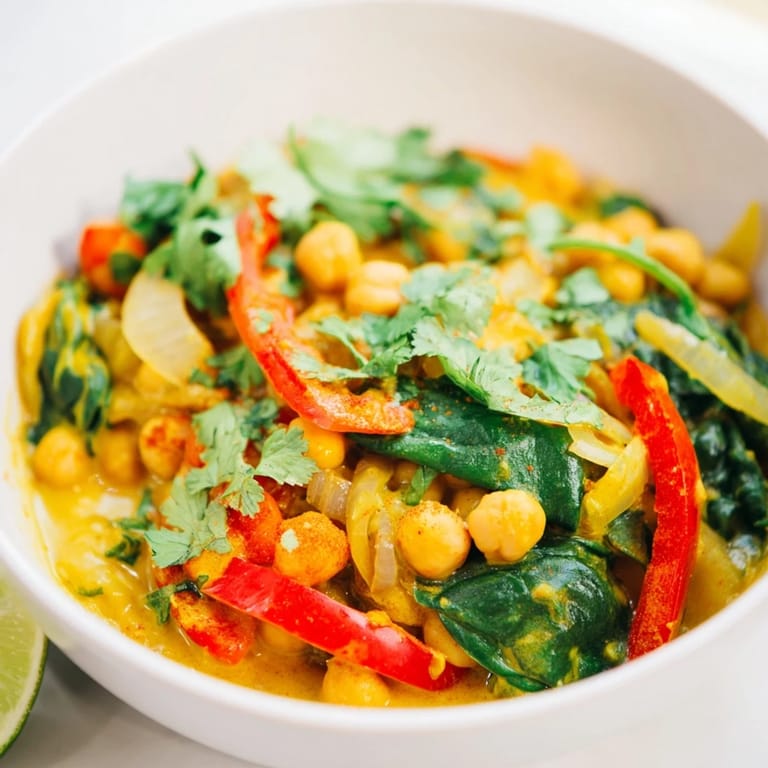
- Serve it with lime wedges on the side so people can add brightness at the last moment, turning each spoonful slightly different.
- A scatter of fresh cilantro at the end isn't just garnish; it's the final note that ties everything together.
 Save to Pinterest
 This curry has become the dish I make when I want to remember that good food doesn't have to be complicated, and that feeding yourself or someone else well is one of the quietest ways to say I'm taking care. It's become a friend I return to again and again.
Recipe FAQs
- → Can I use fresh chickpeas instead of canned?
Yes, soaked and cooked fresh chickpeas work well. Adjust cooking time to ensure tenderness before simmering with spices and liquids.
- → What can I substitute for spinach if unavailable?
Kale or Swiss chard are great alternatives, offering similar texture and nutrients. Add them in the last few minutes of cooking.
- → How can I increase the protein content?
Adding cubed tofu or tempeh boosts protein while complementing the curry’s flavors perfectly.
- → Is it possible to make this less spicy?
Omitting or reducing chili flakes softens the heat without sacrificing the rich, warming curry flavor.
- → What are suitable side dishes for this meal?
Jasmine or basmati rice, naan bread, or a simple salad pair wonderfully with the curry’s robust taste.
- → Can I prepare this dish in advance?
Yes, flavors deepen when chilled overnight. Reheat gently with a splash of broth or water to loosen the sauce.