 Save to Pinterest
 The sizzle of cumin hitting hot oil still brings me right back to my tiny galley kitchen on a rainy Tuesday evening. I had a can of chickpeas, some coconut milk nearing its date, and an ambitious craving for something that tasted like comfort wrapped in spice. What started as pantry improvisation turned into the curry I now make at least twice a month. It's amazing how a few everyday ingredients can transform into something that fills your home with warmth and makes you feel like you've traveled somewhere far away.
I first made this for a friend who swore she didn't like chickpeas, and I watched her go back for seconds without saying a word. There's something about the way the spices coat each tender bean and how the tomatoes break down into the sauce that makes even skeptics believers. She texted me the next morning asking for the recipe, and I knew I had something worth keeping.
Ingredients
- Vegetable oil: Any neutral oil works here, but I've learned that a good glug of oil helps bloom the spices and keeps them from scorching in those first crucial moments.
- Onion: Dicing it finely means it melts into the sauce instead of sitting in chunks, creating a sweet, savory backbone that holds everything together.
- Garlic: Fresh is non-negotiable for me after one sad attempt with jarred garlic that tasted more like regret than aromatics.
- Ginger: Grating releases all those bright, zesty oils that wake up the whole dish and balance the richness of coconut.
- Ground cumin: This is the spice that makes your kitchen smell like an actual Indian restaurant, earthy and welcoming.
- Ground coriander: It adds a subtle citrus note that I didn't notice until I accidentally left it out once.
- Ground turmeric: Beyond the golden color, it brings a warm, slightly bitter depth that rounds out the sweeter spices.
- Garam masala: The blend that ties everything together with its complex warmth, like the final brushstroke on a painting.
- Chili powder: Start conservative, you can always add heat but you can't take it back, a lesson I learned the hard way.
- Paprika: Adds color and a gentle smokiness without overwhelming the more delicate spices.
- Salt and black pepper: Season in layers, a pinch now and adjustments later make all the difference.
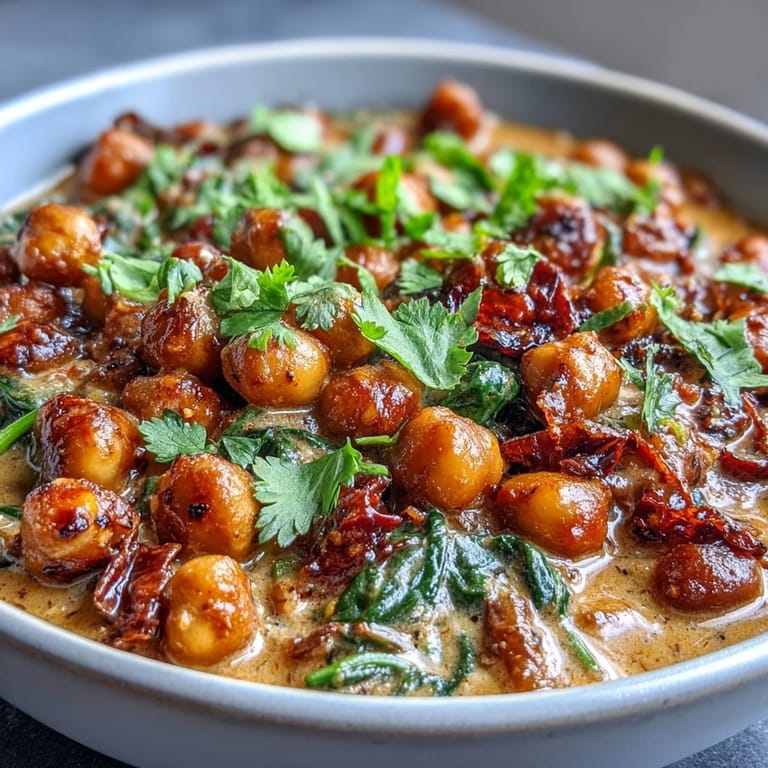
- Chickpeas: Draining and rinsing them removes that slightly metallic canned taste and helps the sauce cling better.
- Coconut milk: Full-fat makes it luxurious and creamy, light versions just don't have the same soul.
- Diced tomatoes: They break down into the sauce and add acidity that cuts through the richness beautifully.
- Vegetable broth: Just enough liquid to let everything simmer without becoming soup, though water works in a pinch.
- Baby spinach: I toss it in because it wilts to nothing and makes me feel like I'm sneaking in something green and virtuous.
- Lime juice: That final squeeze right before serving brightens everything and makes the whole dish pop.
- Fresh cilantro: Some people love it, some taste soap, but I'm firmly in the love camp and pile it on.
Tired of Takeout? 🥡
Get 10 meals you can make faster than delivery arrives. Seriously.
One email. No spam. Unsubscribe anytime.
Instructions
- Start with the aromatics:
- Heat your oil until it shimmers, then add the onion and let it cook slowly until it turns soft and translucent, stirring occasionally so it sweetens without browning. When the garlic and ginger go in, the smell will change immediately, so give it just one minute before moving on.
- Bloom the spices:
- Toss in all your ground spices and stir constantly for about a minute, letting them toast and release their oils without burning. This step is where the magic starts, so don't rush it or walk away.
- Build the curry base:
- Add the chickpeas, tomatoes, coconut milk, and broth, stirring everything together until it's unified and gorgeous. Bring it to a gentle simmer, then cover and let it bubble away for 15 minutes, stirring now and then to keep anything from sticking.
- Finish and adjust:
- Uncover the pot, stir in the spinach if using, and let it wilt into the sauce for a couple of minutes. Squeeze in the lime juice, taste, and add more salt or chili if your heart desires.
- Serve with love:
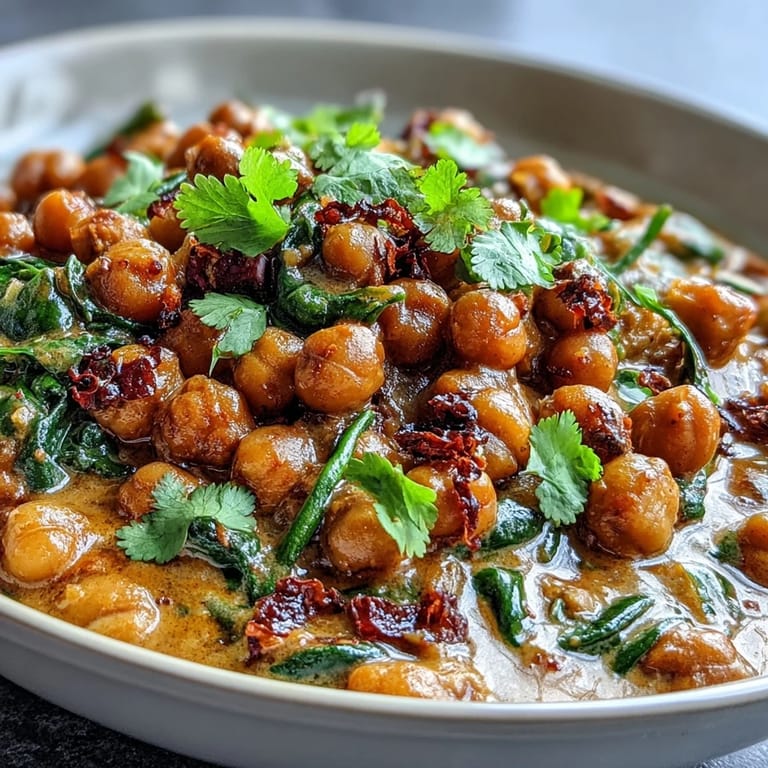
- Ladle the curry into bowls, scatter cilantro on top, and set out lime wedges for anyone who wants an extra hit of brightness. Pair it with rice or naan and watch it disappear.
 Save to Pinterest
 This curry became my go-to meal for nights when I needed something nourishing without a lot of fuss. I've served it to meat-eaters who didn't miss the protein, to skeptics who cleaned their plates, and to myself on evenings when I just needed something warm and dependable. There's a quiet confidence in knowing you can open your pantry and make something this satisfying.
Making It Your Own
I've stirred in diced sweet potato during the simmer for extra heartiness, and I've added bell peppers when I had them lingering in the crisper. Some nights I'll throw in a handful of cashews for crunch, and other times I'll swirl in an extra spoonful of garam masala at the end for a bolder kick. The beauty of this curry is that it welcomes improvisation without losing its soul.
Storage and Reheating
Leftovers keep beautifully in the fridge for up to four days, and I actually prefer them the next day when the spices have had time to mingle and deepen. Reheat gently on the stove with a splash of water or broth to loosen the sauce, stirring occasionally until it's warmed through. I've even frozen portions in airtight containers for up to three months, though the spinach can get a little sad, so I usually add fresh greens when reheating.
Serving Suggestions
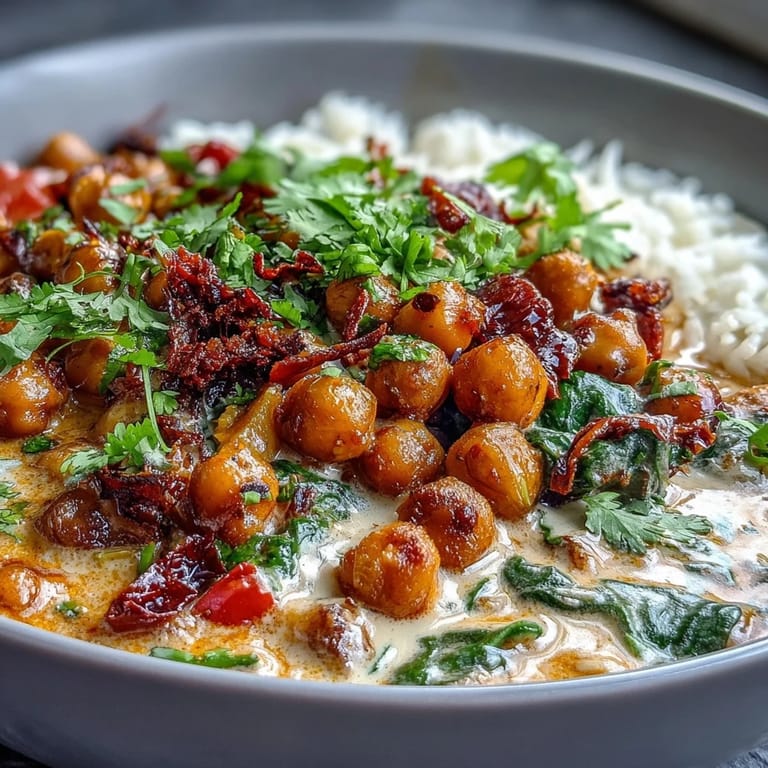
I love spooning this over fluffy basmati rice, but it's just as wonderful with brown rice, quinoa, or torn pieces of warm naan for scooping. A dollop of coconut yogurt on top adds cool creaminess, and a sprinkle of toasted coconut flakes or crushed peanuts brings unexpected texture.
- Serve alongside cucumber raita or a simple tomato and onion salad for freshness.
- Pair with mango chutney if you like a sweet contrast to the savory spice.
- Don't forget extra lime wedges, some people love to squeeze them over every bite.
 Save to Pinterest
 This chickpea curry has earned its place in my regular rotation, and I hope it finds a spot in yours too. May your kitchen smell like cumin and comfort, and may your bowls always be full.
Recipe FAQs
- → Can I make this ahead of time?
Yes, this curry actually tastes better the next day as flavors meld together. Store in an airtight container in the refrigerator for up to 4 days, or freeze for up to 3 months. Reheat gently on the stovetop, adding water if needed to reach desired consistency.
- → How do I adjust the spice level?
Start with 1/2 teaspoon chili powder and taste before adding more. You can also reduce it further or omit it entirely for a mild version. Add fresh jalapeños during cooking for additional heat, or increase garam masala for warmth without spiciness.
- → What if I don't have coconut milk?
Substitute with full-fat Greek yogurt, cashew cream, or heavy cream for creaminess, though the flavor profile will differ. For a lighter version, use vegetable broth with a splash of milk, though the dish won't be as rich.
- → Can I add other vegetables?
Absolutely. Diced sweet potato, bell peppers, carrots, or cauliflower work wonderfully. Add firmer vegetables like potatoes and carrots in step 4 with the chickpeas, and softer vegetables like spinach or bell peppers in the final minutes.
- → What should I serve this with?
Serve alongside steamed basmati or brown rice, naan bread, roti, or quinoa. For a lighter meal, pair with cauliflower rice. Accompany with fresh lime wedges, chopped cilantro, sliced onions, and yogurt on the side for added texture and freshness.
- → Is this dish actually vegan?
Yes, when prepared as written using vegetable oil and full-fat coconut milk, this curry is completely vegan. Always verify that packaged spices and coconut milk are certified vegan, as some may contain non-plant additives.