 Save to Pinterest
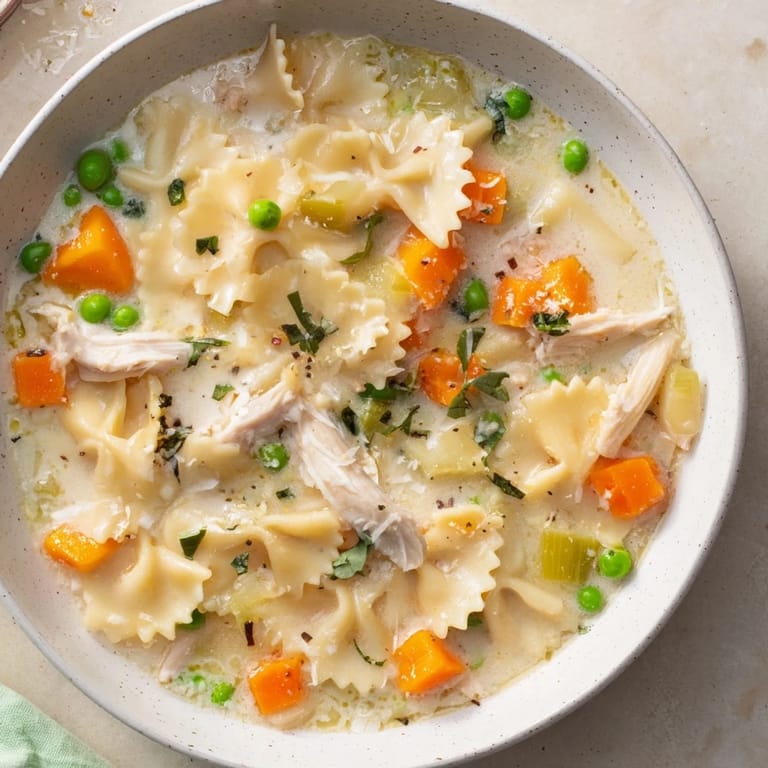
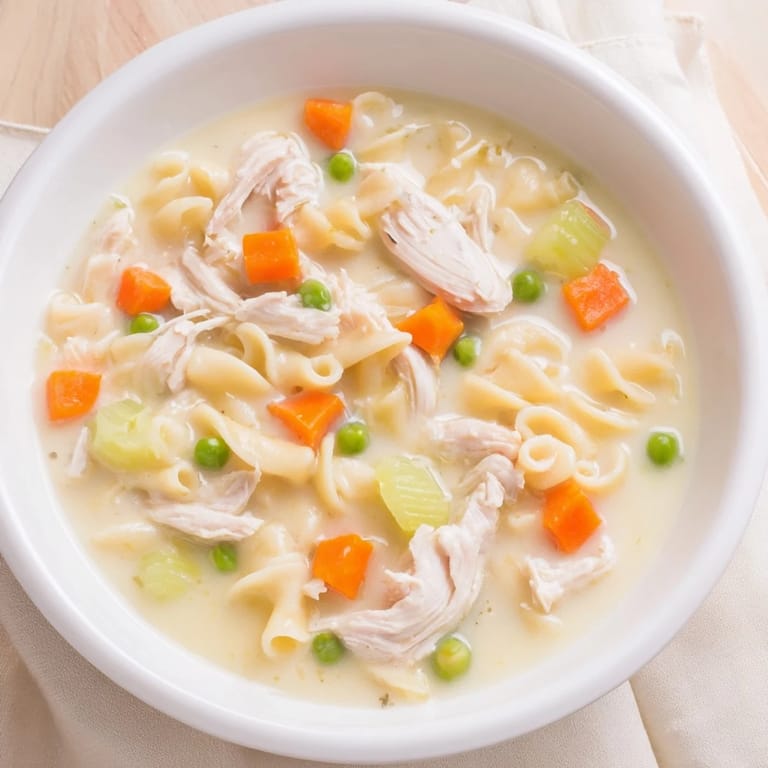
 There's something about a bowl of chicken pot pie soup that stops time. I discovered this version on a gray Tuesday afternoon when I was staring at leftover rotisserie chicken and couldn't justify making a full pie crust just for myself. I grabbed ditalini instead, let it simmer with cream and vegetables, and suddenly had something that tasted like comfort but felt less fussy. My mom called midway through cooking, and I could hear her smile when I described what I was making—she said it sounded like someone finally figured out the secret to pot pie was never really the crust anyway.
I made this for my sister's surprise dinner on a night when she'd been dealing with back-to-back meetings and needed something warm and unpretentious. She sat at the counter with her shoes still on, and I watched her shoulders drop after the first spoonful—the kind of moment that reminds you why cooking for people matters. She asked for the recipe before she even finished the bowl, which I took as the highest compliment possible.
Ingredients
- Cooked chicken breast, shredded or diced (2 cups): Use rotisserie if you're short on time—it adds a subtle smokiness that makes the broth taste less one-note.
- Carrots, diced (1 cup): Cut them into roughly the same size as the celery so they cook evenly and create a pleasant texture contrast.
- Celery, diced (1 cup): This is your secret flavor backbone; don't skip it or the soup will taste flat.
- Frozen peas (1 cup): Frozen is actually better here than fresh because they're picked at peak ripeness and won't turn mushy.
- Yellow onion, diced (1 small): The sweetness balances the savory broth and gives the soup depth.
- Garlic, minced (2 cloves): Fresh is essential—jarred tastes metallic by comparison.
- Fresh parsley, chopped (2 tablespoons plus extra for garnish): Add it at the end so it stays bright and doesn't turn dark and bitter.
- Ditalini pasta, uncooked (1 cup): These small tubes are perfect because they trap broth inside, creating little pockets of creaminess in every bite.
- Low-sodium chicken broth (4 cups): Low-sodium lets you control the salt and prevents the soup from tasting tinny.
- Whole milk (1 cup): This is lighter than using all cream but still gives you richness.
- Heavy cream (1/2 cup): This is what makes it taste like pot pie; don't substitute with milk or the texture suffers.
- Unsalted butter (2 tablespoons): The foundation for your vegetable base and roux.
- All-purpose flour (2 tablespoons): This thickens the soup and creates a silky mouthfeel.
- Salt (1 teaspoon or to taste): Taste as you go; you might need less if your broth is already salty.
- Ground black pepper (1/2 teaspoon): Freshly ground tastes cleaner than pre-ground.
- Dried thyme (1/2 teaspoon): Thyme is the herb that screams pot pie; it's non-negotiable.
- Dried sage, optional (1/2 teaspoon): If you use it, go light—sage can quickly overpower the other flavors.
Tired of Takeout? 🥡
Get 10 meals you can make faster than delivery arrives. Seriously.
One email. No spam. Unsubscribe anytime.
Instructions
- Melt butter and sauté the foundation:
- In a large pot, melt butter over medium heat and add your diced onion, carrots, and celery. You're looking for them to soften and turn translucent at the edges—this takes about 5 minutes. The kitchen will smell like a good home-cooked meal is coming.
- Bloom the garlic and flour:
- Add your minced garlic and cook for just a minute until fragrant, then sprinkle the flour over everything and stir constantly for 2 minutes. This step eliminates the raw flour taste and creates the base for your creamy sauce.
- Build the broth:
- Gradually whisk in the chicken broth—go slow so you don't get lumps—then add the milk and cream. Bring everything to a gentle simmer, stirring occasionally.
- Cook the pasta:
- Add the ditalini, thyme, sage if using, salt, and pepper. Simmer uncovered for about 10 minutes, stirring now and then so nothing sticks to the bottom. The pasta should be tender but still have a tiny bit of resistance when you taste it.
- Finish with chicken and peas:
- Stir in your cooked chicken and frozen peas, then simmer for another 3 to 5 minutes until the peas are heated through and the soup thickens slightly from the pasta starches releasing into the broth.
- Taste and serve:
- This is the moment to taste and adjust—salt, pepper, or a pinch more thyme if it needs it. Stir in your fresh parsley right before serving, and ladle into bowls while everything is still steaming hot.
 Save to Pinterest
 I realized while making this that the magic of pot pie was never about the ritual of rolling out dough—it was about the feeling of eating something warm that tastes like someone cares about you. This soup delivers exactly that without the kitchen mess or the learning curve. It's proof that comfort food doesn't have to be complicated to be real.
Why This Works as a Weeknight Dinner
Most soups require a slow build or hours of simmering, but this one respects your schedule. The broth thickens quickly because of the roux, the pasta cooks in the same pot as everything else, and rotisserie chicken means you're not standing over raw poultry. I've made this on nights when I got home at 6 and needed to eat by 7, and it's never let me down. The cream makes it feel indulgent even though you're spending minimal time and effort.
Customize Without Losing the Essence
The architecture of this soup is flexible enough that you can pivot based on what's in your kitchen. I've added spinach at the last minute, swapped in white wine for a splash of the broth, used fresh thyme from the garden instead of dried, and even thrown in mushrooms when I had them on hand. The only things that really matter are the cream, the chicken, and the thyme—those three elements are what make it taste like pot pie.
The Small Moments That Matter
My favorite part of making this is when someone takes that first bite and their face changes—there's always a second where they're surprised by how creamy and rich it is, followed by this relaxing of their shoulders. It's a soup that does its job quietly, without asking for praise. It just makes you feel better, which is all food should really try to do.
- A splash of dry white wine added with the broth brings acidity that brightens the richness.
- Don't overcook the pasta or it'll turn mushy once it sits in the hot broth—al dente is your target.
- Leftovers thicken as they cool, so add extra broth when you reheat.
 Save to Pinterest
 This soup lives in that perfect middle ground between special enough to feel like you made an effort and simple enough that you'll actually make it again next week. That's the kind of recipe worth keeping.
Recipe FAQs
- → Can I use rotisserie chicken instead?
Yes, rotisserie chicken works well and speeds up preparation without sacrificing flavor.
- → What pasta works best in this dish?
Ditalini pasta is ideal for its small size, but small shells or elbow macaroni can be substituted.
- → How do I make the broth creamy?
Adding milk, heavy cream, butter, and flour creates the rich, creamy texture that coats the ingredients.
- → Can I make this gluten free?
Use gluten-free pasta and substitute all-purpose flour with a gluten-free alternative for thickening.
- → What’s a good side to serve with this dish?
A crisp green salad or crusty bread pairs nicely to complement the creamy soup.
- → How long should I simmer the pasta?
Simmer the pasta uncovered for about 10 minutes until al dente, stirring occasionally to prevent sticking.