Save to Pinterest
 There's something almost meditative about the moment when balsamic vinegar hits the pan and the whole kitchen fills with that deep, slightly sweet aroma. I discovered this salad on a Tuesday evening when I had nothing but greens and a nearly-empty bottle of balsamic, and I decided to stop treating it like a condiment and actually cook with it. That one small choice—letting it bubble down until it became glossy and concentrated—transformed a simple salad into something I couldn't stop thinking about.
I made this for my sister last month when she was going through a phase of eating only vegetables, and watching her fork through it while sitting on my kitchen counter, legs swinging like we were kids again, reminded me why simple food matters. She kept asking for the recipe, and I realized I'd never actually written it down—I'd just been making it by feel, which is maybe the best way to know you've found something worth keeping.
Ingredients
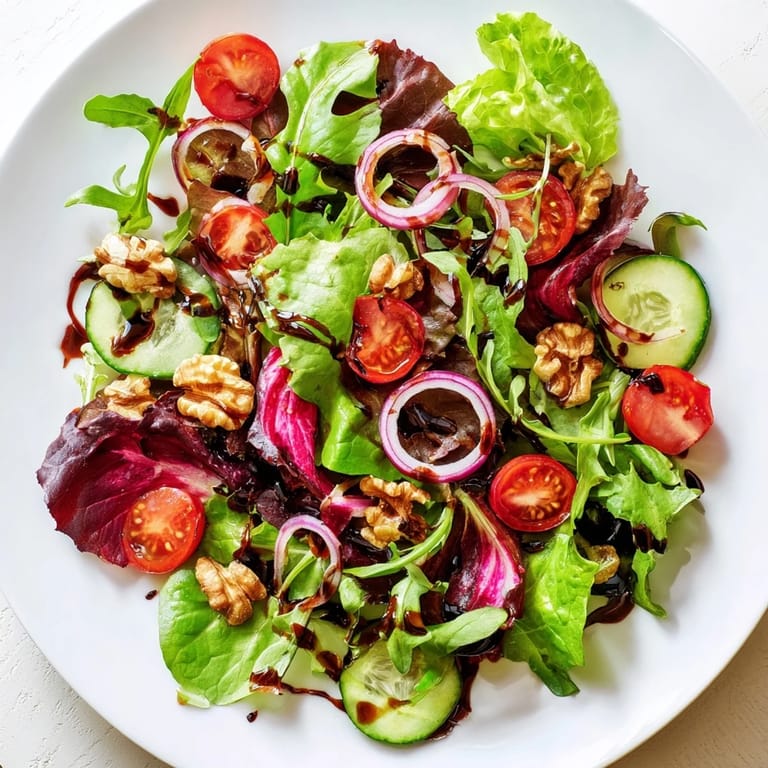
- Mixed salad greens (6 cups): The variety is what makes this work; arugula brings a peppery bite, spinach adds earthiness, romaine gives you structure, and radicchio contributes just enough bitterness to keep things interesting.
- Cherry tomatoes (1 cup, halved): Their sweetness balances the acidic dressing, and halving them prevents them from rolling off your fork.
- Red onion (1/2 small, thinly sliced): This is where you build flavor; the thin slices soften slightly as they sit in the dressing, losing their harsh edge.
- English cucumber (1/2, sliced): The watery crunch keeps the salad from feeling heavy, and English cucumbers have fewer seeds so you don't have that mealy texture.
- Toasted walnuts (1/4 cup, optional): They add a buttery crunch that turns this from side dish into something more substantial; toasting them yourself rather than using raw makes a noticeable difference.
- Balsamic vinegar (1/2 cup): Look for one that feels substantial when you swirl it in the bottle, not thin and watery; the quality here is everything.
- Extra-virgin olive oil (2 tablespoons): This is a small amount deliberately, because the reduced balsamic does most of the heavy lifting and we don't want to drown the greens.
- Dijon mustard (1 teaspoon, optional): It acts as an emulsifier so the dressing doesn't separate, and adds a subtle sharpness that keeps the sweetness of the balsamic from feeling one-note.
- Sea salt and freshly ground black pepper: Finish with these just before serving so the pepper's volatile oils are still alive in the bowl.
Tired of Takeout? 🥡
Get 10 meals you can make faster than delivery arrives. Seriously.
One email. No spam. Unsubscribe anytime.
Instructions
- Start the reduction:
- Pour the balsamic into a small saucepan and turn the heat to medium; you want a gentle simmer, not a rolling boil that evaporates everything too fast. Stir it now and then, and after about 6 to 8 minutes it should coat the back of a spoon when you run your finger through it.
- Build your salad foundation:
- While the balsamic is reducing, grab your largest salad bowl and layer in the greens, tomatoes, onion, cucumber, and walnuts if you're using them. Don't toss yet; let them sit there waiting.
- Make the dressing:
- In a small bowl, whisk together the olive oil, mustard if you're using it, salt, and pepper until they start to come together. Let the balsamic cool for a minute or two, then pour it into the bowl and whisk everything until it looks emulsified and glossy, like you've actually created something rather than just mixed ingredients.
- Bring it together:
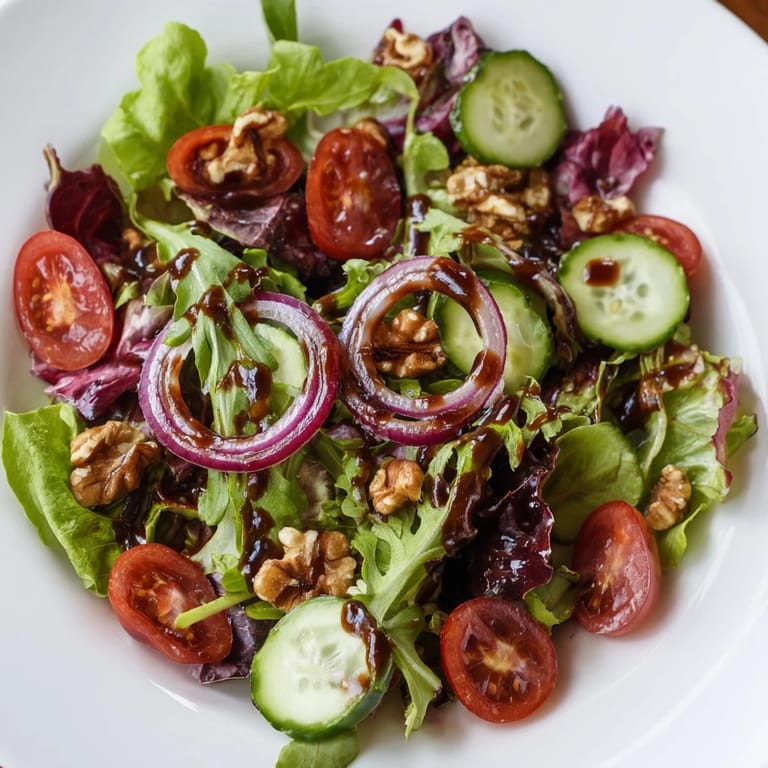
- Pour the dressing over the salad and toss with enough confidence that every leaf gets coated, but gently enough that you're not bruising the greens into submission. The whole thing should glisten.
- Serve immediately:
- Don't let it sit too long, or the greens will start to wilt and weep liquid; the magic is in the freshness and the contrast between the crisp leaves and that glossy, tangy dressing.
 Save to Pinterest
 What I love most about this salad is that it proved to me you don't need complicated techniques or a long ingredient list to make something feel elegant. My grandmother once told me that good food is just good ingredients treated with respect, and this salad is exactly that philosophy on a plate.
The Balsamic Reduction Moment
There's a specific second when you know the balsamic is ready, and it has nothing to do with a timer. You'll see it thicken, watch it darken slightly, and smell something deeper and almost caramelized rising from the pan. That's when you know to stop, because another minute or two and it starts to taste burnt instead of concentrated. I learned this the hard way, standing over my stove with one batch of vinegar that had turned bitter and regretful.
Why This Works as a Meal
The combination of acid, fat, and those crisp vegetables creates something psychologically satisfying in a way that plain greens never are. The balsamic reduction is sweet enough to feel indulgent, acidic enough to feel fresh, and thick enough that you get actual flavor with every bite rather than just dressing-flavored water. It's the kind of salad that makes you feel good about what you're eating, not like you're sacrificing something.
Timing and Flexibility
This recipe is deceptively flexible despite being quick. You can prep your vegetables hours ahead and store them separately, then assemble and dress everything right before eating. The balsamic reduction actually improves if made a day or two in advance, developing a deeper flavor as it sits in the fridge. The real art is knowing that this salad is best served immediately after dressing, which sounds limiting but actually makes it perfect for weeknight cooking when you want something fresh without the stress.
- Make the balsamic reduction whenever you have time and keep it in a jar in the fridge for up to a week.
- Chop your vegetables in the morning and store them in separate containers so assembly takes literally two minutes.
- If you're feeding a crowd, double the dressing rather than the greens—people always want more of the good stuff.
 Save to Pinterest
 This salad became my answer to the question of what to make when I want to feel like I'm taking care of myself without overthinking it. It's the kind of dish that gets better the more you make it, not because the recipe changes, but because you learn the small adjustments that make it yours.
Recipe FAQs
- → How do you make the balsamic reduction?
Simmer balsamic vinegar over medium heat for 6–8 minutes, stirring occasionally, until it reduces by half and thickens slightly.
- → Can toasted walnuts be omitted?
Yes, walnuts are optional and can be left out or substituted with other nuts or seeds for added crunch.
- → What greens work best in this salad?
A mix of arugula, spinach, romaine, and radicchio provides a balanced texture and flavor profile.
- → How should the dressing be combined?
Whisk extra-virgin olive oil with Dijon mustard, salt, and pepper, then blend with the cooled balsamic reduction until smooth.
- → Can protein be added to this salad?
Yes, grilled chicken or chickpeas make excellent additions for extra protein and heartiness.