 Save to Pinterest
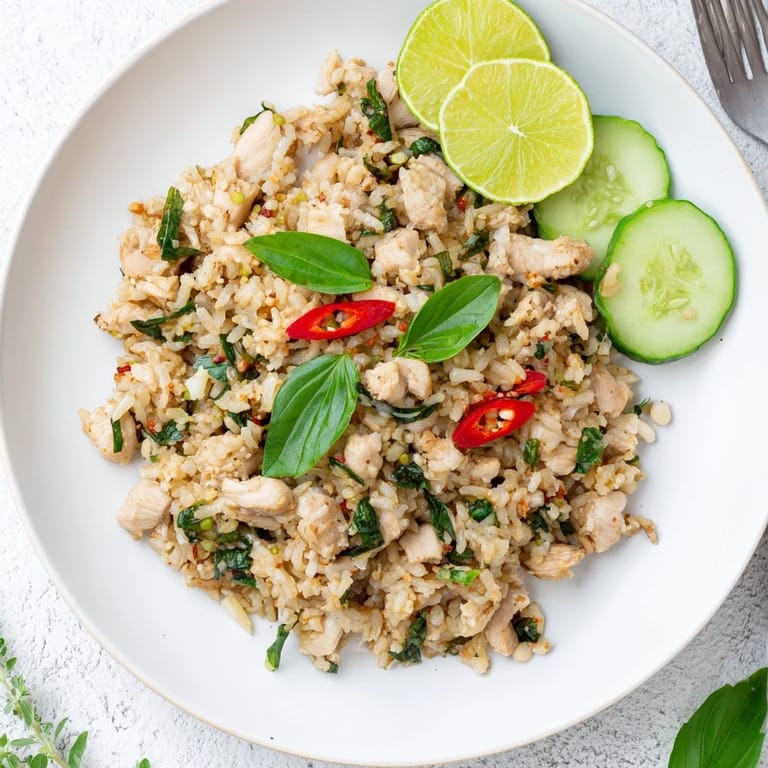
 The first time I attempted this dish in my tiny apartment kitchen, I underestimated just how quickly holy basil wilts. That signature perfume hit me before I even turned around from grabbing the lime wedges. Now I keep everything prepped and within arms reach because this fried rice waits for no one. My roommate poked her head in, drawn by the smell, and ended up eating half the batch standing at the counter.
Last summer, my friend from Chiang Mai taught me that the secret lies in getting your wok smoking hot before anything touches the oil. She laughed watching me inch the chicken in timidly, then took over and showed me how confident, quick movements create those beautiful caramelized bits. Now every time I make this, I can practically hear the sizzle of her family's kitchen.
Ingredients
- Chicken thighs or breasts: Thighs stay juicier through high-heat cooking, but whatever you choose, slice it against the grain for tenderness
- Day-old jasmine rice: Fresh rice turns to mush in the wok, so plan ahead or spread freshly cooked rice on a baking sheet to dry out
- Holy basil: This is nonnegotiable for authentic flavor, though Thai basil works in a pinch with a slightly different aromatic profile
- Fish sauce and oyster sauce: These umami powerhouses create that depth you can never achieve with soy sauce alone
- Thai red chilies: Leave the seeds in if you want the full experience, or remove them for a milder warmth
Tired of Takeout? 🥡
Get 10 meals you can make faster than delivery arrives. Seriously.
One email. No spam. Unsubscribe anytime.
Instructions
- Get your wok screaming hot:
- Heat the oil until it shimmers and just begins to smoke. This high temperature is what creates restaurant-style texture and flavor.
- Build your aromatic base:
- Toss in the garlic and chilies, stirring constantly for about 30 seconds. You should immediately smell the intense fragrance filling your kitchen.
- Cook the chicken until golden:
- Add the sliced chicken and let it sear without moving it too much. You want those browned bits for flavor, about 3 to 4 minutes until fully opaque.
- Add your vegetables:
- Stir in the onion and bell pepper, cooking for 2 minutes until they soften slightly but still retain their crunch.
- Incorporate the rice:
- Add your cooked rice, breaking up clumps with your spatula. Toss vigorously to coat every grain in the rendered fat and aromatics.
- Season everything:
- Pour in your soy sauce, oyster sauce, fish sauce, sugar, and white pepper. Keep tossing until the rice takes on an even golden brown color.
- Finish with holy basil:
- Remove from heat and fold in the holy basil leaves. They should wilt in the residual heat but stay vibrant green.
 Save to Pinterest
  Save to Pinterest
 This recipe became my go-to for impromptu dinner parties after I served it to my skeptical parents, who typically prefer milder flavors. They ended up fighting over the last serving. Something about the combination of heat, sweetness, and that distinctive basil makes people forget they were ever hesitant.
Getting the Rice Texture Right
The difference between good fried rice and great fried rice comes down to individual grains, each coated in flavor but separate from its neighbors. Spread your cooked rice on a baking sheet and refrigerate it uncovered for at least a few hours. This dries out the surface so each grain can crisp up in the hot wok instead of steaming.
Balancing the Heat
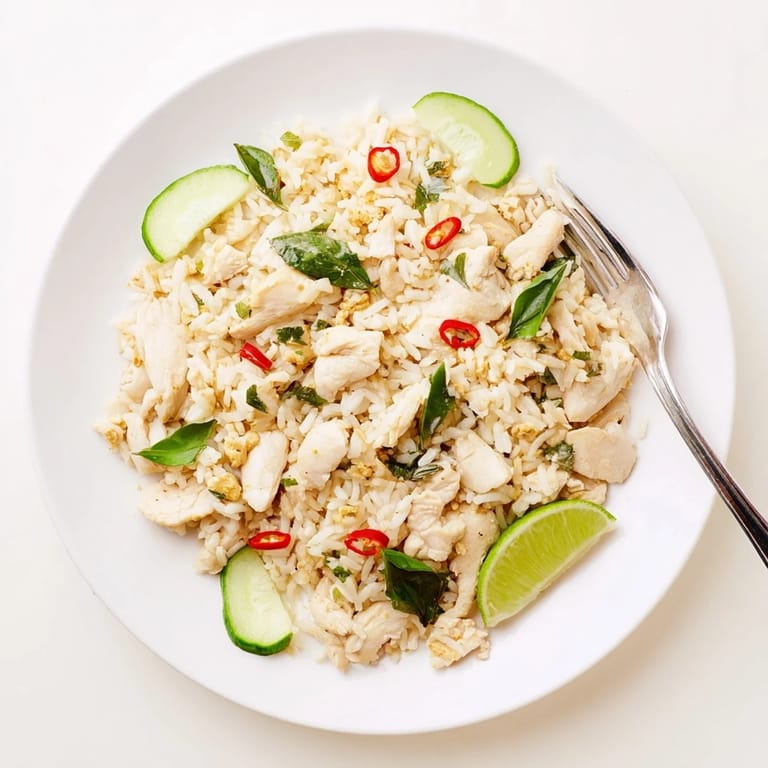
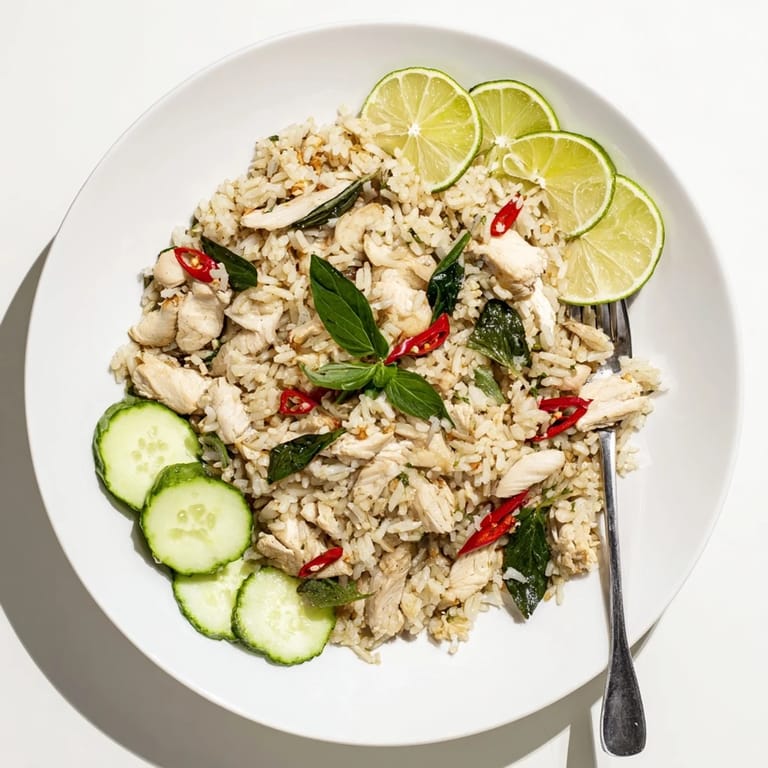
Thai cuisine masters the interplay between fiery heat and cooling elements. The lime wedges and cucumber garnishes are not optional. That bright acid and crisp freshness cut through the spicy richness, creating a complete experience. Squeeze fresh lime over your bowl right before eating.
Making It Your Own
Once you have the basic technique down, this recipe becomes a template for whatever you have on hand. The key is keeping the ratios and cooking method the same. This is one of those forgiving dishes that adapts beautifully to your preferences and pantry staples.
- Try swapping chicken for shrimp, pork, or even firm tofu for a different protein
- Add a cracked egg at the very end, stirring quickly to scramble it into the rice
- Make it vegetarian by using mushroom soy sauce in place of fish sauce and oyster sauce
 Save to Pinterest
  Save to Pinterest
 Gather some friends, maybe a cold beer, and serve this straight from the wok. It is one of those meals that turns a Tuesday night into something memorable.
Recipe FAQs
- → Why use day-old rice for fried rice?
Day-old rice has dried out slightly, which prevents it from becoming mushy during stir-frying. The grains separate easily and absorb sauces better, giving you that perfect texture found in restaurant-quality dishes.
- → Can I substitute holy basil with regular basil?
While regular sweet basil works in a pinch, holy basil (also known as tulsi or Thai basil) has a distinct peppery, clove-like flavor that's essential to authentic Thai cuisine. Thai basil with its purple stems is the closest alternative.
- → How can I adjust the spice level?
Start with fewer chilies and taste as you cook. You can also remove the seeds to reduce heat, or add chili oil at the end for extra spice without changing the cooking process.
- → What protein alternatives work well?
Shrimp cooks quickly and pairs beautifully with basil flavors. Thinly sliced pork belly adds richness, while firm tofu absorbs all the savory sauces beautifully for a vegetarian option.
- → Why is lime served with this dish?
Lime's acidity cuts through the rich, salty sauces while brightening all the flavors. A squeeze of fresh lime balances the heat and adds that classic Thai sweet-sour-spicy-savory harmony.