 Save to Pinterest
 The first time kimchi fried rice saved my dinner was one of those too-tired-to-cook evenings when the fridge held nothing but odds and ends. I'd bought a jar of kimchi on impulse weeks earlier and it was sitting there, looking back at me. Something about the fermentation smell that night felt more promising than discouraging. That ten-minute experiment turned into one of the most satisfying meals I'd made in months. Now I keep cold rice in the freezer specifically for those moments.
My roommate walked in while I was frying that first batch, attracted by the unmistakable aroma of caramelizing kimchi hitting hot oil. She stood watching me toss rice around the wok, asking what I was making. I plated two bowls, topped them with runny fried eggs I'd hurriedly cooked in a separate pan, and handed her a spoon without saying much else. We ate standing up in the kitchen, and she asked for the recipe before she'd even finished her first bite.
Ingredients
- 2 cups cooked short-grain rice: Day-old rice from the refrigerator or freezer works best since its drier and separates into distinct grains instead of clumping together
- 1 cup napa cabbage kimchi chopped plus 2 tbsp kimchi juice: Older kimchi that has fermented longer develops more complexity and a deeper sourness that balances beautifully with the rice
- ½ cup yellow onion finely chopped: The onion provides sweetness that rounds out the tang and heat of the kimchi
- ½ cup carrot diced: Small dice ensures the carrot cooks through in the same time as the onion without remaining crunchy
- 2 green onions sliced white and green parts separated: White parts go in early for aromatic flavor while green parts add fresh bite at the end
- 1 tbsp gochujang Korean chili paste: This fermented chili paste brings a complex heat and slight sweetness that plain hot sauce cant replicate
- 1 tbsp soy sauce: Adds essential salt and umami depth without overpowering the kimchi flavors
- 1 tsp toasted sesame oil: Finish with this rather than cooking with it to preserve the nutty aromatic quality
- ½ tsp sugar: Just enough to mellow the sharpness of kimchi and bring all flavors into harmony
- 2 tbsp vegetable oil: Neutral oil with a high smoke point prevents the rice from steaming instead of frying
- 1 tsp toasted sesame seeds: Sprinkled on top for texture and a final hit of nuttiness
- 2 fried eggs optional: The runny yolk creates an instant sauce when broken over the hot rice
Tired of Takeout? 🥡
Get 10 meals you can make faster than delivery arrives. Seriously.
One email. No spam. Unsubscribe anytime.
Instructions
- Build your flavor foundation:
- Heat 1 tablespoon of vegetable oil in a large skillet or wok over medium-high heat until shimmering. Add the chopped onion, carrot, and the white parts of the green onion. Sauté for 2-3 minutes until the vegetables have softened slightly and the onion edges are turning translucent.
- Bring out the kimchi character:
- Add the chopped kimchi to the pan and cook for another 2-3 minutes. You'll know it's ready when the kimchi becomes fragrant and the edges start to caramelize and brown in spots. This step concentrates the fermented flavors and develops sweetness.
- Create your sauce base:
- Stir in the gochujang, soy sauce, kimchi juice, sugar, and black pepper. Let everything cook together for 1 minute, stirring constantly to coat the vegetables evenly and allow the sugar to dissolve. The mixture should bubble and thicken slightly.
- Unite rice with flavor:
- Add the rice to the pan and immediately start breaking up any clumps with your spatula. Toss everything together vigorously and stir-fry for 3-4 minutes until every grain of rice is evenly coated in the reddish sauce and heated through. Listen for the crackling sound that tells you the rice is frying properly.
- Finish with aromatic brightness:
- Drizzle the sesame oil around the edges of the pan and add the green parts of the green onion. Stir well to combine, letting the green onions wilt slightly but remain vibrant. The sesame oil should perfume the dish without weighing it down.
- Top and serve:
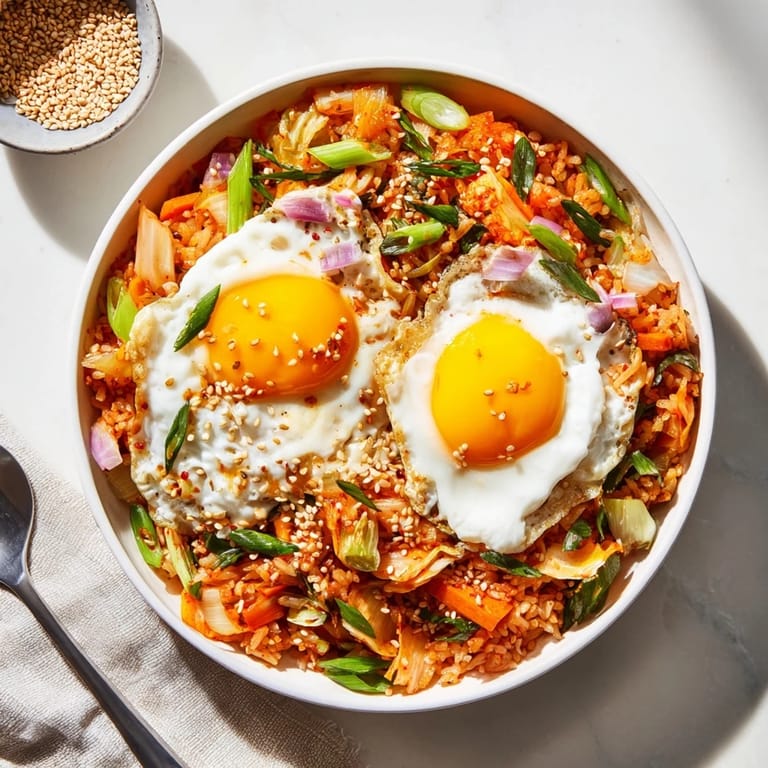
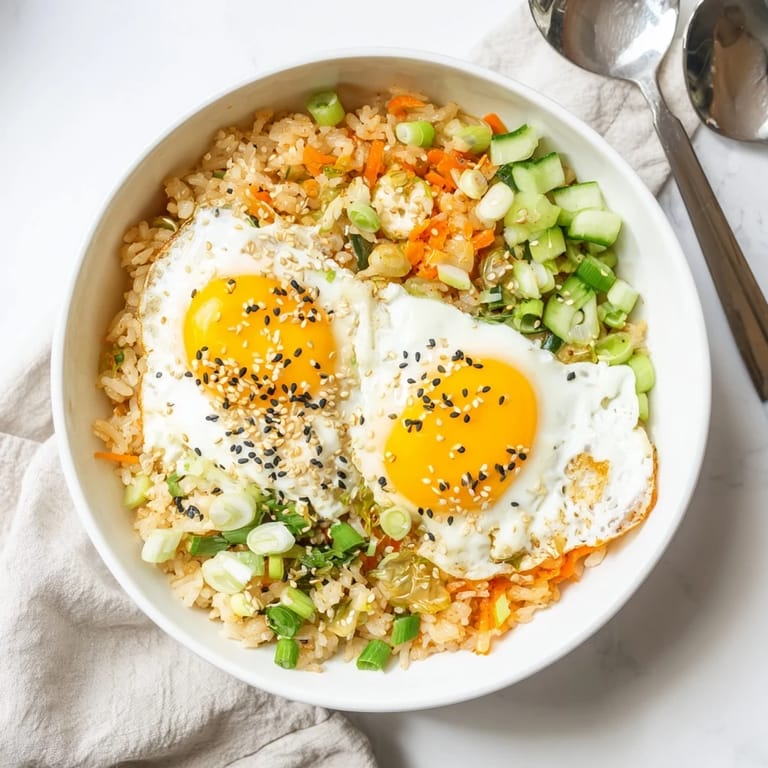
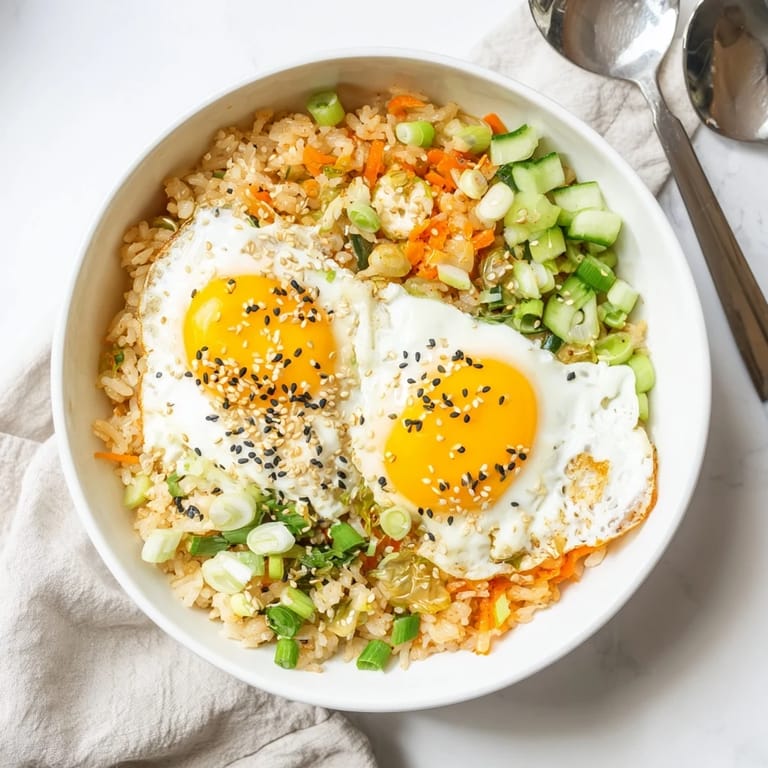
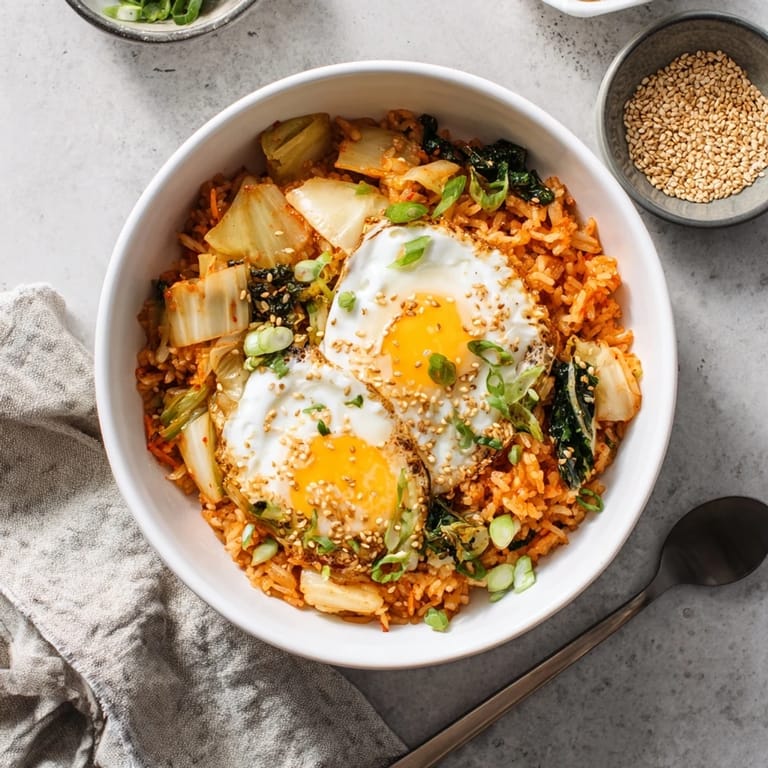
- If desired, heat the remaining oil in a separate pan and fry eggs until the whites are crisp but yolks remain runny. Serve the kimchi fried rice in bowls, topped with the fried eggs and a sprinkle of sesame seeds. Break the yolks immediately before eating to create a creamy sauce.
 Save to Pinterest
  Save to Pinterest
 This recipe became my go-to for feeding friends during late-night study sessions in college. Everyone would gather around the stove watching the rice fry, and I'd always double the recipe because the first batch disappeared before it even reached the table. Something about the combination of hot rice and spicy kimchi brings people together in the most ordinary yet wonderful way.
Getting the Rice Texture Right
The difference between good fried rice and great fried rice comes down to how you handle the rice. Cold, day-old rice has lost excess moisture and individual grains have firmed up enough to withstand high-heat stir-frying without turning into mush. When you add rice to the pan, use a folding motion rather than pressing down. You want each grain to make contact with the hot pan surface separately, developing slightly crispy edges while staying tender inside.
Balancing Kimchi Intensity
Kimchi varies wildly in intensity depending on how long it's been fermenting. Fresh kimchi is milder and crisper, while deeply fermented kimchi packs serious sourness and funk. Taste your kimchi before cooking and adjust the sugar accordingly. Older kimchi might need the full half teaspoon of sugar or even a touch more to round out the sharpness. The kimchi juice also concentrates over time, so start with less if your jar has been sitting in the fridge for weeks.
Make It Your Own
The beauty of kimchi fried rice lies in its adaptability. Once you've mastered the basic technique, this dish becomes a template for whatever you have on hand or whatever you're craving. The kimchi provides enough flavor that you can take liberties with additions without losing the essential character of the dish.
- Diced tofu gets wonderfully crisp when added with the vegetables and absorbs all the spicy flavors
- Leftover shredded chicken or pork transforms this into a heartier one-bowl meal
- A handful of spinach or bok choy added at the end wilts into the rice and adds color
 Save to Pinterest
  Save to Pinterest
 I hope this recipe finds you on a hungry evening when you need something fast, hot, and deeply satisfying. There's something profound about transforming leftovers into something that feels like a proper meal.
Recipe FAQs
- → Why use day-old rice for kimchi fried rice?
Day-old rice has dried out slightly, which prevents it from becoming mushy during stir-frying. The grains separate easily and develop a pleasant texture with slightly crispy edges when tossed in the hot skillet with the vegetables and seasonings.
- → Can I make this dish spicy?
Absolutely. Adjust the heat level by increasing the amount of gochujang or adding extra kimchi juice. You can also incorporate Korean chili flakes or a drizzle of sesame oil with chili infusion for an additional layer of warmth.
- → What protein options work well?
This dish pairs beautifully with diced tofu, shredded cooked chicken, or sautéed shrimp. Simply add your chosen protein during the vegetable sautéing step to ensure it heats through and absorbs the savory gochujang-kimchi sauce.
- → Is this suitable for meal prep?
Yes, kimchi fried rice reheats wonderfully. Store portions in airtight containers and warm in a skillet with a splash of water or oil. The flavors often deepen overnight as the rice continues to absorb the tangy kimchi and gochujang.
- → What makes this dish vegetarian-friendly?
The core ingredients—rice, kimchi, vegetables, gochujang, and soy sauce—are naturally plant-based. Simply omit the fried egg topping or substitute with a plant-based alternative. Always check kimchi and gochujang labels to ensure no fish products were used during fermentation.
- → How do I prevent the rice from sticking?
Use a well-seasoned wok or large skillet with enough oil to coat the surface. Keep the heat at medium-high and stir constantly. Breaking up rice clumps before adding them to the pan also helps distribute the grains evenly for consistent cooking.